Vitamin E After 40: Is a Supplement Worth It?
Turning 40 or reaching menopause doesn’t, by itself, establish a need for extra vitamin E.
If you’re over 40 without a diagnosed deficiency or another specific medical reason, age alone isn’t a reason to start vitamin E. Most people get enough from food. Certain health conditions may change your needs, while blood thinners and some other medicines make supplement safety worth checking before you add a pill. 12
A birthday doesn’t change the basic question
Vitamin E matters to your health: it acts as an antioxidant and plays a role in immune function. But needing a nutrient isn’t the same as needing it in a supplement. MedlinePlus says most people get enough vitamin E from food and identifies certain health conditions, not turning 40 or reaching menopause, as reasons someone may need extra. 1
So if you’re considering vitamin E simply because you’re in perimenopause or postmenopause, start with the reason you’d take it. Is the goal to fill a known nutrition gap, or are you hoping it will help a particular symptom? Menopause alone doesn’t establish a deficiency, and this evidence doesn’t establish that vitamin E supplements improve menopause symptoms. 1
Food, a health condition, and a supplement aren’t interchangeable
Vegetable oils and leafy greens provide vitamin E, and it’s added to some foods, including cereals. For most people, food already supplies enough. 1
A specific health condition can make this a different decision. MedlinePlus names liver disease, cystic fibrosis, and Crohn’s disease as examples of conditions in which someone may need extra vitamin E. Having one of these conditions doesn’t tell you, on its own, whether to buy a supplement. It gives you a more useful question to raise with the clinician managing that condition: does it affect your vitamin E needs? 1
A higher blood level isn’t proof of a health benefit
One randomized study helps clarify a common marketing leap. In a two-year trial, a multivitamin increased blood alpha-tocopherol, a form of vitamin E, compared with placebo. The analysis involved older adults: women aged 65 and older and men aged 60 and older. It measured a blood marker after multivitamin use, not whether vitamin E alone improved symptoms or prevented illness in women in midlife. 3
That distinction matters if a label points to a change in vitamin levels as though it proves you’ll feel better. The study shows that supplementation can change a measured level in the people studied. It doesn’t answer whether a woman over 40 with no identified nutrition problem benefits from adding vitamin E. 3
Check what else you take before adding vitamin E
Vitamin E supplements may be harmful for people taking blood thinners and other medicines. Vitamin E can also interfere with how vitamin K works in the body, which is especially relevant when you take a blood thinner. If you’re considering a supplement, a pharmacist or prescriber can check it against your actual medication list. 12
The practical dividing line isn’t 40 versus 50, or perimenopause versus postmenopause. It’s whether you have a specific reason to need extra vitamin E, and whether a supplement makes sense alongside your medicines. For most people, food is already doing the job. 12
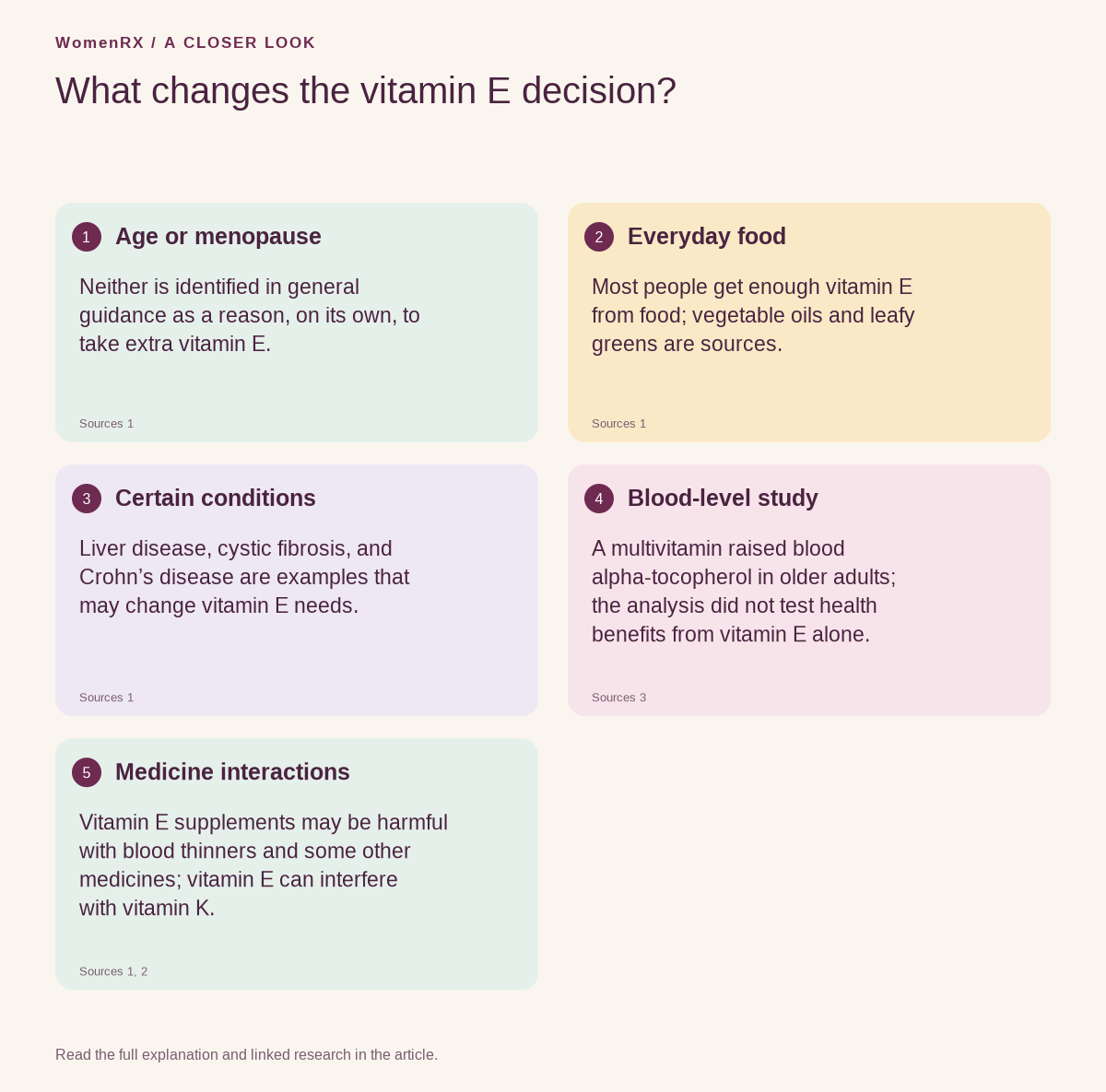
What changes the vitamin E decision?
Age or menopause: Neither is identified in general guidance as a reason, on its own, to take extra vitamin E.1
Everyday food: Most people get enough vitamin E from food; vegetable oils and leafy greens are sources.1
Certain conditions: Liver disease, cystic fibrosis, and Crohn’s disease are examples that may change vitamin E needs.1
Blood-level study: A multivitamin raised blood alpha-tocopherol in older adults; the analysis did not test health benefits from vitamin E alone.3
Medicine interactions: Vitamin E supplements may be harmful with blood thinners and some other medicines; vitamin E can interfere with vitamin K.12
Read the figure as text
These distinctions separate a possible reason to assess your needs from evidence that a supplement improves health.- Age or menopause: Neither is identified in general guidance as a reason, on its own, to take extra vitamin E.1
- Everyday food: Most people get enough vitamin E from food; vegetable oils and leafy greens are sources.1
- Certain conditions: Liver disease, cystic fibrosis, and Crohn’s disease are examples that may change vitamin E needs.1
- Blood-level study: A multivitamin raised blood alpha-tocopherol in older adults; the analysis did not test health benefits from vitamin E alone.3
- Medicine interactions: Vitamin E supplements may be harmful with blood thinners and some other medicines; vitamin E can interfere with vitamin K.12
Sources you can check
- Vitamin E: MedlinePlusAccessed 2026-09-25Return to first citation
- Vitamin K: MedlinePlusAccessed 2026-09-25Return to first citation
- Effects of Randomized Multivitamin Supplementation on Carotenoids and α-Tocopherol in the COcoa Supplement and Multivitamin Outcomes Study.Christopher CN, Erdman JW, Kim E, Black M, Rist PM, Tobias DK, Rautiainen S, Manson JE, Sesso HD. · Journal of the Academy of Nutrition and Dietetics · 2026Return to first citation