When to Take Green Tea Extract: What Timing Can Change
A useful time of day depends on your product’s directions, its caffeine information, and how caffeine affects your sleep.
Start with the product label. Green tea contains caffeine, and supplement labels may not accurately reflect actual ingredients or amounts. 2 General caffeine guidance says its effects may last four to six hours, but that doesn’t determine the best time for a particular extract. 1 If caffeine affects your sleep, factor in that response, and follow any product directions about taking it with food.
Start with the label, not the clock
Green tea contains caffeine, but supplement labels may not accurately reflect the actual ingredients or amounts. Check your product’s directions and any caffeine information it provides. If the amount isn’t listed, you can’t calculate its caffeine contribution from the label alone. 2
The caffeine timing figures below describe caffeine generally. They don’t, on their own, tell you the best time to take a particular green tea extract. Follow the product’s directions rather than choosing a schedule based on a claim that morning use is better.
Use your sleep response to choose a time
Caffeine reaches its peak level in your blood within about an hour, and you may feel its effects for four to six hours. People vary in how sensitive they are. 1 If caffeine affects your sleep, taking a product that contains it close to bedtime may be unhelpful. The four-to-six-hour estimate isn’t a guaranteed cutoff for good sleep.
For example, if you notice that a caffeinated product makes you feel more alert or disrupts your sleep, consider an earlier time if that fits the label. If unwanted effects continue, timing alone may not solve the problem. Remember to account for caffeine from other sources, too.
Stomach comfort is a separate question
If your product gives directions about taking it with food, follow those directions.
Pregnancy and breastfeeding call for more than a timing change
During pregnancy or breastfeeding, the question isn’t simply whether to take an extract in the morning or evening. MedlinePlus advises checking whether caffeine should be limited or avoided in these situations. 1 A small amount of caffeine consumed while breastfeeding passes into breast milk. 1 A review reports that fussiness, jitteriness, and poor sleep have been reported in infants when maternal caffeine intake is extremely high. It also reports that oral green tea extract during breastfeeding had not been studied in the evidence it reviewed. 2
Ask about the extract itself, not just its caffeine, before using it during pregnancy or while breastfeeding. Moving it to a different time of day doesn’t answer whether the product is suitable.
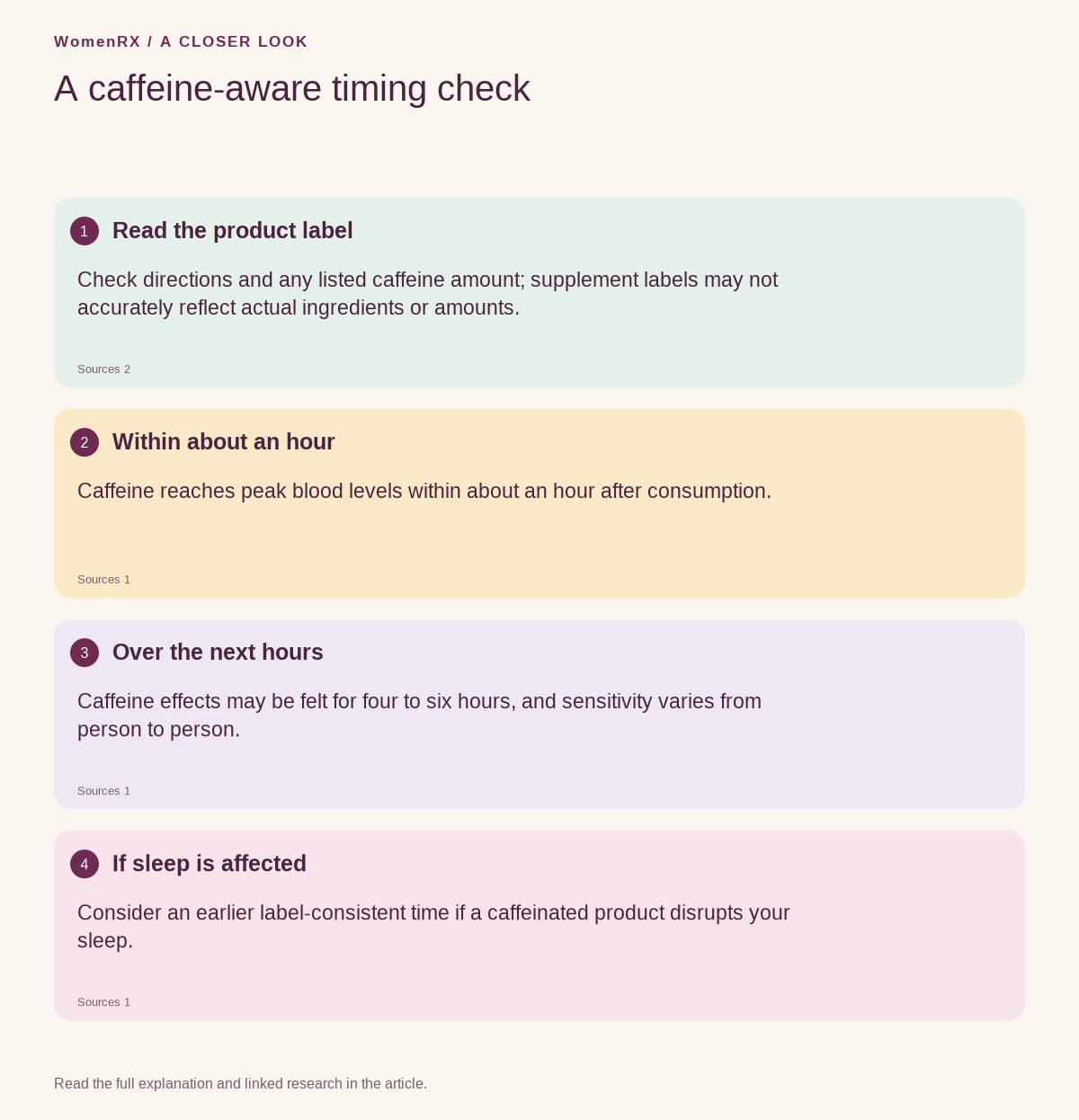
A caffeine-aware timing check
Read the product label: Check directions and any listed caffeine amount; supplement labels may not accurately reflect actual ingredients or amounts.2
Within about an hour: Caffeine reaches peak blood levels within about an hour after consumption.1
Over the next hours: Caffeine effects may be felt for four to six hours, and sensitivity varies from person to person.1
If sleep is affected: Consider an earlier label-consistent time if a caffeinated product disrupts your sleep.1
Read the figure as text
Use the product directions first, then weigh caffeine’s general timing and your own sleep response. These timing estimates don’t determine the best time for a particular extract.- Read the product label: Check directions and any listed caffeine amount; supplement labels may not accurately reflect actual ingredients or amounts.2
- Within about an hour: Caffeine reaches peak blood levels within about an hour after consumption.1
- Over the next hours: Caffeine effects may be felt for four to six hours, and sensitivity varies from person to person.1
- If sleep is affected: Consider an earlier label-consistent time if a caffeinated product disrupts your sleep.1
More questions, answered
Does taking green tea extract at night make it more effective?
Caffeine’s general timing information doesn’t tell you whether a particular green tea extract is more effective at night. If the product contains caffeine and you’re sensitive to it, taking it at night may affect your sleep. 1
What if my product doesn’t list a caffeine amount?
You can’t determine the product’s caffeine contribution from a label that doesn’t state the amount. Don’t assume it is caffeine-free; check the product information or ask the manufacturer.
Sources you can check
- Caffeine: MedlinePlusAccessed 2026-09-25Return to first citation
- Green Tea2006Return to first citation