When Persistent Fatigue Deserves a Closer Look
Night sweats can leave you tired, but fatigue that persists or disrupts daily life deserves a look beyond menopause.
If you’ve felt unusually tired for several weeks, or fatigue is making everyday activities difficult, make an appointment to discuss it. Night sweats and broken sleep may be part of the picture during perimenopause or menopause, but anemia, sleep apnea, thyroid disease, mood conditions, medicines, and other causes can also contribute. Note your sleep, bleeding, other symptoms, and what you’re no longer able to do comfortably. 134
Start with what the tiredness is changing
Fatigue is more than wishing you’d slept another hour. It can feel like a lack of energy that gets in the way of your usual activities. A demanding week or too little sleep may explain a short stretch of tiredness. If you’ve been tired for weeks, it isn’t improving, or it’s affecting daily life, it’s reasonable to arrange a medical assessment rather than wait for it to pass. 14
Be specific about the change. For example, are you struggling to finish a workday you used to manage, skipping walks because you feel drained, or needing to rest after ordinary errands? Those details help convey the impact more clearly than “I’m tired all the time.” 1
Look at the night, but don’t stop there
During perimenopause and menopause, trouble falling or staying asleep can affect the next day. Night sweats may make sleep problems worse, and poor sleep can make concentration and mood feel worse too. If you’re waking hot or sweaty and feeling tired the following day, that pattern is worth describing. It’s a possible explanation, not proof that menopause is the only cause. 3
Another sleep pattern points in a different direction: loud snoring, gasping or choking noises at night, and daytime tiredness can suggest sleep apnea. If someone has noticed those sounds, mention them even if you don’t remember waking. Sleep quality matters alongside the number of hours spent in bed. 14
You can work on sleep habits while arranging a review. A consistent sleep schedule and less caffeine late in the day may help if sleep has been disrupted. They aren’t a reason to dismiss fatigue that continues despite rest. 14
Notice clues that may change the assessment
Fatigue has many possible causes, so accompanying symptoms matter. Palpitations, shortness of breath, or looking unusually pale can occur with iron deficiency anemia. Feeling very thirsty, urinating more often, and losing weight may point toward diabetes. Feeling tired but also restless, anxious, irritable, or weak can be seen with an overactive thyroid. These are clues to discuss, not a way to diagnose yourself. 4
Mood belongs in the conversation too. Depression and anxiety can accompany fatigue, and research across people with common mental disorders finds that fatigue and depression can precede one another. That doesn’t mean fatigue is “just stress,” or that a physical cause has been ruled out. You can describe both changes in mood and changes in energy without having to decide which came first. 12
Bring up new medicines as well. Antihistamines, some antidepressants, and medicines for nausea or pain are among those that can contribute to tiredness. Note when you started or changed a medicine rather than stopping it on the assumption that it’s the cause. 1
If you still have periods, describe any change in bleeding alongside the fatigue. And if you’ve gone at least 12 months without a period, any vaginal bleeding, even spotting or pink or brown discharge, needs to be checked. That’s a separate reason to arrange care, whether or not you feel tired. 3
Make a short record that earns its place
You don’t need a perfect symptom diary. A few notes over several days can show a pattern you might otherwise miss. Record when the fatigue began and whether it’s improving; what it interrupts; how you sleep, including night sweats or reported snoring; changes in mood, bleeding, medicines, or supplements; and symptoms such as thirst, palpitations, or shortness of breath. MedlinePlus notes that a fatigue diary can help identify times of day when energy rises or falls. 14
At the visit, the next step should follow the history, not a one-size-fits-all fatigue test list. A clinician may ask about sleep, activity, appetite, and exercise, examine you, and consider tests based on what those findings suggest. For example, blood tests may help assess anemia, diabetes, or an overactive thyroid when appropriate. 14
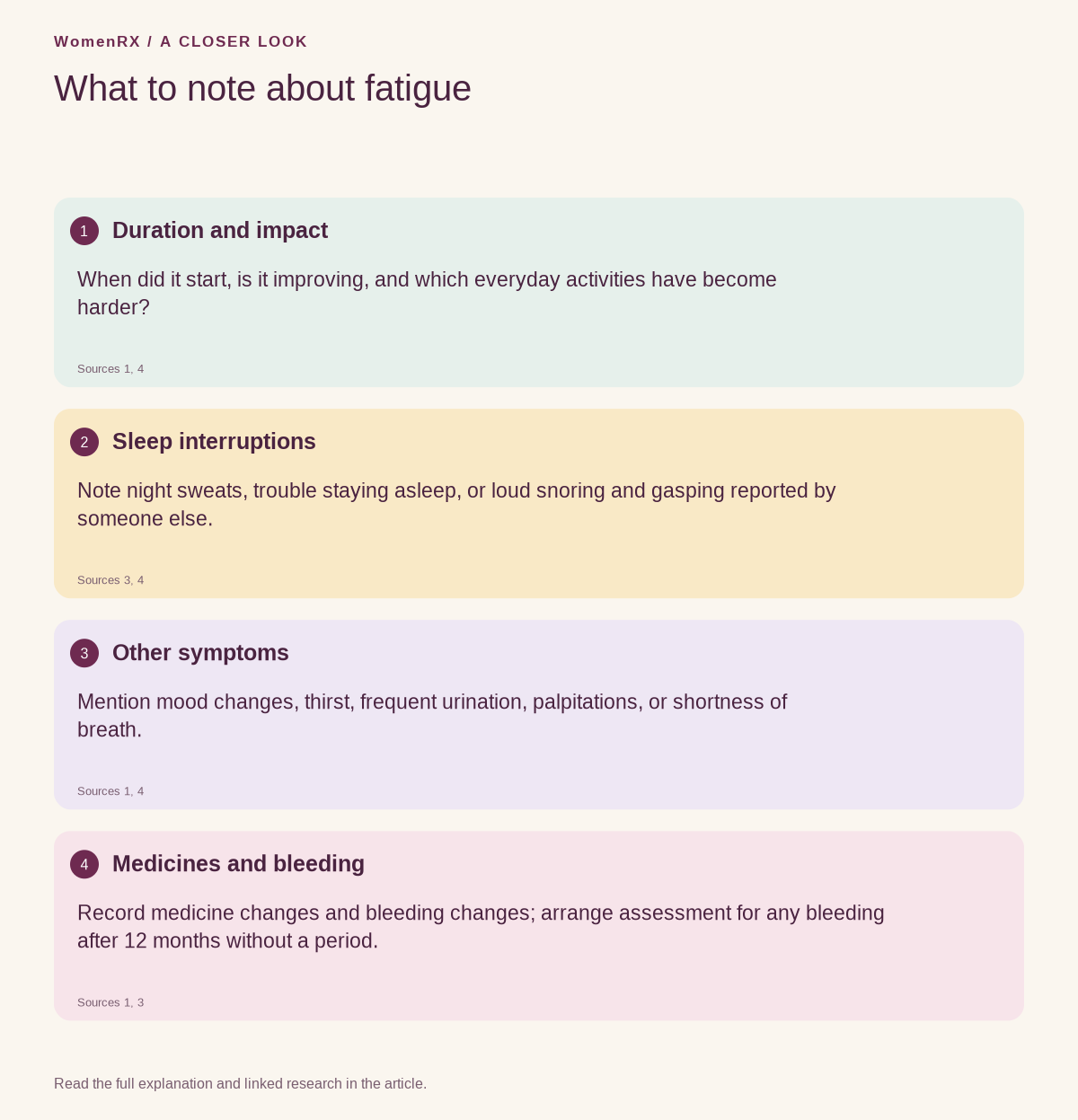
What to note about fatigue
Duration and impact: When did it start, is it improving, and which everyday activities have become harder?14
Sleep interruptions: Note night sweats, trouble staying asleep, or loud snoring and gasping reported by someone else.34
Other symptoms: Mention mood changes, thirst, frequent urination, palpitations, or shortness of breath.14
Medicines and bleeding: Record medicine changes and bleeding changes; arrange assessment for any bleeding after 12 months without a period.13
Read the figure as text
These notes can help separate a possible sleep pattern from other clues and show how much fatigue is affecting you. They are not a diagnostic score.- Duration and impact: When did it start, is it improving, and which everyday activities have become harder?14
- Sleep interruptions: Note night sweats, trouble staying asleep, or loud snoring and gasping reported by someone else.34
- Other symptoms: Mention mood changes, thirst, frequent urination, palpitations, or shortness of breath.14
- Medicines and bleeding: Record medicine changes and bleeding changes; arrange assessment for any bleeding after 12 months without a period.13
More questions, answered
What if I’m sleeping enough hours but still wake up tired?
Hours in bed don’t tell the whole story. Interrupted sleep, including waking with night sweats, may leave you tired; loud snoring or gasping can point toward sleep apnea. Tell your clinician what the night is like, not only how long you were in bed. 34
Should I ask for blood tests right away?
Describe the fatigue and any accompanying symptoms first. Blood tests may be useful to investigate possibilities such as anemia, diabetes, or an overactive thyroid, but the assessment should be guided by your history and examination rather than assuming everyone needs the same tests. 14
Sources you can check
- Fatigue: MedlinePlusAccessed 2026-09-25Return to first citation
- A systematic review of the prevalence of fatigue in common mental disorders (mood disorders, anxiety disorders, personality disorders, and trauma and stressor related disorders).Olsen RK, Arnfred SM, Randau M, Madsen C, Nielsen KD, Shaker AA, Masri H, Hovmand OR. · BMC psychiatry · 2026Return to first citation
- Symptoms of menopause and perimenopause - NHSAccessed 2026-09-25Return to first citation
- Tiredness and fatigue - NHSAccessed 2026-09-25Return to first citation