Vitamin D and Hormones: What the Studies Measure
The clearest trial findings are limited to certain blood markers in people with PCOS, not a general promise of hormone balance.
Vitamin D hasn’t been shown to balance hormones broadly. In randomized-trial reviews involving people with PCOS, supplementation was linked to a change in total testosterone, but findings for other hormone markers varied. These blood-test results don’t establish that vitamin D improves symptoms, fertility, or hormone levels in women without PCOS or during menopause. 1 2
“Hormone balance” needs a specific measure
Hormones have different roles, so “balance” isn’t one defined study outcome. To judge a vitamin D claim, look for three things: the group studied, the exact hormone measured, and whether researchers measured symptoms or only blood tests.
The most directly relevant evidence here concerns people with polycystic ovary syndrome (PCOS). Reviews of randomized trials examined vitamin D supplementation and blood markers in that specific group. Those results can’t automatically be applied to women generally, or to different life stages and conditions. 1 2
In PCOS, results vary by hormone marker
A 2021 meta-analysis combined 18 randomized controlled trials involving 1,060 people with PCOS. It found a significant improvement in total testosterone with vitamin D supplementation. But it found no significant effect on free testosterone, DHEA-S, sex hormone-binding globulin (SHBG), or free androgen index (FAI). In other words, the pooled result wasn’t a consistent shift across the androgen-related measures studied. 1
A separate review of nine randomized trials in women with PCOS described beneficial findings for total testosterone, SHBG, and FAI in some comparisons. That doesn’t mean every trial found those changes or that every hormone marker responds. The reviews considered different sets of trials and comparisons, so their findings are best read as limited signals in a condition-specific research area, not a general supplement effect. 2
The meta-analysis also reported changes in some inflammation and oxidative-stress measures. Those are laboratory outcomes, too. A change in a blood marker, whether hormonal or not, does not by itself show that someone’s symptoms or health improved. 1
A lab result isn’t the same as symptom relief
The studies summarized in these reviews focus on blood markers. They don’t establish that vitamin D improves PCOS symptoms, menstrual patterns, or fertility. Nor does a finding about total testosterone in PCOS show that supplementation changes hormone-related symptoms in women without PCOS. 1 2
That distinction matters when a product claim moves from “a study measured a hormone” to “this will balance your hormones.” The first statement may describe a research outcome; the second promises a broader effect that these findings don’t establish.
Don’t transfer PCOS findings to menopause
PCOS trials answer a question about people with PCOS. They don’t tell us whether vitamin D changes sex hormones or related symptoms during perimenopause or after menopause. The reviews discussed here also don’t establish an effect on other menstrual conditions or fertility outcomes. Those questions require studies in the relevant groups that measure the outcomes people care about, not just a hormone level. 1 2
A practical way to assess a “hormone balance” claim is to ask: Which hormone changed? In which group? And did the study show a meaningful change in symptoms or another health outcome? For vitamin D, the findings are specific to certain blood markers in PCOS, not evidence of a general hormone-balancing treatment.
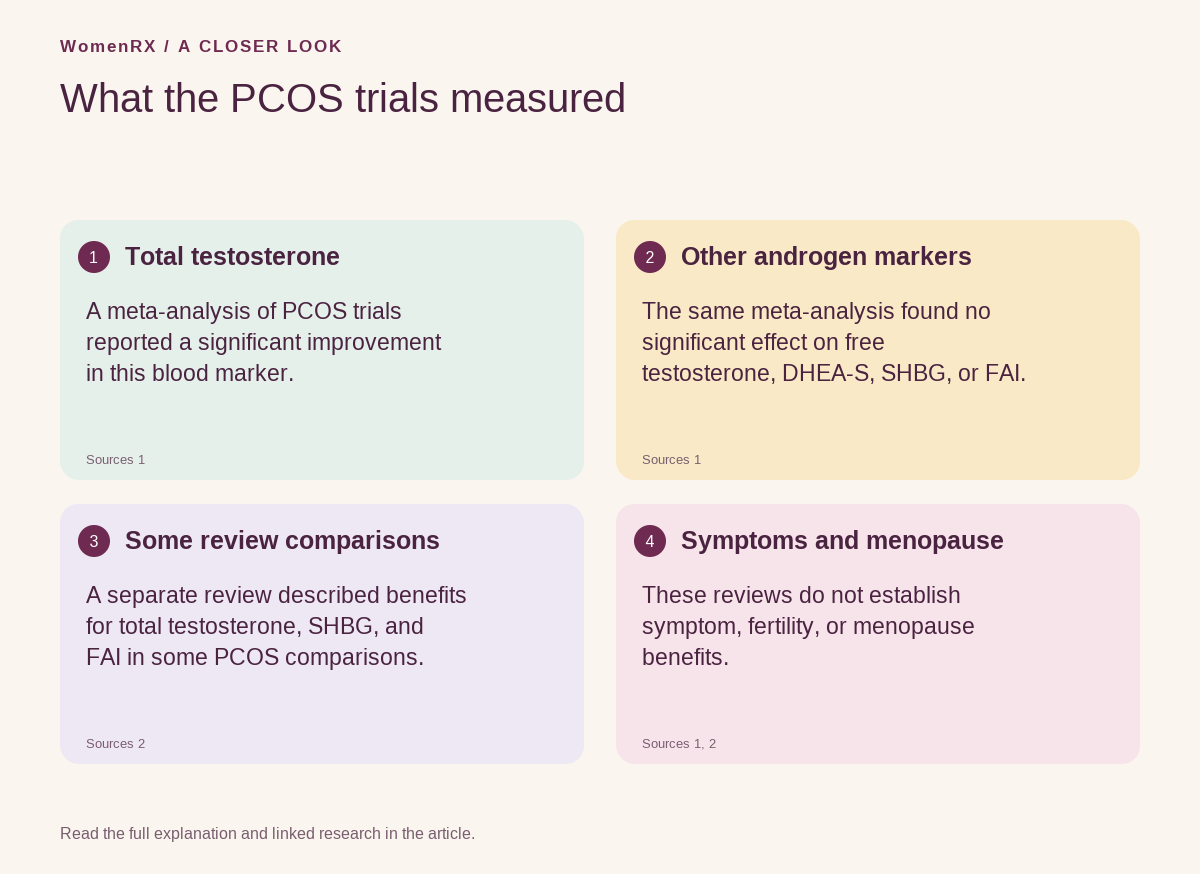
What the PCOS trials measured
Total testosterone: A meta-analysis of PCOS trials reported a significant improvement in this blood marker.1
Other androgen markers: The same meta-analysis found no significant effect on free testosterone, DHEA-S, SHBG, or FAI.1
Some review comparisons: A separate review described benefits for total testosterone, SHBG, and FAI in some PCOS comparisons.2
Symptoms and menopause: These reviews do not establish symptom, fertility, or menopause benefits.12
Read the figure as text
Separate the blood markers reported in PCOS trials from symptoms and populations those results do not establish.- Total testosterone: A meta-analysis of PCOS trials reported a significant improvement in this blood marker.1
- Other androgen markers: The same meta-analysis found no significant effect on free testosterone, DHEA-S, SHBG, or FAI.1
- Some review comparisons: A separate review described benefits for total testosterone, SHBG, and FAI in some PCOS comparisons.2
- Symptoms and menopause: These reviews do not establish symptom, fertility, or menopause benefits.12
Sources you can check
- Vitamin D improves levels of hormonal, oxidative stress and inflammatory parameters in polycystic ovary syndrome: a meta-analysis study.Zhao JF, Li BX, Zhang Q. · Annals of palliative medicine · 2021Return to first citation
- Effects of vitamin D supplementation in women with polycystic ovary syndrome: a review.Menichini D, Facchinetti F. · Gynecological endocrinology : the official journal of the International Society of Gynecological Endocrinology · 2020Return to first citation