Vitamin D and Bone Health: Who Benefits From Supplements?
Vitamin D helps your body use calcium, but taking extra isn’t a stand-alone way to prevent fractures.
Vitamin D helps your body absorb calcium and keep bones properly mineralized. If you’re deficient, correcting that deficiency matters. But taking a supplement doesn’t guarantee fracture prevention, including after menopause. A vitamin D blood test and a bone-density scan answer different questions; your need for either depends on your deficiency risks and your broader risk of osteoporosis and fractures. 1 2 4 5
What vitamin D does for your bones
Vitamin D helps your gut absorb calcium, a building block of bone. It also helps bone mineralize normally. When vitamin D deficiency is severe, adults can develop osteomalacia: bones become weak because they aren’t properly mineralized. Osteoporosis is a different condition, involving low bone density and deterioration of bone structure. 2 4 5
That’s why treating a deficiency and taking extra vitamin D when your status is adequate are different decisions. The 2024 Royal Australian College of General Practitioners and Healthy Bones Australia osteoporosis guideline says combined calcium and vitamin D supplementation is more effective at reducing fracture risk in people who have calcium and vitamin D deficiency, rather than in healthy people living outside institutions. It does not establish the same benefit for vitamin D alone, or a need for every postmenopausal woman to take a supplement. 5
Two tests, two different questions
If you’re concerned about bone strength, it helps to be clear about what you’re trying to find out:
- Could my vitamin D be low? A blood test measures vitamin D status. Older age, limited sun exposure, difficulty absorbing nutrients, and certain medicines can raise the chance of deficiency. MedlinePlus lists some anti-seizure, steroid, cholesterol, and weight-loss medicines among those that may affect vitamin D levels. A risk factor is a reason to consider the question, not proof of deficiency. 2
- Do I have low bone density? A bone-density scan measures bone mass and can identify low bone density or osteoporosis. It doesn’t measure vitamin D status. Family history and certain medical conditions can also affect bone density, so a vitamin D result alone can’t tell you how strong your bones are. 1 2
Around menopause and later in life, the useful question isn’t simply, “Should I take vitamin D?” It’s whether you have a reason to suspect deficiency, what your overall fracture risk looks like, and whether a bone-density assessment is appropriate. The Australian guideline for postmenopausal women and men over 50 emphasizes clinical risk factors and fracture-risk assessment rather than treating everyone alike. 5
Where supplements fit in a broader plan
Getting enough calcium and vitamin D, staying physically active, and addressing low bone density or osteoporosis when present are different parts of protecting bone health. Weight-bearing activities such as walking, dancing, or tennis are examples of physical activity MedlinePlus includes in fracture-prevention advice. If you already have osteoporosis, a supplement doesn’t replace an assessment of whether you need bone-specific treatment. 3
If a test shows vitamin D deficiency, the next question is what may be causing it. Limited intake is one possibility; difficulty absorbing vitamin D, certain medicines, and kidney or liver problems are others. That context matters when deciding how to address a low result. 2
More isn’t automatically better. Very high vitamin D levels can raise blood calcium and harm the kidneys, and MedlinePlus notes that most cases of vitamin D toxicity follow overuse of supplements. Rather than choosing a high dose in the hope of stronger bones, clarify whether you’re addressing a deficiency, meeting your usual intake needs, or evaluating a separate risk of osteoporosis. 2 4
The distinction is practical: a vitamin D test can help answer whether you’re low; a bone-density scan and clinical risk assessment help answer whether your bones need further attention. Neither result, on its own, makes a supplement a complete fracture-prevention plan. 1 2 5
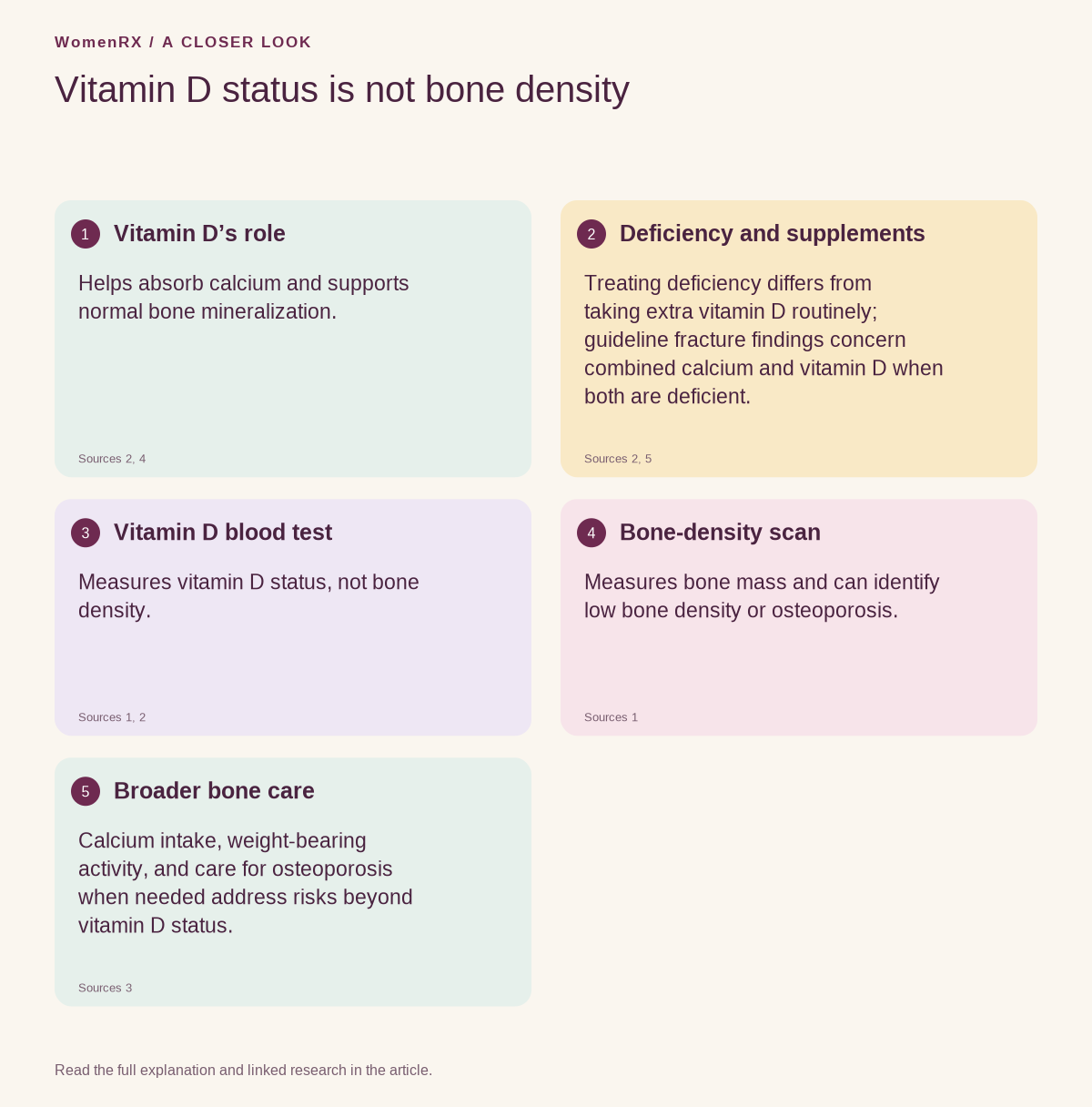
Vitamin D status is not bone density
Vitamin D’s role: Helps absorb calcium and supports normal bone mineralization.24
Deficiency and supplements: Treating deficiency differs from taking extra vitamin D routinely; guideline fracture findings concern combined calcium and vitamin D when both are deficient.25
Vitamin D blood test: Measures vitamin D status, not bone density.12
Bone-density scan: Measures bone mass and can identify low bone density or osteoporosis.1
Broader bone care: Calcium intake, weight-bearing activity, and care for osteoporosis when needed address risks beyond vitamin D status.3
Read the figure as text
Four related pieces of bone health answer different questions.- Vitamin D’s role: Helps absorb calcium and supports normal bone mineralization.24
- Deficiency and supplements: Treating deficiency differs from taking extra vitamin D routinely; guideline fracture findings concern combined calcium and vitamin D when both are deficient.25
- Vitamin D blood test: Measures vitamin D status, not bone density.12
- Bone-density scan: Measures bone mass and can identify low bone density or osteoporosis.1
- Broader bone care: Calcium intake, weight-bearing activity, and care for osteoporosis when needed address risks beyond vitamin D status.3
More questions, answered
Is a vitamin D blood test the same as a bone-density scan?
No. The blood test measures vitamin D status. A bone-density scan measures bone mass and can identify low bone density or osteoporosis. One result can’t stand in for the other. 1 2
Sources you can check
- Bone Density | Bone Mineral Density | BMD | MedlinePlusAccessed 2026-09-25Return to first citation
- Vitamin D Deficiency: MedlinePlusAccessed 2026-09-25Return to first citation
- Fracture | MedlinePlusAccessed 2026-09-25Return to first citation
- Vitamin D - Health Professional Fact SheetAccessed 2026-09-25Return to first citation
- 2024 Royal Australian College of General Practitioners and Healthy Bones Australia guideline for osteoporosis management and fracture prevention in postmenopausal women and men over 50 years of age.Wong P, Chen W, Ewald D, Girgis C, Rawlin M, Tsingos J, Waters J. · The Medical journal of Australia · 2025Return to first citation