Tretinoin for Acne and Sun-Damaged Skin
Topical tretinoin treats acne and can improve some sun-related skin changes, but the treatment goal and your skin’s tolerance shape the plan.
Topical tretinoin is prescribed for acne. Research also supports improvement in some signs of photoaging, especially fine wrinkles, roughness, and uneven pigmentation. These are different treatment goals, and the directions for a particular acne product shouldn’t be assumed to cover photoaging. Redness and peeling can make the choice of product and routine as relevant as the hoped-for result. 1 3
Start with what you want to treat
Tretinoin is a topical retinoid used for acne. The US label for one 0.025% tretinoin cream identifies acne vulgaris as its indication; it says the long-term safety and effectiveness of that product for other conditions haven’t been established. That label tells you what the cream is indicated for, not everything known about topical tretinoin. 1
Photoaging is a separate conversation. A review describes improvement with topical tretinoin in some changes associated with sun exposure. Fine wrinkles, surface roughness, and uneven pigmentation show the most consistent improvement, while other signs don’t respond equally. If your main concern is a particular change, such as rough texture rather than deeper wrinkles, name it when discussing whether tretinoin fits your goal. Regular broad-spectrum sunscreen use is also part of care for photoaged skin. 3
Product choice is about more than a percentage
Ask which formulation is being recommended and why, rather than choosing by strength alone. The directions and cautions below come from the label for a specific acne cream; a prescription for another product may have different instructions. It’s worth making sure the plan matches whether you’re treating acne, photoaging, or both. 1
For acne, the labeled cream is applied lightly to the affected area before bed, not just dotted onto individual spots. Its instructions say to keep it away from the eyes, mouth, creases beside the nose, and other mucous membranes. They also recommend gentle cleansing instead of scrubbing and letting the skin dry before applying the cream. Follow the directions for your own prescription if they differ. 1
What else is in your routine matters. The cream label advises caution with abrasive or strongly drying cleansers and cosmetics, as well as products containing salicylic acid, sulfur, or resorcinol. That doesn’t mean every combination is ruled out. It means your other products belong in the conversation when you’re working out a routine your skin can tolerate. 1
Know when irritation changes the plan
Redness and peeling can happen with topical tretinoin. If irritation becomes difficult to tolerate, the cream label describes less frequent use, a temporary pause, or stopping as possible responses. Severe or persistent irritation calls for stopping the product and getting guidance, rather than trying to push through it. Eczematous skin needs particular caution because the label warns of severe irritation there. 1
For pregnancy, the topical cream label says there aren’t adequate, well-controlled studies in pregnant women and that use during pregnancy should depend on whether the potential benefit justifies the potential risk. These are cautions for topical tretinoin cream. They aren’t the instructions for oral tretinoin capsules, which are a different treatment. 1
Acne can have hormonal influences
Hormones can contribute to acne by increasing oil production and changing the lining of hair follicles, which can help block pores. That explains one way hormones may influence acne, but it doesn’t establish how commonly adult women’s breakouts follow a menstrual pattern. A US cream label identifies tretinoin as a topical treatment for acne vulgaris, not as a women-only treatment. 2 1
Tretinoin is also not the only acne option. Acne guidance describes benzoyl peroxide and, for more severe acne, other prescription treatments. Painful nodules or cysts deserve attention because they may need different treatment to reduce the risk of scarring. If that’s what your acne looks or feels like, a topical routine alone may not be the whole answer. 2
The most useful questions are specific to your goal: Is this product being prescribed for my acne, sun-related changes, or both? How should it fit with the products I already use? And what change in irritation means the plan needs adjusting? Those answers make the prescription easier to use as intended. 1 3
What tretinoin evidence answers
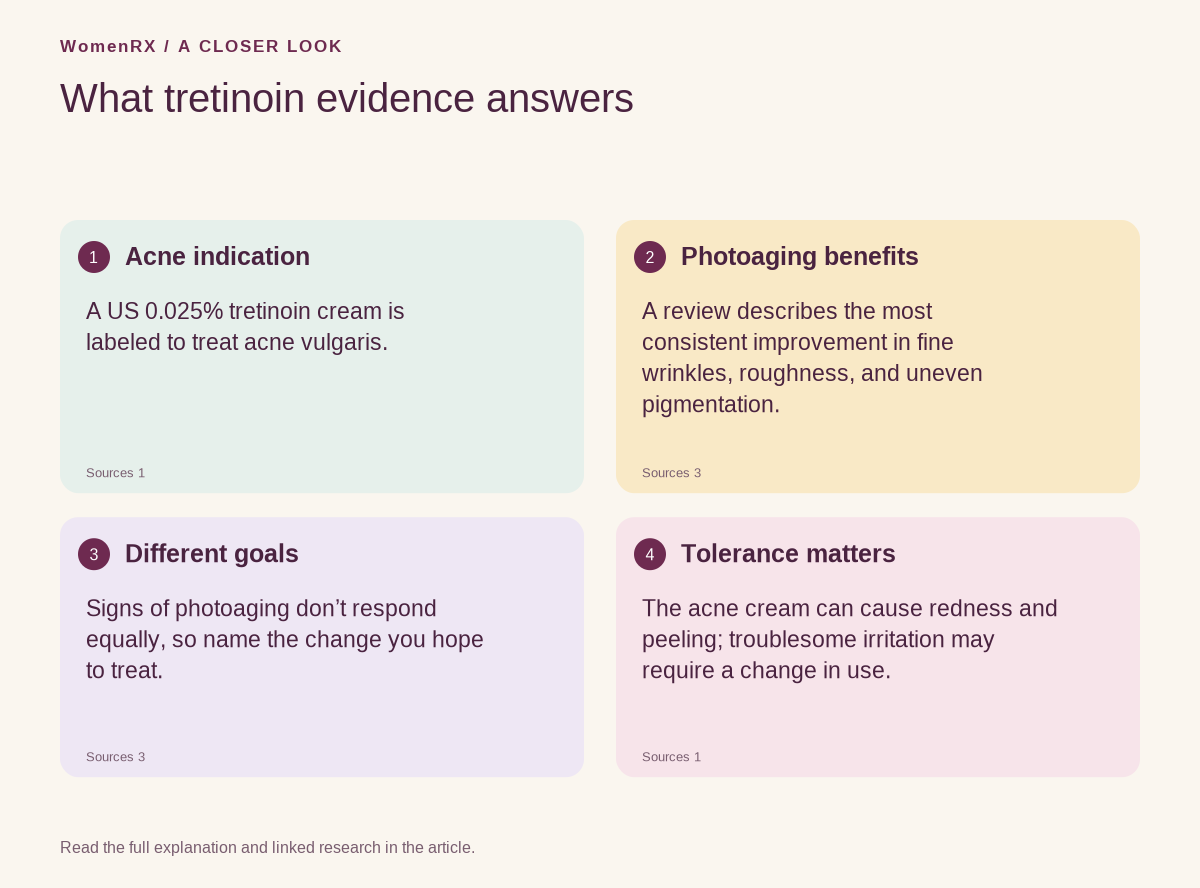
Acne indication: A US 0.025% tretinoin cream is labeled to treat acne vulgaris.1
Photoaging benefits: A review describes the most consistent improvement in fine wrinkles, roughness, and uneven pigmentation.3
Different goals: Signs of photoaging don’t respond equally, so name the change you hope to treat.3
Tolerance matters: The acne cream can cause redness and peeling; troublesome irritation may require a change in use.1
Read the figure as text
The treatment goal changes which evidence and product details matter.- Acne indication: A US 0.025% tretinoin cream is labeled to treat acne vulgaris.1
- Photoaging benefits: A review describes the most consistent improvement in fine wrinkles, roughness, and uneven pigmentation.3
- Different goals: Signs of photoaging don’t respond equally, so name the change you hope to treat.3
- Tolerance matters: The acne cream can cause redness and peeling; troublesome irritation may require a change in use.1
Sources you can check
- TRETINOIN CREAM [REDPHARM DRUG] | US prescribing information and patient instructionsAccessed 2026-09-25Return to first citation
- Acne - NHSAccessed 2026-09-25Return to first citation
- Tretinoin peel: a critical view.Sumita JM, Leonardi GR, Bagatin E. · Anais brasileiros de dermatologia · 2017Return to first citation