Tretinoin and Alcohol: A Drink or a Skin Product?
Topical tretinoin cream labeling cautions about high-alcohol skin products but does not list drinking alcohol as an interaction.
If you use topical tretinoin, a drink and an alcohol-containing toner are different questions. The cream labeling advises caution with skin products containing high concentrations of alcohol because of a possible interaction. It does not list drinking alcohol as an interaction. Tretinoin can also irritate skin, so pay attention to products that leave treated areas dry or uncomfortable. 3
A drink isn’t a product applied to your face
The warning in topical tretinoin cream labeling is about products used on the skin. It advises caution with products containing high concentrations of alcohol because of a possible interaction with tretinoin. The labeling does not list drinking alcohol as an interaction with the cream. That distinction is useful, though an interaction not appearing on the label is not proof that every possibility has been studied or ruled out. 3
Alcohol has health effects of its own, which vary with factors such as how much you drink and your overall health. Those considerations are separate from the topical skincare warning. 1 This question also shouldn’t be used to draw conclusions about alcohol during pregnancy.
What to watch for in your routine
The label’s high-alcohol caution does not say that every product with “alcohol” on its ingredient list is unsuitable. It specifies high concentrations and calls the concern a possible interaction, without identifying skin irritation as the reason for that particular warning. 3
There’s a related, practical skin concern. Tretinoin cream can cause redness and peeling where you apply it. Its labeling separately advises caution with products that have a strong drying effect, including some soaps and cosmetics. For example, if an astringent toner leaves your treated skin stinging and flaky, setting that toner aside gives you one less potential source of discomfort. That’s a way to respond to your skin, not a test for a drug interaction. 3
If your skin becomes severely or persistently irritated, the cream’s instructions say to stop using tretinoin and contact the clinician who prescribed it. Redness with swelling, blisters, or crusting also deserves attention rather than being treated as routine dryness. 3
Make sure you mean topical tretinoin
Tretinoin also comes as oral capsules used for a different condition. Capsule information, including its warnings and interactions, should not be substituted for guidance about cream applied to the skin. 23
For a topical routine, the useful distinction is this: drinking alcohol isn’t listed as an interaction in the cream labeling; high-alcohol skin products carry a specific caution about a possible interaction; and strongly drying products may add to skin discomfort while you use tretinoin. 3
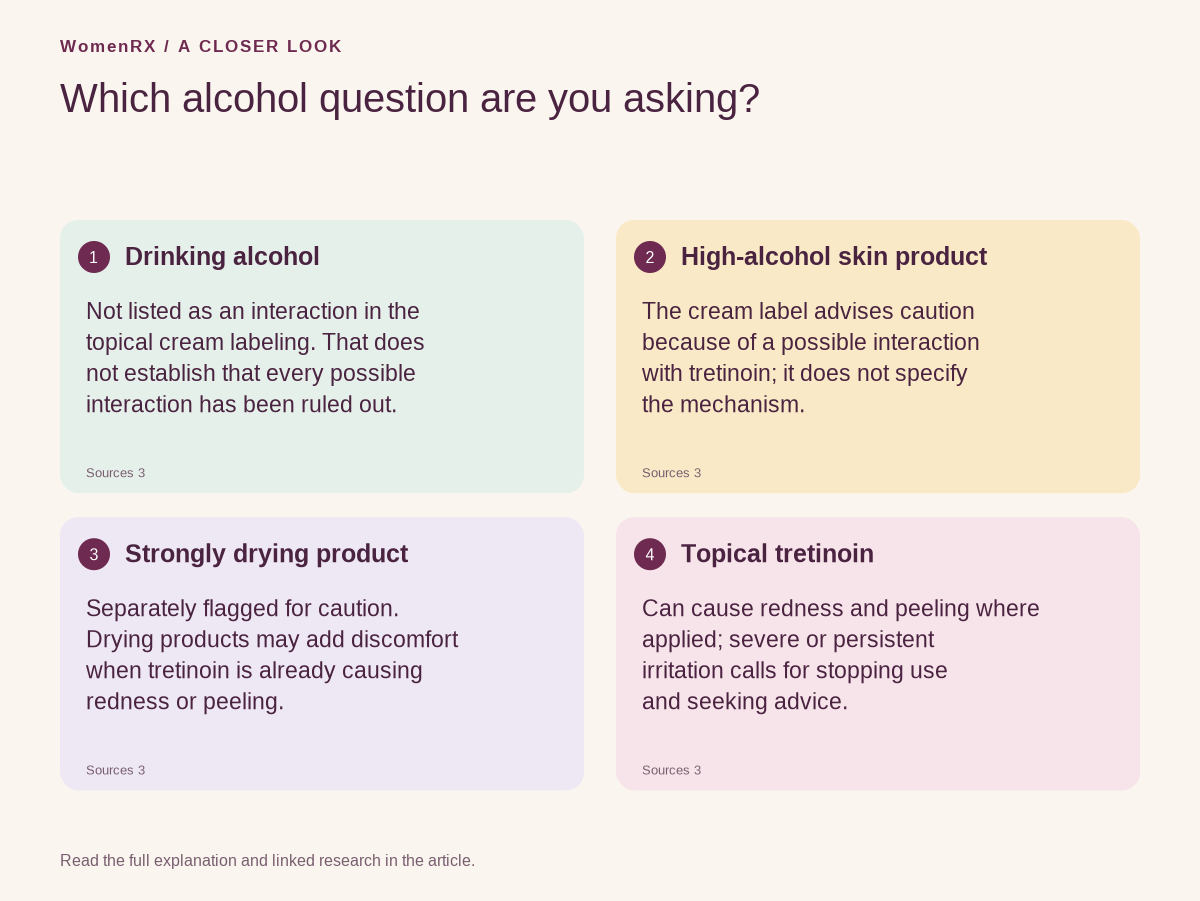
Which alcohol question are you asking?
Drinking alcohol: Not listed as an interaction in the topical cream labeling. That does not establish that every possible interaction has been ruled out.3
High-alcohol skin product: The cream label advises caution because of a possible interaction with tretinoin; it does not specify the mechanism.3
Strongly drying product: Separately flagged for caution. Drying products may add discomfort when tretinoin is already causing redness or peeling.3
Topical tretinoin: Can cause redness and peeling where applied; severe or persistent irritation calls for stopping use and seeking advice.3
Read the figure as text
The relevant label language changes depending on whether you mean a drink or something applied to treated skin.- Drinking alcohol: Not listed as an interaction in the topical cream labeling. That does not establish that every possible interaction has been ruled out.3
- High-alcohol skin product: The cream label advises caution because of a possible interaction with tretinoin; it does not specify the mechanism.3
- Strongly drying product: Separately flagged for caution. Drying products may add discomfort when tretinoin is already causing redness or peeling.3
- Topical tretinoin: Can cause redness and peeling where applied; severe or persistent irritation calls for stopping use and seeking advice.3
More questions, answered
Do I need to avoid every ingredient called alcohol?
No blanket avoidance rule appears in the cream labeling. It cautions about skin products with high concentrations of alcohol, not every product whose ingredient list contains the word. Check the specific product and how your skin responds. 3
Sources you can check
- Alcohol | Drinking | MedlinePlusAccessed 2026-09-25Return to first citation
- TRETINOIN CAPSULE [PAR HEALTH USA, LLC] | US prescribing information and patient instructionsAccessed 2026-09-25Return to first citation
- TRETINOIN CREAM [REDPHARM DRUG] | US prescribing information and patient instructionsAccessed 2026-09-25Return to first citation