Paroxetine for Hot Flashes: What About Alcohol?
It’s best not to drink while taking paroxetine, because alcohol can increase the chance of side effects.
If you take paroxetine for menopausal hot flashes, the practical guidance is to avoid alcohol: it can increase the chance of side effects. That advice applies to paroxetine generally, not just its use for menopause. If you drink or are thinking about drinking, ask a pharmacist or prescriber to review your particular product, other medicines, drinking pattern, and any symptoms you’ve noticed.4
The advice is about paroxetine, not menopause
Brisdelle is a paroxetine product used for moderate to severe hot flashes associated with menopause. Paroxetine is also used for other conditions, and the amount prescribed can depend on why you take it. The guidance on alcohol is broader: it’s best not to drink while taking paroxetine because alcohol can increase the chance of side effects.14
That doesn’t mean every person will feel the same effect after a drink. It also isn’t a basis for naming a number of drinks that’s safe for you. Alcohol can affect clear thinking, mood, coordination, and physical control on its own. Those effects matter when you’re deciding whether to drink, especially if you need to drive or do something that requires steady attention.2
Which side effects could be harder to sort out?
SSRIs, the medicine group that includes paroxetine, can cause nausea, dizziness, shakiness, or agitation. Alcohol may also affect how you feel and function. For example, if you feel dizzy after drinking, you may not be able to tell from that experience alone how much is due to alcohol, the medicine, or both. Let a pharmacist or prescriber know if a symptom is new, troublesome, or isn’t improving rather than assuming it’s just part of menopause.32
Don’t stop paroxetine suddenly to make room for a drink. Stopping it suddenly can cause withdrawal symptoms. If drinking is a regular part of your life, that’s a reason to discuss a workable plan for your hot-flash treatment, not to change the medicine on your own.4
What makes the conversation specific to you?
A pharmacist or prescriber can give more useful advice if they know which paroxetine product you take and why. Brisdelle is a 7.5 mg product for menopausal hot flashes; paroxetine products used for other conditions may be prescribed differently. Don’t assume someone else’s experience with paroxetine applies to your prescription.14
Also describe how you actually drink, whether that means an occasional drink, several drinks at a time, or drinking most evenings. Alcohol’s effects and the risks of drinking more are not the same in every situation.2 Mention every other medicine you take rather than asking only about paroxetine and alcohol. Paroxetine has other medicine interactions: for example, studies described in Brisdelle’s prescribing information found changes in paroxetine levels when a different paroxetine product was taken with cimetidine, phenobarbital, or phenytoin. Those studies used a different paroxetine product and dosing, so they don’t predict your individual result, but they show why a full medicine review matters.1
Finally, say what you’ve noticed. Feeling dizzy or sick, having trouble thinking clearly, or noticing a change in mood gives the conversation a practical starting point. You don’t have to decide on your own whether alcohol or paroxetine caused it.23
The bottom line is straightforward: avoiding alcohol follows paroxetine patient guidance. If that doesn’t fit your circumstances, bring your product name, medicine list, drinking pattern, and symptoms to a pharmacist or prescriber for advice that fits you.4
Four details to bring up
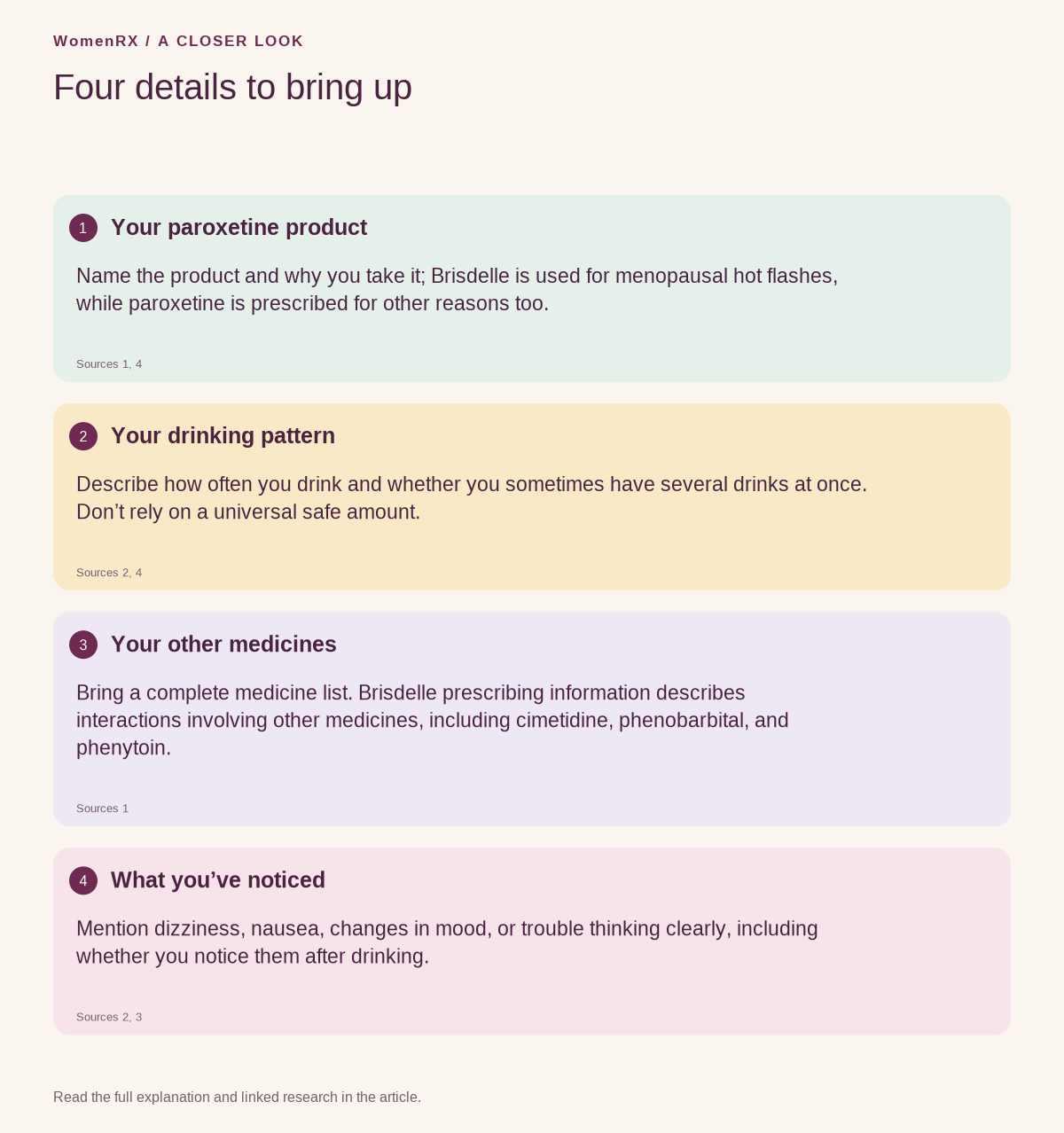
Your paroxetine product: Name the product and why you take it; Brisdelle is used for menopausal hot flashes, while paroxetine is prescribed for other reasons too.14
Your drinking pattern: Describe how often you drink and whether you sometimes have several drinks at once. Don’t rely on a universal safe amount.24
Your other medicines: Bring a complete medicine list. Brisdelle prescribing information describes interactions involving other medicines, including cimetidine, phenobarbital, and phenytoin.1
What you’ve noticed: Mention dizziness, nausea, changes in mood, or trouble thinking clearly, including whether you notice them after drinking.23
Read the figure as text
Use these prompts to make an alcohol-and-paroxetine conversation specific to your situation. This is not a test for whether drinking is safe.- Your paroxetine product: Name the product and why you take it; Brisdelle is used for menopausal hot flashes, while paroxetine is prescribed for other reasons too.14
- Your drinking pattern: Describe how often you drink and whether you sometimes have several drinks at once. Don’t rely on a universal safe amount.24
- Your other medicines: Bring a complete medicine list. Brisdelle prescribing information describes interactions involving other medicines, including cimetidine, phenobarbital, and phenytoin.1
- What you’ve noticed: Mention dizziness, nausea, changes in mood, or trouble thinking clearly, including whether you notice them after drinking.23
More questions, answered
Does taking paroxetine for hot flashes change the alcohol advice?
The advice to avoid alcohol applies to paroxetine generally, including when it is taken for menopausal hot flashes, because drinking can increase the chance of side effects. Brisdelle is a paroxetine product prescribed for menopausal hot flashes.41
Sources you can check
- BRISDELLE (PAROXETINE) CAPSULE [LEGACY PHARMA USA, INC.] | US prescribing information and patient instructionsAccessed 2026-09-25Return to first citation
- Alcohol | Drinking | MedlinePlusAccessed 2026-09-25Return to first citation
- Other medicines for menopause symptoms - NHSAccessed 2026-09-25Return to first citation
- Paroxetine: a medicine to treat depression - NHSAccessed 2026-09-25Return to first citation