Milia or Acne? How to Tell and What to Do
Milia are tiny, firm keratin cysts that often appear on the face and can usually be left alone, but a white bump isn’t automatically milia.
Milia are small, firm, white bumps caused by keratin trapped just beneath the skin; they’re usually benign and temporary. 4 Acne can also cause white bumps, so appearance alone may not settle it. 1 4 Leaving a likely milium alone is reasonable. If you’re unsure what a bump is or want it removed, don’t pierce or squeeze it yourself; have it identified first.
What might make a bump look like milia?
A milium (the singular of milia) is a small keratin cyst just beneath the skin. Milia often look like firm, white or pearly bumps and commonly appear on the face, though they can occur elsewhere. Primary milia may arise on their own; secondary milia can follow skin trauma or occur with an underlying skin condition or medication. 4
That appearance is a clue, not a diagnosis. Acne can also produce white bumps. A whitehead is a type of acne spot, while acne may also cause blackheads, tender red bumps, or bumps with a white tip from pus. A small, firm, pale bump without obvious redness may fit milia better than inflamed acne, but the overlap means you can’t reliably identify every bump at home. 1 4
Location and pattern can offer other clues. Rough, similar-looking bumps grouped on the upper arms, legs, or buttocks may be keratosis pilaris, another condition that can resemble milia. 3 If you can’t tell what a bump is, having it examined makes more sense than trying to open it.
Leaving it alone is a reasonable option
Milia are described as benign and transient, so if the bumps don’t bother you and you’re reasonably sure what they are, watchful waiting is a sensible choice. They aren’t the same as acne, and acne treatments shouldn’t be assumed to treat a bump that hasn’t been identified as acne. 1 4
Don’t pierce or scrape an unidentified bump: doing so causes skin trauma, which is associated with secondary milia. 4 It may not be milia. If it’s an acne spot, squeezing it can make it worse and cause permanent scarring. 1
When removal or an assessment makes sense
If the bump is bothering you, has lasted and continues to concern you, or you can’t tell whether it’s milia, having it identified is a useful next step. Secondary milia can be associated with skin trauma or an underlying skin problem. 4 That association alone doesn’t mean a bump needs removal.
A clinician can examine the bump before you decide whether to leave it alone or discuss removal. The choice starts with identifying what the bump actually is, not opening it at home.
What might removal involve? A review of pediatric and adolescent skin growths that includes milia describes observation or curettage with electrodessication. Curettage means removing a growth with an instrument; electrodessication uses an electrical treatment. That review does not establish the preferred procedure for adult milia, so the first step is confirming what the bump is and discussing whether removal is worthwhile. 2
When to reconsider what the bump might be
If a bump is red or tender, has a pus-filled center, or appears with blackheads, acne may be a better fit than milia. 1 4 If it’s a firm pale bump and you’re uncertain, skip home extraction and let a clinician identify it first.
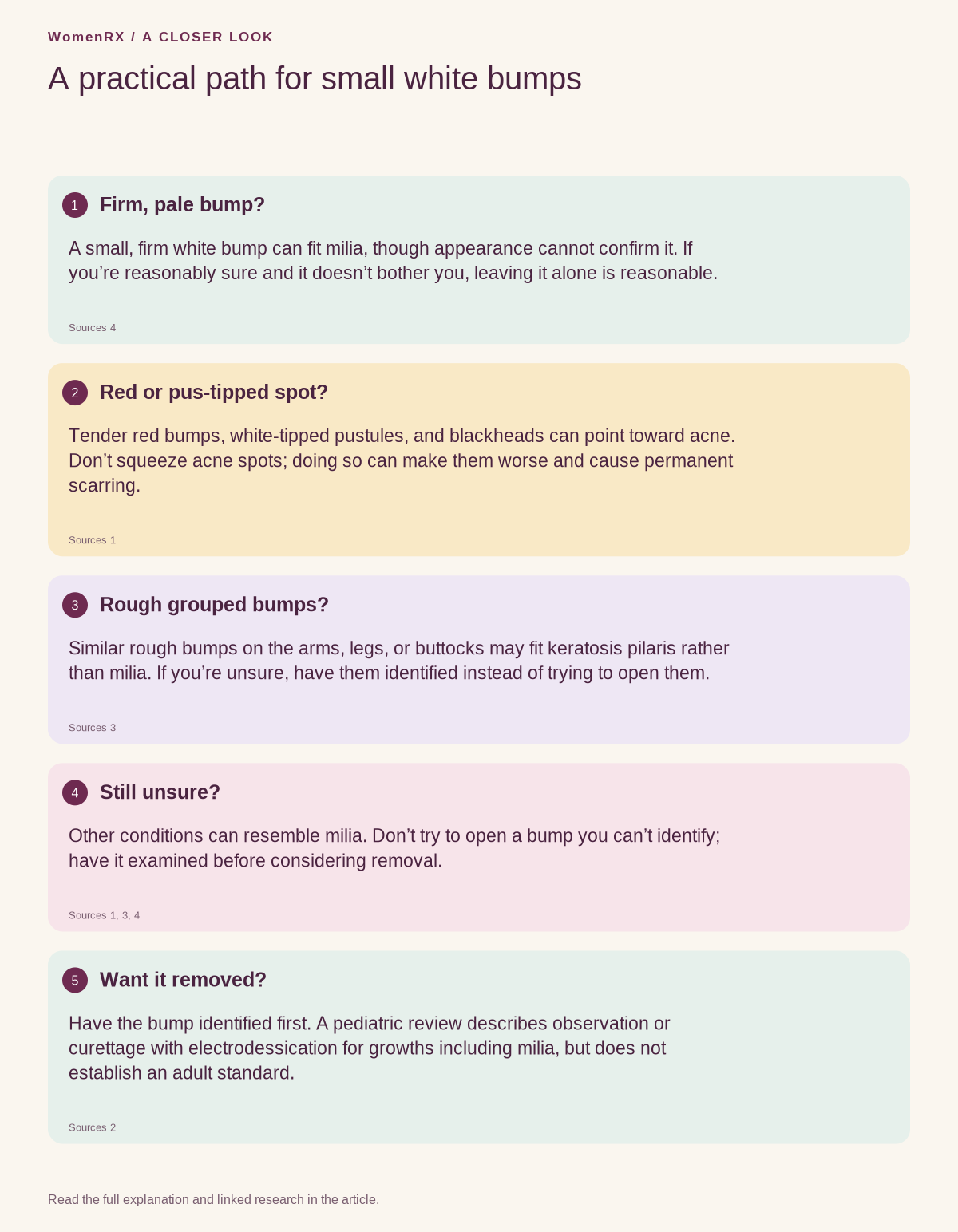
A practical path for small white bumps
Firm, pale bump?: A small, firm white bump can fit milia, though appearance cannot confirm it. If you’re reasonably sure and it doesn’t bother you, leaving it alone is reasonable.4
Red or pus-tipped spot?: Tender red bumps, white-tipped pustules, and blackheads can point toward acne. Don’t squeeze acne spots; doing so can make them worse and cause permanent scarring.1
Rough grouped bumps?: Similar rough bumps on the arms, legs, or buttocks may fit keratosis pilaris rather than milia. If you’re unsure, have them identified instead of trying to open them.3
Still unsure?: Other conditions can resemble milia. Don’t try to open a bump you can’t identify; have it examined before considering removal.134
Want it removed?: Have the bump identified first. A pediatric review describes observation or curettage with electrodessication for growths including milia, but does not establish an adult standard.2
Read the figure as text
Start with the appearance, then ask whether you’re reasonably sure what the bump is. Leave a likely, unbothersome milium alone. If you’re unsure or want removal, don’t try to open it; have it identified first.- Firm, pale bump?: A small, firm white bump can fit milia, though appearance cannot confirm it. If you’re reasonably sure and it doesn’t bother you, leaving it alone is reasonable.4
- Red or pus-tipped spot?: Tender red bumps, white-tipped pustules, and blackheads can point toward acne. Don’t squeeze acne spots; doing so can make them worse and cause permanent scarring.1
- Rough grouped bumps?: Similar rough bumps on the arms, legs, or buttocks may fit keratosis pilaris rather than milia. If you’re unsure, have them identified instead of trying to open them.3
- Still unsure?: Other conditions can resemble milia. Don’t try to open a bump you can’t identify; have it examined before considering removal.134
- Want it removed?: Have the bump identified first. A pediatric review describes observation or curettage with electrodessication for growths including milia, but does not establish an adult standard.2
Sources you can check
- Acne - NHSAccessed 2026-09-25Return to first citation
- Common pediatric and adolescent skin conditions.Sanfilippo AM, Barrio V, Kulp-Shorten C, Callen JP. · Journal of pediatric and adolescent gynecology · 2003Return to first citation
- Presentations of Cutaneous Disease in Various Skin Pigmentations: Keratosis Pilaris.Lim H, Ayoub R, Richards M, Hall M, Scheufele C, Carletti M, Weis SE. · HCA healthcare journal of medicine · 2026Return to first citation
- MiliaGallardo Avila PP, Mendez MD. · 2026Return to first citation