Tirzepatide, Weight Loss, and Gallstone Symptoms
Zepbound’s trial data show a small difference in reported gallstones, while rapid weight loss is also a known risk context.
Zepbound (tirzepatide) treatment is associated with gallbladder events, but the trial numbers don’t show that the medicine alone caused each one. In weight-loss trials, gallstones were reported in 1.1% of people taking Zepbound and 1% taking placebo; gallbladder inflammation was reported in 0.7% and 0.2%, respectively. Upper-abdominal pain, fever, yellowing skin or eyes, or pale stools should be reported promptly. 1
What the Zepbound numbers do, and don’t, say
In a pool of two Zepbound weight-loss trials, gallstones were reported in 1.1% of participants taking Zepbound and 1% taking placebo. Gallbladder inflammation was reported in 0.7% and 0.2%, respectively; gallbladder removal was reported in 0.2% and none of the placebo group. These are small absolute differences, and they describe events reported during trials, not the chance that a particular person will develop a problem. 1
The prescribing information says acute gallbladder events were associated with weight reduction. That matters because losing weight quickly can itself increase the likelihood of gallstones. So a gallbladder problem during treatment may occur in the context of weight loss; the trial results don’t establish that tirzepatide directly caused every stone. 12
A systematic review of nine randomized trials involving 9,871 participants with type 2 diabetes or obesity found an increase in a combined outcome of gallbladder or bile-duct disease with tirzepatide versus placebo or basal insulin. It did not find a statistically significant increase in the individual outcomes of gallstones or gallbladder inflammation. A combined outcome can capture several related events, so it shouldn’t be read as proof that each specific condition increased. 3
The symptoms worth recognizing
The Zepbound medication guide lists pain in the upper abdomen, fever, yellowing of the skin or eyes, and clay-colored stools as possible signs of gallbladder problems. Gallstones may cause no symptoms at all; when a stone blocks a duct, it can cause significant abdominal pain. 12
Don’t assume new upper-abdominal pain is simply a routine medication side effect, especially if it is severe, continues, or comes with fever, yellowing skin or eyes, pale stools, or repeated vomiting. Tell your prescriber promptly about suspected gallbladder symptoms. The product information says gallbladder diagnostic testing and follow-up are indicated if gallbladder inflammation is suspected. 1
When pain shouldn’t wait
Seek urgent medical assessment for severe or persistent upper-abdominal pain, and don’t wait it out if it occurs with fever or yellowing of the skin or eyes. Pale stools are also a reason to contact your care team promptly. Repeated vomiting deserves prompt attention too, particularly if you can’t keep fluids down; Zepbound’s medication guide advises reporting nausea, vomiting, or diarrhea that doesn’t go away. 1
A clinician may arrange diagnostic testing, such as an ultrasound, when symptoms suggest gallstones. The symptoms alone can’t confirm that a stone is the cause, and the evaluation matters because gallstones can sometimes lead to more serious complications. 12
Put your personal context beside the trial average
Trial percentages can’t predict an individual outcome. Rapid weight loss is one recognized gallstone risk context; diabetes and some other health conditions are also associated with higher likelihood of gallstones. Your weight-loss pattern and health history can help your prescriber interpret new symptoms, but they don’t replace assessment when pain or warning signs appear. 2
If you recognize that you’re pregnant while taking Zepbound, discontinue it. Weight loss is not recommended during pregnancy. 1
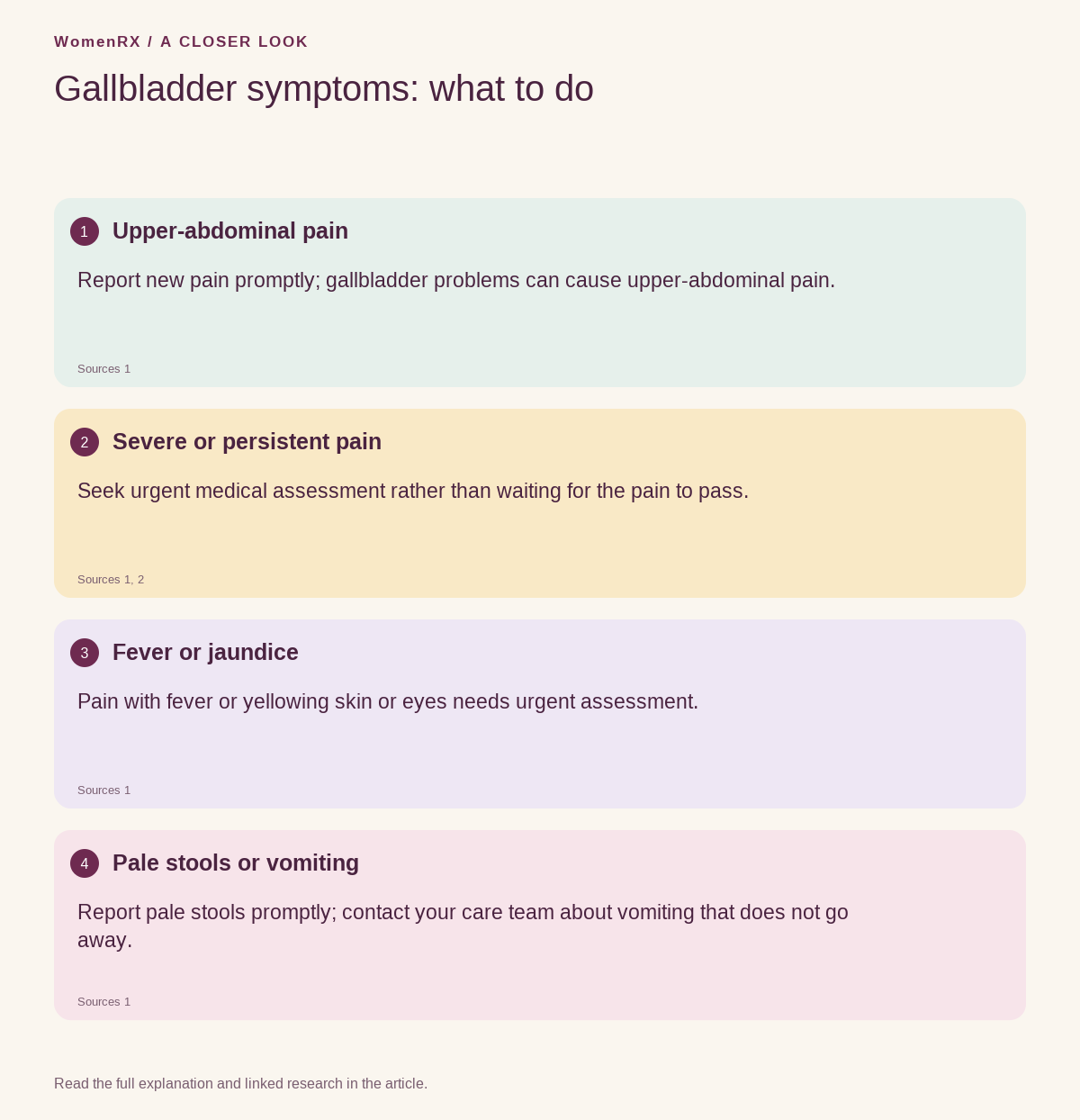
Gallbladder symptoms: what to do
Upper-abdominal pain: Report new pain promptly; gallbladder problems can cause upper-abdominal pain.1
Severe or persistent pain: Seek urgent medical assessment rather than waiting for the pain to pass.12
Fever or jaundice: Pain with fever or yellowing skin or eyes needs urgent assessment.1
Pale stools or vomiting: Report pale stools promptly; contact your care team about vomiting that does not go away.1
Read the figure as text
A symptom-based guide to reporting possible gallbladder problems during Zepbound treatment, without treating symptoms as a diagnosis.- Upper-abdominal pain: Report new pain promptly; gallbladder problems can cause upper-abdominal pain.1
- Severe or persistent pain: Seek urgent medical assessment rather than waiting for the pain to pass.12
- Fever or jaundice: Pain with fever or yellowing skin or eyes needs urgent assessment.1
- Pale stools or vomiting: Report pale stools promptly; contact your care team about vomiting that does not go away.1
More questions, answered
Does a gallstone diagnosis mean Zepbound caused it?
Not necessarily. Zepbound trial information links acute gallbladder events with weight reduction, and rapid weight loss is itself a recognized gallstone risk context. The available trial results don’t establish the cause of an individual person’s gallstone. 12
Can gallstones cause symptoms?
Yes, though many gallstones cause no symptoms. A stone that blocks a bile duct can cause abdominal pain, and suspected gallbladder problems during Zepbound treatment should be reported promptly. 12
Sources you can check
- ZEPBOUND (TIRZEPATIDE) INJECTION, SOLUTION ZEPBOUND (TIRZEPATIDE) INJECTION, SOLUTION ZEPBOUND KWIKPEN (TIRZEPATIDE) INJECTION, SOLUTION [ELI LILLY AND COMPANY] | US prescribing information and patient instructionsAccessed 2026-09-25Return to first citation
- Gallstones - NHSAccessed 2026-09-25Return to first citation
- Safety issues of tirzepatide (pancreatitis and gallbladder or biliary disease) in type 2 diabetes and obesity: a systematic review and meta-analysis.Zeng Q, Xu J, Mu X, Shi Y, Fan H, Li S. · Frontiers in endocrinology · 2023Return to first citation