Tinnitus in Your 40s: Could Perimenopause Be Involved?
Perimenopause may overlap with tinnitus, but the timing alone can’t show that hormone changes caused the sound.
Perimenopause is possible in your 40s, but age alone can’t confirm it. 3 4 Tinnitus starting around the same time doesn’t prove a hormonal cause. Tinnitus can also be linked to hearing loss, loud-noise exposure and some medicines, including aspirin, non-steroidal anti-inflammatory drugs (NSAIDs) and certain antibiotics. 1 2 Note when it began, whether it’s in one or both ears, any hearing changes and recent medication changes.
When the timing overlaps
Some people in their 40s may be approaching menopause: menopause commonly happens between 45 and 55, though it can happen earlier. Perimenopause is the transition in the few years before the final menstrual period. Menopause itself is identified retrospectively, after 12 months without a period. Age by itself can’t tell you whether you’re in perimenopause. 3 4
If tinnitus begins during this transition, the overlap can make a hormonal explanation feel likely. But timing alone can’t establish that estradiol changes caused the sound. Hearing loss, loud noise and some medicines are other recognized contributors to tinnitus. 1 2
Check the other clues, too
Tinnitus can sound like ringing, buzzing, hissing, roaring or clicking, and you may hear it in one ear or both. Hearing changes and exposure to loud noise are worth noting because tinnitus is often linked to hearing loss and can follow loud-noise exposure. 1 2
Medicines can matter as well. Some antibiotics, NSAIDs, aspirin and certain chemotherapy medicines can contribute to tinnitus. 2 If the sound began after starting or changing a medicine, write down the medicine name and when the change happened.
These clues don’t identify the cause by themselves. An assessment may include looking for earwax or infection and checking for hearing loss. 2
A short list to take to an assessment
Jot down:
- Onset: when you first noticed the sound, whether it started suddenly, and whether it comes and goes or is constant.
- Location: one ear, both ears or a sound that seems to be in your head.
- Hearing: any change in hearing alongside the tinnitus.
- Medication and noise exposure: recent medicine starts or changes, and any loud-noise exposure around the time it began.
- Other symptoms: whether the sound beats in time with your pulse, or comes with spinning dizziness, facial weakness or a recent head injury.
Regular or constant tinnitus, tinnitus that’s getting worse, or tinnitus affecting sleep or concentration is a reason to arrange an assessment. Seek urgent medical assessment for tinnitus that beats with your pulse, follows a head injury, or comes with sudden hearing loss, facial weakness or spinning dizziness. 2
What a hormonal explanation can and can’t tell you
Perimenopause may be part of the context if your periods are changing or you’re having other menopause symptoms, but it shouldn’t be used to explain away new tinnitus without considering hearing, noise and medication clues. If an assessment finds hearing loss, hearing aids may be recommended; treatment depends on the cause. 1 2
The practical takeaway is to treat menopause as one piece of the timeline, not a diagnosis for the sound. A clear account of onset, which ear is affected, hearing changes and medicine exposures gives an assessment more useful information than age alone.
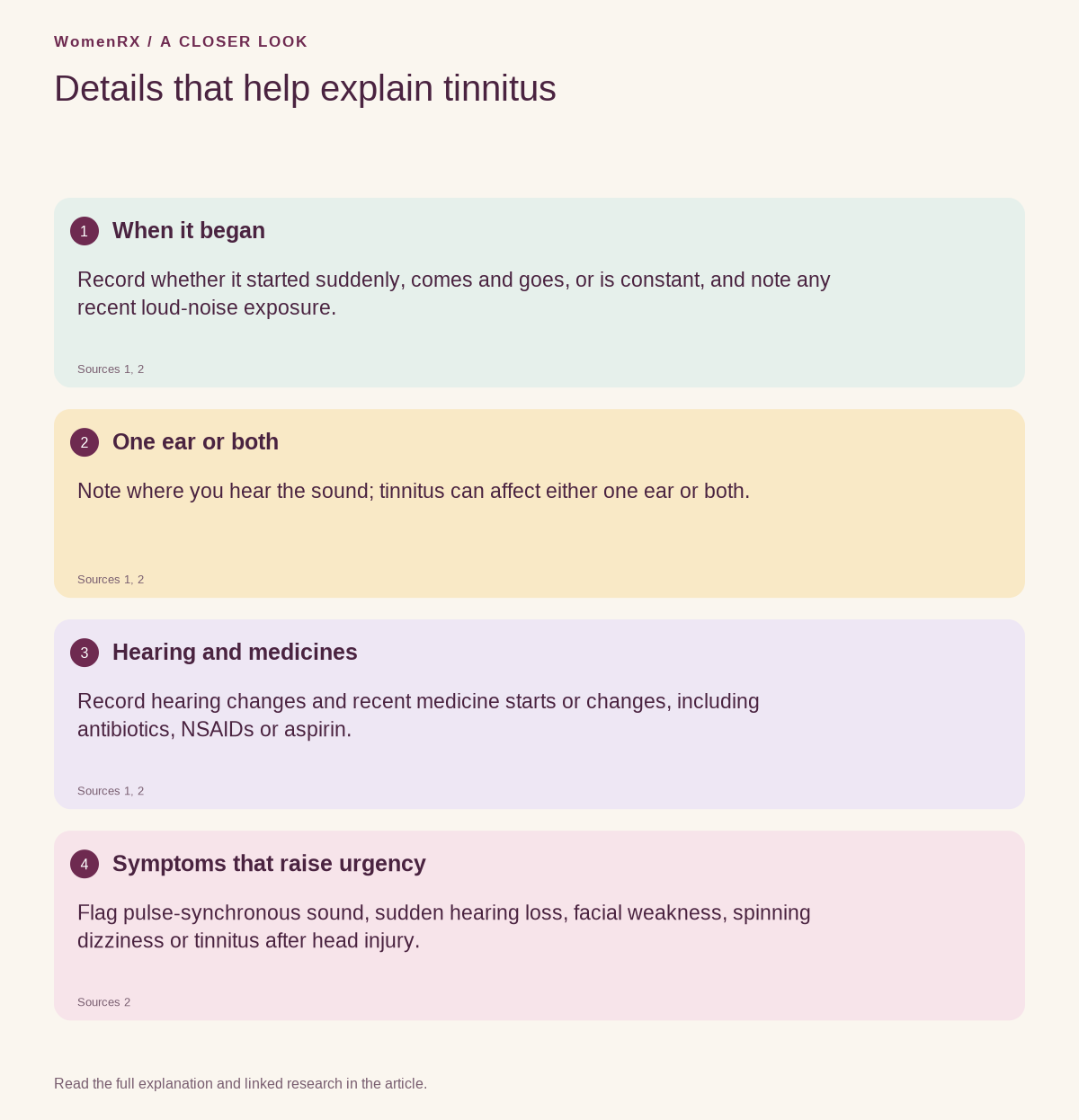
Details that help explain tinnitus
When it began: Record whether it started suddenly, comes and goes, or is constant, and note any recent loud-noise exposure.12
One ear or both: Note where you hear the sound; tinnitus can affect either one ear or both.12
Hearing and medicines: Record hearing changes and recent medicine starts or changes, including antibiotics, NSAIDs or aspirin.12
Symptoms that raise urgency: Flag pulse-synchronous sound, sudden hearing loss, facial weakness, spinning dizziness or tinnitus after head injury.2
Read the figure as text
A brief history can distinguish the timing of tinnitus from clues about hearing, medicine exposure and symptoms that change urgency.- When it began: Record whether it started suddenly, comes and goes, or is constant, and note any recent loud-noise exposure.12
- One ear or both: Note where you hear the sound; tinnitus can affect either one ear or both.12
- Hearing and medicines: Record hearing changes and recent medicine starts or changes, including antibiotics, NSAIDs or aspirin.12
- Symptoms that raise urgency: Flag pulse-synchronous sound, sudden hearing loss, facial weakness, spinning dizziness or tinnitus after head injury.2
More questions, answered
Does tinnitus mean I’m in perimenopause?
No. Tinnitus by itself can’t establish perimenopause. The transition is associated with changes in menstrual cycles and may include symptoms such as hot flashes, but age or tinnitus alone can’t confirm your menopausal stage. 4
When should tinnitus be assessed urgently?
Seek urgent medical assessment if it beats in time with your pulse, follows a head injury, or occurs with sudden hearing loss, facial weakness or spinning dizziness. 2
Sources you can check
- Tinnitus | Tinnitus Treatment | MedlinePlusAccessed 2026-09-25Return to first citation
- Tinnitus - NHSAccessed 2026-09-25Return to first citation
- When to take hormone replacement therapy (HRT) - NHSAccessed 2026-09-25Return to first citation
- Hormone Therapy for the Primary Prevention of Chronic Conditions in Postmenopausal Persons: US Preventive Services Task Force Recommendation Statement.US Preventive Services Task Force, Mangione CM, Barry MJ, Nicholson WK, Cabana M, Caughey AB, Chelmow D, Coker TR, Davis EM, Donahue KE, Jaén CR, Kubik M, Li L, Ogedegbe G, Pbert L... · JAMA · 2022Return to first citation