Selenium Excess: Symptoms, Sources, and When to Get Help
Selenium comes from food as well as supplements, so check the full product lineup before adding another source.
Too much selenium can cause stomach upset, diarrhea, fatigue, tingling or other nerve symptoms, and changes to hair and nails. Those symptoms have many possible causes, so they can’t confirm selenium toxicity on their own. Add up selenium from supplements and fortified products, and get prompt advice if you may have taken a misformulated product or a much larger amount than intended. 1 3
Start with the total, not one bottle
Selenium is found naturally in many foods and is also added to some products and sold in supplements. That means a stand-alone selenium pill may not be the only source to count. Check the Supplement Facts panel on each supplement you use, including multivitamins and pregnancy or postpartum products, and note the amount per serving. Food contributes too, so a supplement-label tally isn’t a complete measure of your daily intake. 1
For context, an analysis of U.S. survey data estimated average selenium intake at 108 micrograms a day from foods and beverages, and 116 micrograms a day when supplements were included. Those are population averages, not a prediction of what you personally consume. 1
The adult tolerable upper intake level is 400 micrograms a day. It’s a limit for usual total intake, not a target and not a line that diagnoses poisoning: symptoms can’t tell you exactly how much selenium you’ve taken in. 3
What excess can feel like
Possible effects include nausea, abdominal pain, diarrhea, fatigue, tingling in the hands or feet, and hair loss or brittle, changed nails. A garlic-like breath odor has also been reported with chronic selenium toxicity. These symptoms are not specific to selenium, so having one or more doesn’t establish that selenium is the cause. 3 2
The seriousness depends on the exposure. A U.S. outbreak followed supplements that had been misformulated with far more selenium than intended; the reported problems included substantial hair loss, diarrhea, fatigue, muscle cramps, and joint pain. That unusual product error is a reason to take a suspected overdose or labeling mistake seriously, not a reason to assume ordinary food intake causes the same effects. 3
If you suspect you took a much larger amount than intended, or a supplement may be misformulated, contact a poison center or medical service promptly for advice. Don’t wait for hair or nail changes, which can take time to appear. For gradual symptoms without a known exposure, review your product labels and seek advice about possible causes rather than diagnosing toxicity from symptoms alone.
Pregnancy, breastfeeding, and overlapping products
During pregnancy or breastfeeding, look at the selenium amount in each product you take, including prenatal or postnatal supplements and any separate mineral or wellness products. If you’re unsure whether products overlap, show the labels to your prenatal care team or pharmacist before adding another supplement. Don’t stop a product that was specifically recommended for you without checking first.
Research on selenium status during pregnancy and newborn outcomes is inconsistent and often limited by study quality. It doesn’t provide a simple symptom checklist or a separate, reliable toxicity threshold for an individual pregnancy. 2
What about medicine interactions?
A product’s interaction questions can depend on the specific medicine and supplement. If you take prescription medicine and are considering selenium, ask a pharmacist or prescriber to check the exact product label. Keep the bottle or a clear photo of its Supplement Facts panel handy, especially if you’re asking about a suspected excess.
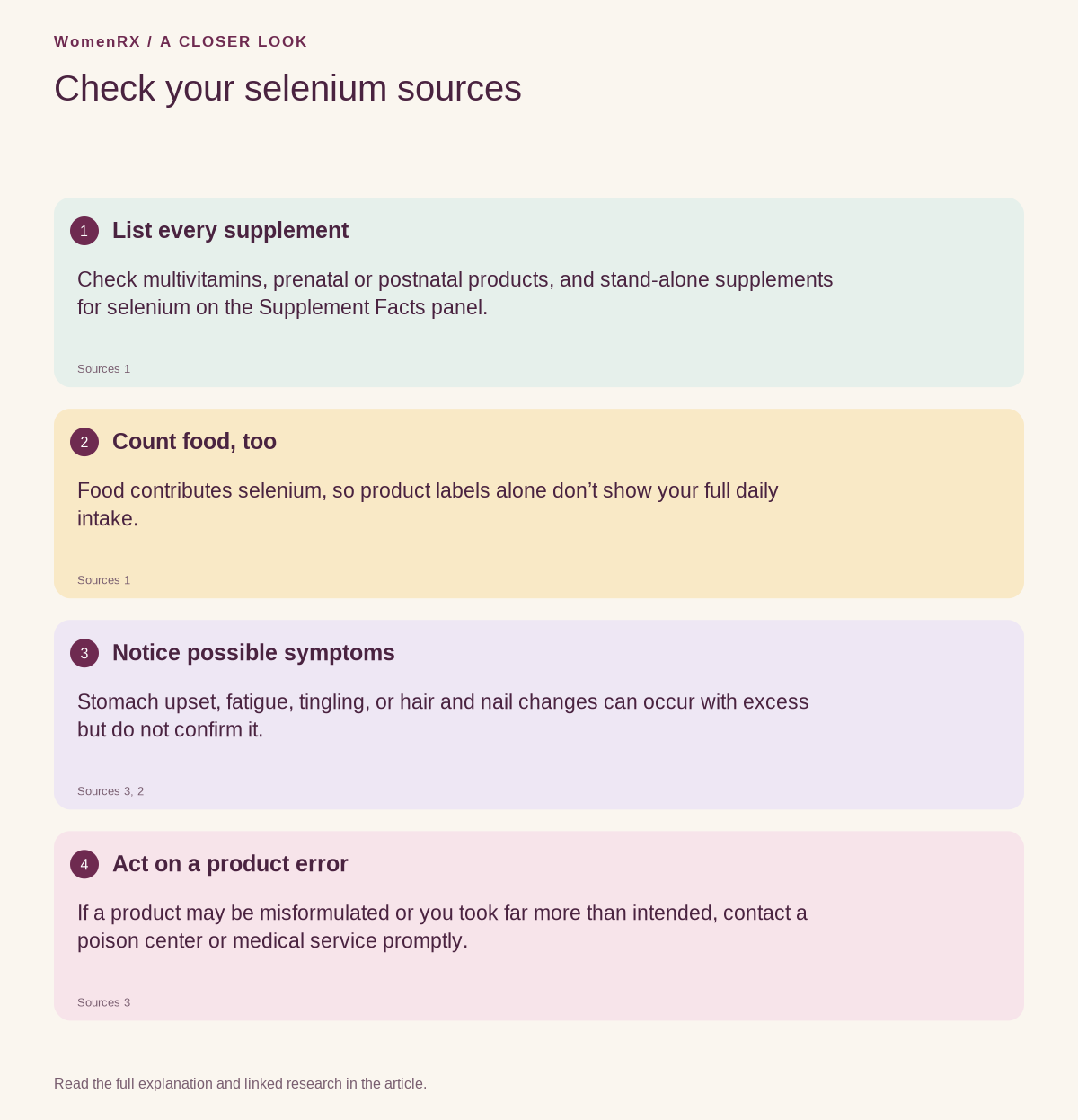
Check your selenium sources
List every supplement: Check multivitamins, prenatal or postnatal products, and stand-alone supplements for selenium on the Supplement Facts panel.1
Count food, too: Food contributes selenium, so product labels alone don’t show your full daily intake.1
Notice possible symptoms: Stomach upset, fatigue, tingling, or hair and nail changes can occur with excess but do not confirm it.32
Act on a product error: If a product may be misformulated or you took far more than intended, contact a poison center or medical service promptly.3
Read the figure as text
Review products together before adding selenium, then consider whether the exposure calls for prompt advice.- List every supplement: Check multivitamins, prenatal or postnatal products, and stand-alone supplements for selenium on the Supplement Facts panel.1
- Count food, too: Food contributes selenium, so product labels alone don’t show your full daily intake.1
- Notice possible symptoms: Stomach upset, fatigue, tingling, or hair and nail changes can occur with excess but do not confirm it.32
- Act on a product error: If a product may be misformulated or you took far more than intended, contact a poison center or medical service promptly.3
Sources you can check
- Selenium - Health Professional Fact SheetAccessed 2026-09-25Return to first citation
- Gestational Selenium Exposure and Neonatal Health Outcomes: A Systematic Review of Mortality, Morbidity, and Neurobehavioral Development.Stachika N, Tsarna E, Solomou E, Kyriakou SI, Stavros S, Christopoulos P. · Journal of clinical medicine · 2026Return to first citation
- Selenium toxicity from a misformulated dietary supplement, adverse health effects, and the temporal response in the nail biologic monitor.Morris JS, Crane SB. · Nutrients · 2013Return to first citation