Plantar Fasciitis and Menopause: Is There a Link?
Heel pain can appear during the menopause transition, but timing alone doesn’t show that hormones caused it.
A 2026 narrative review discusses plantar fasciitis among injuries in midlife women, but it doesn’t establish that menopause or falling estrogen causes the condition or quantify a menopause-specific risk. Pain under the heel or arch that’s worse on your first steps after rest fits the usual pattern. Other pain locations or sudden injury symptoms can point to a different cause. 1 2 4
What research says about menopause and heel pain
A 2026 narrative review proposes that hormonal, muscle, tissue, and movement changes could contribute to overuse injuries around menopause, and it includes plantar fasciitis in that discussion. That’s a possible explanation to investigate, not proof that menopause causes the condition. The review doesn’t provide a menopause-specific comparison or risk estimate for plantar fasciitis, so a heel problem beginning during perimenopause or after menopause can’t be attributed to estrogen decline on timing alone. 4
That distinction matters when deciding what to do next. The menopause hormone therapy position statement describes uses such as treating bothersome hot flashes and preventing bone loss; it doesn’t establish hormone therapy as a treatment for plantar fasciitis. The review also doesn’t show that hormone therapy treats heel pain. 3 4
Start with where and when it hurts
Plantar fasciitis typically causes pain on the bottom of the foot around the heel or arch. A common clue is pain that’s worse when you first start walking after sleeping or sitting, and stretching the sole of the foot, such as raising your toes, may hurt too. These features can fit plantar fasciitis, but they don’t confirm it by themselves. 1
The location and circumstances can point toward other possibilities. Pain at the back of the heel, especially with ankle or calf pain, can fit Achilles tendon trouble. Redness and swelling with a dull ache can fit bursitis. Sudden sharp pain after an injury, particularly with swelling, a popping or snapping sound, or difficulty walking, can signal a more serious injury such as a fracture or Achilles tendon rupture. 2
Common ways to ease typical plantar heel pain
For pain that fits the usual plantar fasciitis pattern, commonly suggested measures include wearing cushioned shoes with good arch support, trying an insole or heel pad, and avoiding barefoot walking on hard floors. Gentle stretches for the sole of the foot and heel, rest from aggravating activity, and ice wrapped in a towel are also suggested. These are general options, not a guarantee that the pain is plantar fasciitis or that one measure will resolve it. 1
If the pain isn’t improving after about two weeks, is getting worse, or is making walking difficult, arrange an evaluation. Sudden severe pain after an injury, swelling, a pop or snap, or difficulty walking deserves prompt attention rather than being treated as routine plantar fasciitis. 1 2
When you describe the problem, it may help to note whether the pain is under the heel, in the arch, or behind the heel; whether it’s worst on your first steps after rest; and whether it began after a change in activity or time spent standing. These details help distinguish a familiar plantar fasciitis pattern from other kinds of heel pain. Menopause timing can be part of the context, but it doesn’t identify the cause.
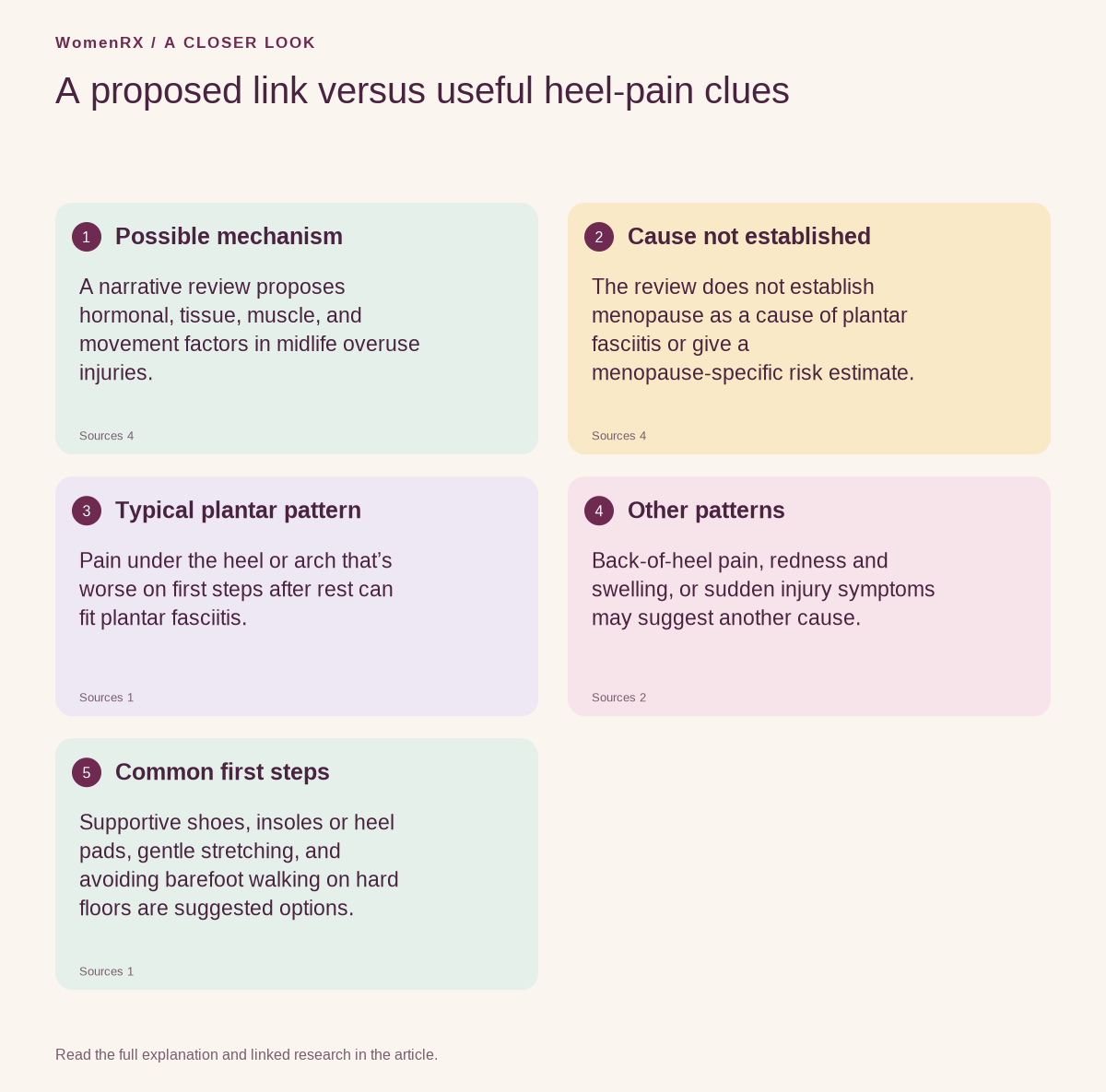
A proposed link versus useful heel-pain clues
Possible mechanism: A narrative review proposes hormonal, tissue, muscle, and movement factors in midlife overuse injuries.4
Cause not established: The review does not establish menopause as a cause of plantar fasciitis or give a menopause-specific risk estimate.4
Typical plantar pattern: Pain under the heel or arch that’s worse on first steps after rest can fit plantar fasciitis.1
Other patterns: Back-of-heel pain, redness and swelling, or sudden injury symptoms may suggest another cause.2
Common first steps: Supportive shoes, insoles or heel pads, gentle stretching, and avoiding barefoot walking on hard floors are suggested options.1
Read the figure as text
Separate a possible menopause-related explanation from the pain patterns and care options used to think through heel pain.- Possible mechanism: A narrative review proposes hormonal, tissue, muscle, and movement factors in midlife overuse injuries.4
- Cause not established: The review does not establish menopause as a cause of plantar fasciitis or give a menopause-specific risk estimate.4
- Typical plantar pattern: Pain under the heel or arch that’s worse on first steps after rest can fit plantar fasciitis.1
- Other patterns: Back-of-heel pain, redness and swelling, or sudden injury symptoms may suggest another cause.2
- Common first steps: Supportive shoes, insoles or heel pads, gentle stretching, and avoiding barefoot walking on hard floors are suggested options.1
Sources you can check
- Plantar fasciitis - NHSAccessed 2026-09-25Return to first citation
- Heel pain - NHSAccessed 2026-09-25Return to first citation
- The 2022 hormone therapy position statement of The North American Menopause Society.“The 2022 Hormone Therapy Position Statement of The North American Menopause Society” Advisory Panel. · Menopause (New York, N.Y.) · 2022Return to first citation
- Hormonal Shifts and Structural Strain: A Literature Review of Menopause and Perimenopause in Relation to Overuse Injuries and Stress Fractures.Ansari M, Hussain F, Shopon M, Ajmal H, Asif M, David S. · Annals of rehabilitation medicine · 2026Return to first citation