Perimenopause: Which Period Changes Need a Closer Look?
Periods can become less predictable before menopause, but heavy bleeding that disrupts your life or bleeding between periods deserves attention.
Perimenopause often brings more variation in cycle length, skipped periods, and symptoms such as hot flashes. Menopause is reached after 12 months without a period. 2 But a changing cycle doesn't explain every kind of bleeding. Make an appointment if bleeding is heavy enough to affect daily life, happens between periods or after sex, or comes with severe period pain. 1

What a changing cycle can look like
One month your period may come later than expected; another month, you may skip it. Increasing variation in the time between periods and stretches without a period are characteristic of the menopausal transition. Hot flashes can occur alongside those changes. Perimenopause is the period leading up to the final menstrual period, while menopause is identified afterward, once 12 months have passed without a period. 2
That pattern gives you context, not a diagnosis from a calendar alone. The useful distinction is between when a period arrives and what else has changed. A late or missed period can fit the transition. Bleeding that is unusually heavy for you, occurs between periods, or follows sex deserves a separate look rather than being attributed to perimenopause. 12
When the amount of bleeding matters
Heavy bleeding can happen as menopause approaches, but you don't have to put up with it because it may be related to the transition. As practical signs of heavy flow, you might need to change a pad or tampon every one to two hours, use two period products together, or feel tired or short of breath a lot. If heavy periods affect your daily life or have continued for some time, make an appointment. 1
There are other possible explanations, including fibroids, adenomyosis, endometriosis, pelvic inflammatory disease, and some medicines or treatments. Rarely, heavy bleeding can be a sign of uterine cancer. Fibroids in particular can cause bleeding as well as pelvic pressure, and guidance on fibroid care supports investigating those symptoms rather than assuming they'll resolve on their own. 13
This doesn't mean a heavy period points to any one condition. It means that the amount of bleeding, its effect on you, and any accompanying symptoms matter more than whether you're at an age when perimenopause seems plausible. 13
Changes worth bringing up sooner
Arrange medical assessment if you bleed between periods or after sex, have severe pain during periods, or have heavy bleeding along with pain when you urinate, have a bowel movement, or have sex. These are reasons to look beyond a changing cycle. 1
If heavy bleeding is making you feel frequently tired or short of breath, say that when you arrange care. Those symptoms are useful details, not just a measure of how inconvenient the period has been. 1 You can also note when bleeding starts and stops, how often you need to change period products, and whether pain or bleeding after sex is part of the pattern. Those specifics help describe the change clearly; they aren't a test for perimenopause.
The same principle applies if your age or medical history makes menopause feel like an uncertain explanation: don't force a new symptom into that explanation. A clinician can consider the bleeding pattern, its impact, and whether another cause needs investigation. If a condition is suspected, tests or specialist assessment may be offered. Treatments are also available when heavy periods are affecting your life. 13
The bottom line is not that irregular periods are automatically harmless or that every variation is alarming. Cycle timing often changes during perimenopause. Bleeding between periods or after sex, severe pain, and heavy flow that affects your life are reasons to get a closer look. 12
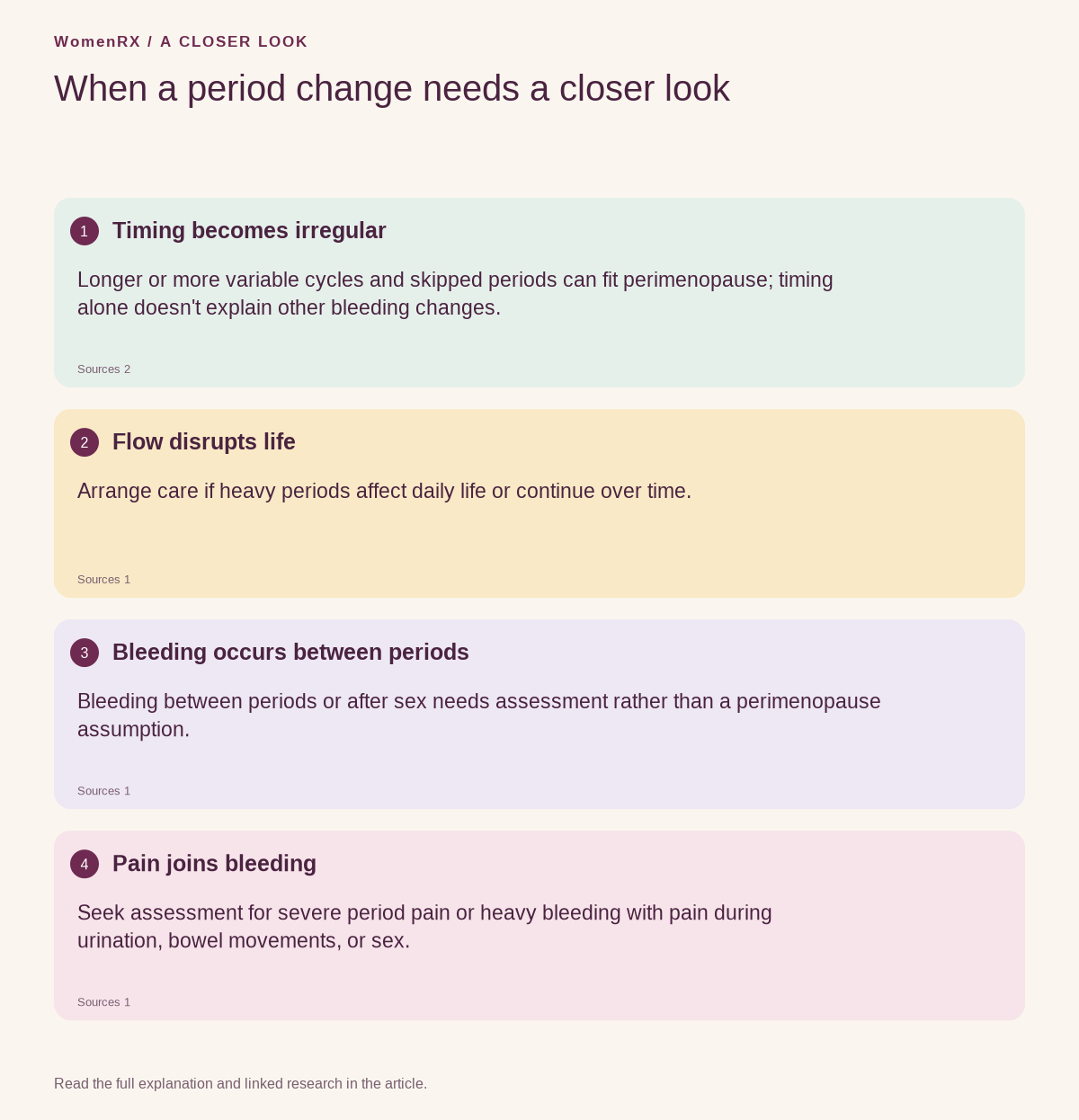
When a period change needs a closer look
Timing becomes irregular: Longer or more variable cycles and skipped periods can fit perimenopause; timing alone doesn't explain other bleeding changes.2
Flow disrupts life: Arrange care if heavy periods affect daily life or continue over time.1
Bleeding occurs between periods: Bleeding between periods or after sex needs assessment rather than a perimenopause assumption.1
Pain joins bleeding: Seek assessment for severe period pain or heavy bleeding with pain during urination, bowel movements, or sex.1
Read the figure as text
Use the pattern and its effect on you to decide whether to arrange an assessment. This is a guide to describing symptoms, not a diagnostic test.- Timing becomes irregular: Longer or more variable cycles and skipped periods can fit perimenopause; timing alone doesn't explain other bleeding changes.2
- Flow disrupts life: Arrange care if heavy periods affect daily life or continue over time.1
- Bleeding occurs between periods: Bleeding between periods or after sex needs assessment rather than a perimenopause assumption.1
- Pain joins bleeding: Seek assessment for severe period pain or heavy bleeding with pain during urination, bowel movements, or sex.1
More questions, answered
Does a skipped period mean I've reached menopause?
No. Stretches without a period can occur during perimenopause. Menopause is identified retrospectively after 12 months without a period. 2
Could heavy periods be caused by fibroids rather than perimenopause?
Yes. Fibroids can cause menstrual bleeding and pelvic pressure, though heavy bleeding has other possible causes too. Assessment matters if the bleeding affects your life or comes with pain or pressure. 13
Sources you can check
- Heavy periods - NHSAccessed 2026-09-25Return to first citation
- Hormone Therapy for the Primary Prevention of Chronic Conditions in Postmenopausal Persons: US Preventive Services Task Force Recommendation Statement.US Preventive Services Task Force, Mangione CM, Barry MJ, Nicholson WK, Cabana M, Caughey AB, Chelmow D, Coker TR, Davis EM, Donahue KE, Jaén CR, Kubik M, Li L, Ogedegbe G, Pbert L... · JAMA · 2022Return to first citation
- Guideline No. 461: The Management of Uterine Fibroids.Chen I, Kives S, Randle E, Rattray D, Sanders A, Vilos G. · Journal of obstetrics and gynaecology Canada : JOGC = Journal d'obstetrique et gynecologie du Canada : JOGC · 2025Return to first citation