Perimenopause Depression: How Long Can It Last?
Mood symptoms can become more likely during perimenopause, but the transition doesn’t provide a reliable timeline for when depression will end.
There’s no dependable number of months or years that depression lasts in perimenopause. Studies find higher depression risk during the transition, but they don’t show when symptoms will ease for an individual woman. If low mood or loss of interest is affecting daily life, seek an assessment rather than waiting for menopause to pass; depression can be treated. 1 4
Perimenopause raises risk, but it isn’t a countdown
A 2024 review pooled seven studies involving 9,141 women and found that perimenopausal women had higher odds of depressive symptoms or a depression diagnosis than premenopausal women. That’s a group-level finding, not a prediction that you’ll become depressed, or a way to estimate how long symptoms will last. The studies also used different definitions of menopause stages and depression. 4
Crucially, this research does not establish a typical duration for depression that begins during perimenopause. Symptoms may ease, persist, or need treatment; menopause itself doesn’t tell you which will happen. It’s worth taking distress seriously whether it began recently or you’ve been struggling for longer.
What may shape the experience
A history of depression deserves attention in the conversation. In a study of 135 perimenopausal women, those with a prior depression history reported more depressive symptoms and sleep disturbances than those without one. The study was cross-sectional, so it shows a relationship, not that prior depression caused current symptoms or predicts an individual outcome. 6
Hot flashes and sleep disruption can also be part of the picture. In one prospective study of women with no previous major depression, those entering perimenopause were more likely to develop significant depressive symptoms than women who remained premenopausal. The increased risk was somewhat greater among women reporting vasomotor symptoms, such as hot flashes. This doesn’t establish that hot flashes cause depression, or that treating them alone will resolve it. 5
That distinction matters in everyday care: a rough night after a hot flash can leave you drained, but persistent loss of interest, low mood, or trouble managing daily life deserves its own assessment. Depression can have several contributing factors, and there may not be one obvious cause. 1
When to seek assessment, and what care can include
You don’t need to wait until symptoms have lasted a certain number of months. MedlinePlus describes major depression symptoms as affecting daily activities for at least two weeks, with depressed mood or loss of interest among the symptoms. That’s a diagnostic timeframe, not a reason to delay asking for help if you’re concerned. A clinician may ask about symptoms and health history and may consider other causes, including thyroid problems or medication effects. 1
Treatment can include psychotherapy, antidepressant medication, or both, depending on your needs. Finding an approach that works can take time; tell your prescriber about concerns or side effects rather than stopping a medication on your own. 1
If hot flashes are also disrupting sleep or daily life, you can discuss that as a separate treatment goal. Menopause hormone therapy is an effective treatment for bothersome vasomotor symptoms for appropriate candidates, but that benefit doesn’t establish it as a stand-alone treatment for depression. 2 Some nonhormone treatments are also recommended for vasomotor symptoms, but relief of hot flashes and care for depression aren’t interchangeable goals. 3
If you’re thinking about suicide or feel you can’t keep yourself safe, seek urgent help now. Thoughts of death or suicide can be part of depression and should not be left for a routine follow-up. 1
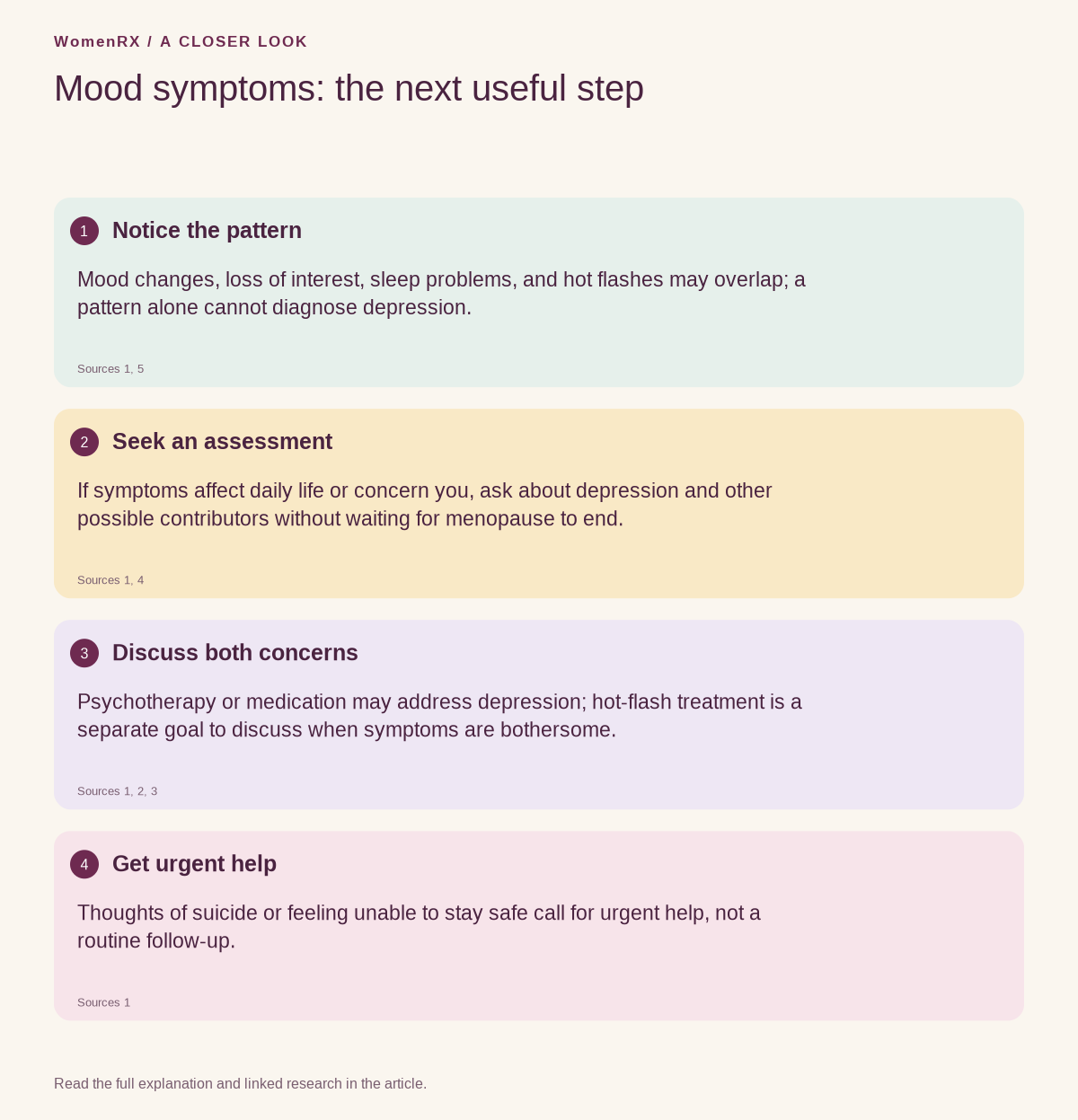
Mood symptoms: the next useful step
Notice the pattern: Mood changes, loss of interest, sleep problems, and hot flashes may overlap; a pattern alone cannot diagnose depression.15
Seek an assessment: If symptoms affect daily life or concern you, ask about depression and other possible contributors without waiting for menopause to end.14
Discuss both concerns: Psychotherapy or medication may address depression; hot-flash treatment is a separate goal to discuss when symptoms are bothersome.123
Get urgent help: Thoughts of suicide or feeling unable to stay safe call for urgent help, not a routine follow-up.1
Read the figure as text
This flow separates noticing symptoms from getting routine care or urgent help, while keeping hot-flash treatment distinct from depression treatment.- Notice the pattern: Mood changes, loss of interest, sleep problems, and hot flashes may overlap; a pattern alone cannot diagnose depression.15
- Seek an assessment: If symptoms affect daily life or concern you, ask about depression and other possible contributors without waiting for menopause to end.14
- Discuss both concerns: Psychotherapy or medication may address depression; hot-flash treatment is a separate goal to discuss when symptoms are bothersome.123
- Get urgent help: Thoughts of suicide or feeling unable to stay safe call for urgent help, not a routine follow-up.1
More questions, answered
Do perimenopause-related mood symptoms always go away after menopause?
No. Studies show increased depression risk during perimenopause, but they don’t establish a predictable point when symptoms end for an individual woman. Don’t assume you have to wait for the transition to finish before seeking care. 4
Does treating hot flashes treat depression?
Not necessarily. Hot flashes and sleep disruption can add to the strain, but treating vasomotor symptoms is a different goal from treating depression. Discuss each problem on its own terms. 2 3 5
Sources you can check
- Depression: MedlinePlusAccessed 2026-09-25Return to first citation
- The 2022 hormone therapy position statement of The North American Menopause Society.“The 2022 Hormone Therapy Position Statement of The North American Menopause Society” Advisory Panel. · Menopause (New York, N.Y.) · 2022Return to first citation
- The 2023 nonhormone therapy position statement of The North American Menopause Society.Menopause (New York, N.Y.) · 2023Return to first citation
- The risk of depression in the menopausal stages: A systematic review and meta-analysis.Badawy Y, Spector A, Li Z, Desai R. · Journal of affective disorders · 2024Return to first citation
- Risk for new onset of depression during the menopausal transition: the Harvard study of moods and cycles.Cohen LS, Soares CN, Vitonis AF, Otto MW, Harlow BL. · Archives of general psychiatry · 2006Return to first citation
- Prior depression affects the experience of the perimenopause - findings from the Swiss Perimenopause Study.Willi J, Süss H, Grub J, Ehlert U. · Journal of affective disorders · 2020Return to first citation