Paroxetine Side Effects for Hot Flashes: What to Watch
Headache, tiredness, and nausea are worth monitoring, while sudden mood changes, eye symptoms, and seizures need faster attention.
If you take paroxetine for menopausal hot flashes, headache, tiredness, and nausea are among the more common side effects reported in low-dose trials. Discuss effects that persist or bother you. 1 Seek immediate medical help for a seizure or symptoms of possible serotonin syndrome. Call your prescriber right away about suicidal thoughts or sudden mood changes, and seek urgent assessment for eye pain with vision changes. 1
Start with the effects seen in hot-flash trials
Paroxetine used for hot flashes is still an SSRI, a type of medicine also used for depression and anxiety. The safety picture depends partly on the formulation and dose: findings from low-dose treatment for menopausal symptoms should not be treated as a complete guide to effects at other doses or when paroxetine is used for another reason. 2 3
In three placebo-controlled trials of low-dose Brisdelle for menopausal hot flashes, headache was reported by 6.3% of the 635 postmenopausal women taking paroxetine and 4.8% of the 641 taking placebo. Tiredness, including fatigue or lethargy, was reported by 4.9% versus 2.8%, and nausea or vomiting by 4.3% versus 2.3%. Nausea occurred mainly in the first four weeks, and fatigue mainly in the first week; both became less frequent with continued treatment. These are group averages, not a prediction of how you’ll feel. 1
If an effect starts after you begin treatment, notice whether it’s easing or interfering with sleep or usual activities. Discuss one that persists or bothers you with the prescriber. You don’t have to put up with a disruptive effect simply because it appears on a list of common side effects. 1
Know which changes need faster attention
Get immediate medical help for a seizure or symptoms of possible serotonin syndrome. This potentially life-threatening reaction can involve agitation or confusion, muscle twitching or stiffness, a racing heartbeat, sweating or fever, and nausea, vomiting, or diarrhea. It can happen with paroxetine alone, but the risk rises with certain other medicines, including tramadol, some migraine medicines called triptans, and St. John’s wort. A seizure is not an effect to log and watch. 1
Act right away on suicidal thoughts or sudden, troubling mood changes. Call your prescriber right away if you notice thoughts of suicide or dying, new or worsening depression, or a sudden change in behavior or mood. If you might act on those thoughts or have made an attempt, go to an emergency department. The Brisdelle medication guide calls for particular attention when treatment starts. Women with a history of suicidal thoughts or behavior were excluded from its hot-flash trials, so those trials cannot establish the risk for them. 1
Seek urgent assessment for eye pain with vision changes or redness or swelling around the eye. Paroxetine can trigger an angle-closure glaucoma attack in someone with susceptible eyes. Don’t save these symptoms for a routine visit. 1
Tell the prescriber about unusual bleeding or bruising. Paroxetine may increase bleeding risk, particularly when combined with warfarin, aspirin, or nonsteroidal anti-inflammatory drugs such as ibuprofen or naproxen. New confusion, weakness, or unsteadiness also deserves prompt medical advice: these can be signs of low blood sodium, a risk that is greater in older adults and people taking diuretics. 1
Raise sexual changes and medicine interactions
The Brisdelle medication guide says paroxetine can cause sexual problems, including reduced sexual desire or delayed or absent orgasm. A pooled analysis of two randomized trials in postmenopausal women taking low-dose paroxetine for hot flashes found no clinically meaningful or statistically significant change in sexual-function measures; reported sexual side effects were low and similar with paroxetine and placebo. These findings apply to that study population. They don’t rule out a change for an individual or establish the same result at other doses. 1 3
If sexual changes matter to you, describe what has changed and when it began. The prescriber can consider whether the timing fits the medicine, other possible contributors, and what management choices make sense. In the same pooled analysis, weight measures did not change in a clinically meaningful or statistically significant way with low-dose paroxetine during the 12- or 24-week study periods. 1 3
Make sure the prescriber and pharmacist know about your other medicines, including ones you take only occasionally. Beyond medicines that can raise the risk of serotonin syndrome or bleeding, paroxetine may reduce tamoxifen’s effectiveness. If you take tamoxifen, discuss that interaction before starting paroxetine. 1
If you’re thinking of stopping
A side effect that won’t settle is a reason to discuss a change, not to stop paroxetine abruptly on your own. In the hot-flash trials, symptoms reported more often after stopping Brisdelle than after stopping placebo included trouble sleeping, anxiety, headache, muscle twitching, and restless feelings in the legs. The prescriber can help you weigh the effect you’re having against the hot-flash relief you’re getting and plan any change in treatment. Serious warning signs are different: use the faster response described above rather than waiting to discuss a stopping plan at a routine visit. 1
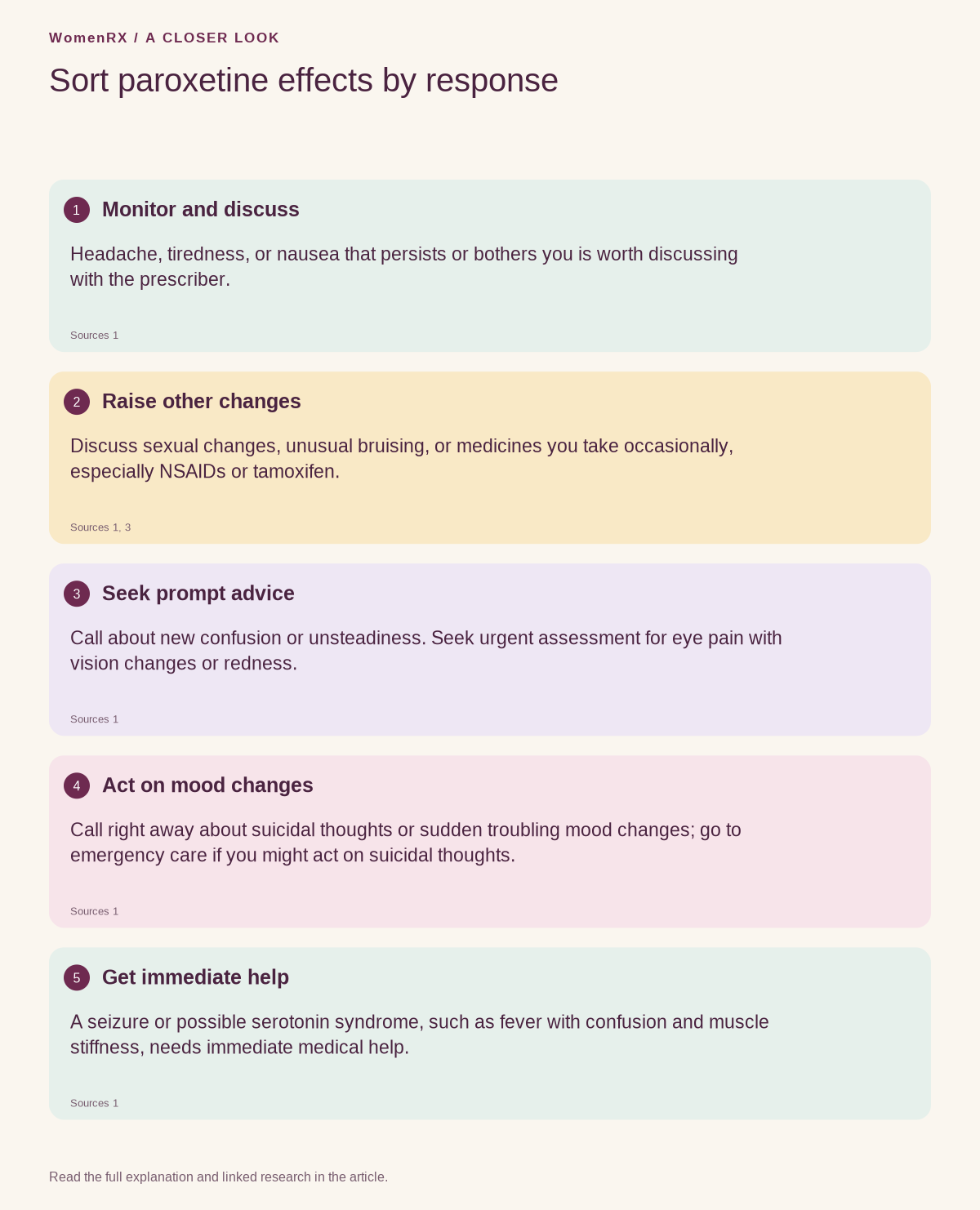
Sort paroxetine effects by response
Monitor and discuss: Headache, tiredness, or nausea that persists or bothers you is worth discussing with the prescriber.1
Raise other changes: Discuss sexual changes, unusual bruising, or medicines you take occasionally, especially NSAIDs or tamoxifen.13
Seek prompt advice: Call about new confusion or unsteadiness. Seek urgent assessment for eye pain with vision changes or redness.1
Act on mood changes: Call right away about suicidal thoughts or sudden troubling mood changes; go to emergency care if you might act on suicidal thoughts.1
Get immediate help: A seizure or possible serotonin syndrome, such as fever with confusion and muscle stiffness, needs immediate medical help.1
Read the figure as text
The distinction is what you can monitor, what deserves a call, and what cannot wait. This is not a diagnostic score.- Monitor and discuss: Headache, tiredness, or nausea that persists or bothers you is worth discussing with the prescriber.1
- Raise other changes: Discuss sexual changes, unusual bruising, or medicines you take occasionally, especially NSAIDs or tamoxifen.13
- Seek prompt advice: Call about new confusion or unsteadiness. Seek urgent assessment for eye pain with vision changes or redness.1
- Act on mood changes: Call right away about suicidal thoughts or sudden troubling mood changes; go to emergency care if you might act on suicidal thoughts.1
- Get immediate help: A seizure or possible serotonin syndrome, such as fever with confusion and muscle stiffness, needs immediate medical help.1
More questions, answered
Does low-dose paroxetine for hot flashes usually cause weight gain?
In a pooled analysis of two randomized trials in postmenopausal women, low-dose paroxetine did not produce a clinically meaningful or statistically significant change in weight over 12 or 24 weeks. That finding is specific to the dose and population studied, not a guarantee about every use of paroxetine. 3
Should I mention medicines I take only occasionally?
Yes. The product information warns about bleeding risk with medicines such as ibuprofen, naproxen, and aspirin, and about serotonin syndrome with certain interacting medicines. Include occasional medicines and supplements when you review what you take with the prescriber or pharmacist. 1
Sources you can check
- BRISDELLE (PAROXETINE) CAPSULE [LEGACY PHARMA USA, INC.] | US prescribing information and patient instructionsAccessed 2026-09-25Return to first citation
- A Clinical Review on Paroxetine and Emerging Therapies for the Treatment of Vasomotor Symptoms.David PS, Smith TL, Nordhues HC, Kling JM. · International journal of women's health · 2022Return to first citation
- Effects of low-dose paroxetine 7.5 mg on weight and sexual function during treatment of vasomotor symptoms associated with menopause.Portman DJ, Kaunitz AM, Kazempour K, Mekonnen H, Bhaskar S, Lippman J. · Menopause (New York, N.Y.) · 2014Return to first citation