Paroxetine for Hot Flashes: Medicines and Supplements to Review
A complete list helps your pharmacist or prescriber spot different kinds of interaction risks before you add or change anything.
If you take paroxetine for menopausal hot flashes, disclose every prescription, over-the-counter medicine, vitamin, herb, and supplement, including products you use only occasionally. Specifically flag serotonin-affecting medicines, tamoxifen, opioids such as tramadol or codeine, and warfarin or NSAID pain relievers. These combinations raise different concerns, so have your full list checked rather than stopping anything on your own. 1 3 4
Paroxetine used for hot flashes can interact with medicines for other conditions, as well as with nonprescription products. A useful review isn’t just a list of daily prescriptions: include occasional pain or migraine medicines, supplements, and anything you’re thinking of starting. An interaction warning doesn’t automatically mean a combination is prohibited, but it does mean the specific products deserve a check. 1 2 5
Make the list complete
Write down each product’s name and, when possible, its active ingredients. Include prescriptions from different clinicians, over-the-counter medicines, vitamins, herbal products, and supplements. Mention products you take only as needed, along with any recent starts, stops, or changes. If you’re unsure what a product contains, bring the package or a clear photo of its label. Over-the-counter medicines and supplements can interact with other medicines too. 1 2
Flag medicines that affect serotonin
Paroxetine can contribute to serotonin syndrome, a potentially life-threatening reaction, and risk can increase when it’s combined with other serotonin-affecting substances. The paroxetine prescribing information specifically names migraine triptans, tricyclic antidepressants, opioids including tramadol, fentanyl, meperidine, and methadone, as well as lithium, buspirone, amphetamines, linezolid, St. John’s wort, and tryptophan supplements. Monoamine oxidase inhibitors (MAOIs) are also important to disclose. These are examples, not a complete interaction list. 1
Symptoms described in the prescribing information can involve several parts of the body: unusual agitation or confusion, sweating or fever, a fast heartbeat, tremor, muscle stiffness or jerking, poor coordination, nausea, vomiting, or diarrhea. If these symptoms occur, contact your healthcare provider or seek emergency care, as the product information advises. 1
Give tamoxifen and pain medicines special attention
If you take tamoxifen for breast cancer, make sure the clinician managing that treatment knows you take paroxetine. The paroxetine prescribing information warns that tamoxifen may not work as well when taken with it. This calls for a treatment review, not a change you should make on your own. 1 5
Mention opioid pain medicines even if you use them only occasionally. Tramadol deserves particular attention because it can add serotonin-related risk. Paroxetine can also affect the metabolism of some opioids: CYP2D6 helps metabolize many opioids, and paroxetine is identified as a CYP inhibitor. This can matter for pain relief or side effects, so include medicines such as tramadol and codeine on your list. 1 3 4
Include medicines that can raise bleeding risk
Tell the pharmacist or prescriber if you take warfarin or use nonsteroidal anti-inflammatory drugs (NSAIDs), including ibuprofen, naproxen, or aspirin. Paroxetine’s prescribing information warns that it may increase bleeding or bruising risk, especially with these medicines. Include how often you use a nonprescription pain reliever so the reviewer understands your actual use. 1
Ask for a check of the whole list
A useful question is: “Can you review these products together with my paroxetine, including the ones I take only sometimes?” A pharmacist or prescriber can assess your actual combination and explain whether it needs a different plan or monitoring. Bring the list when another clinician prescribes something or before you add a supplement. Don’t stop a prescribed medicine or supplement solely because it appears in a general interaction warning; ask how that warning applies to you. 1 2
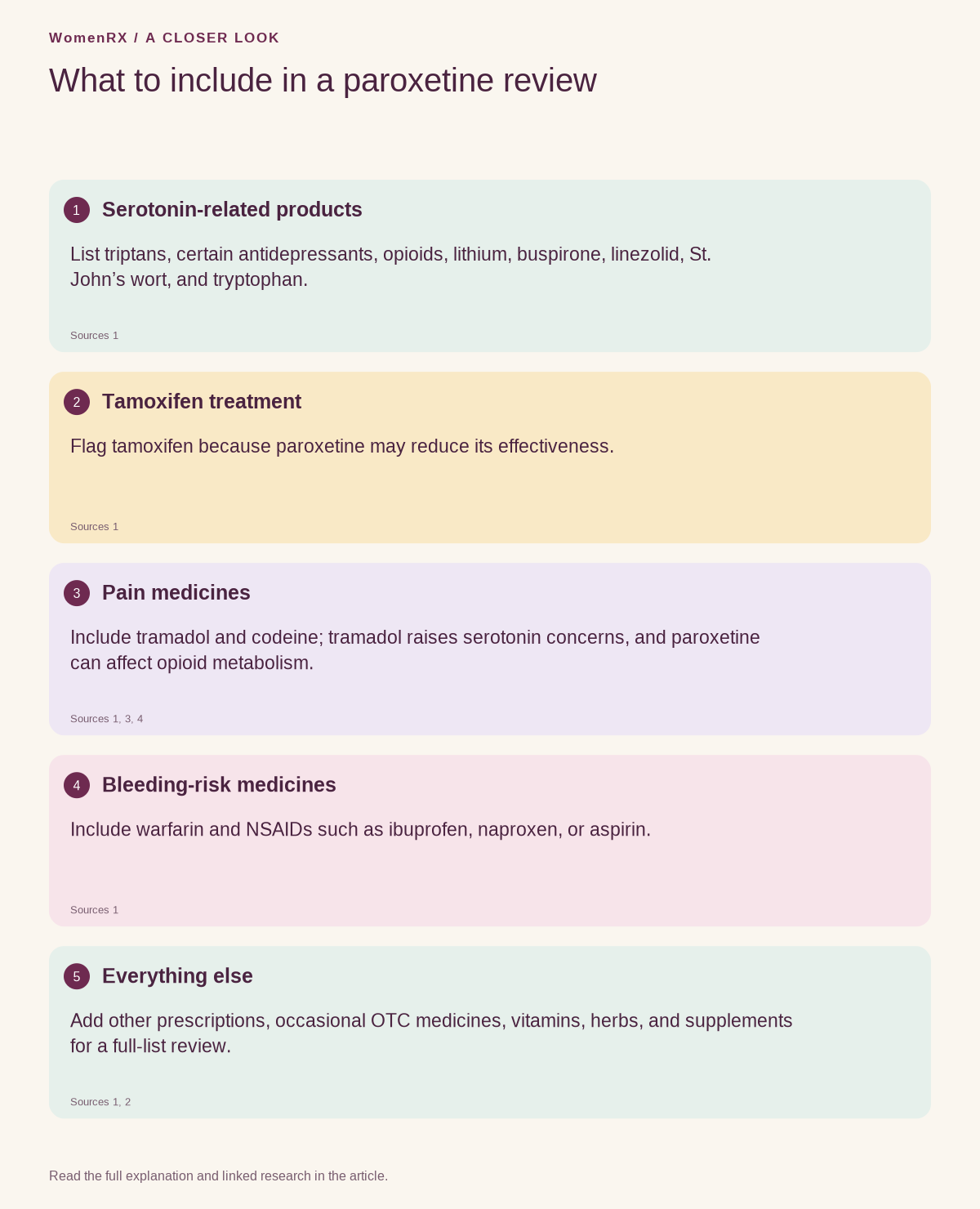
What to include in a paroxetine review
Serotonin-related products: List triptans, certain antidepressants, opioids, lithium, buspirone, linezolid, St. John’s wort, and tryptophan.1
Tamoxifen treatment: Flag tamoxifen because paroxetine may reduce its effectiveness.1
Pain medicines: Include tramadol and codeine; tramadol raises serotonin concerns, and paroxetine can affect opioid metabolism.134
Bleeding-risk medicines: Include warfarin and NSAIDs such as ibuprofen, naproxen, or aspirin.1
Everything else: Add other prescriptions, occasional OTC medicines, vitamins, herbs, and supplements for a full-list review.12
Read the figure as text
Use these categories to build a full list for a pharmacist or prescriber. They highlight interaction concerns, not an exhaustive drug-interaction check.- Serotonin-related products: List triptans, certain antidepressants, opioids, lithium, buspirone, linezolid, St. John’s wort, and tryptophan.1
- Tamoxifen treatment: Flag tamoxifen because paroxetine may reduce its effectiveness.1
- Pain medicines: Include tramadol and codeine; tramadol raises serotonin concerns, and paroxetine can affect opioid metabolism.134
- Bleeding-risk medicines: Include warfarin and NSAIDs such as ibuprofen, naproxen, or aspirin.1
- Everything else: Add other prescriptions, occasional OTC medicines, vitamins, herbs, and supplements for a full-list review.12
More questions, answered
Does an interaction warning mean I have to stop a medicine?
Not necessarily. Different combinations raise different concerns, and a warning alone doesn’t determine the right plan for you. Ask a pharmacist or prescriber to review the exact products before making a change. 1
Sources you can check
- BRISDELLE (PAROXETINE) CAPSULE [LEGACY PHARMA USA, INC.] | US prescribing information and patient instructionsAccessed 2026-09-25Return to first citation
- Over-the-Counter Medicines: MedlinePlusAccessed 2026-09-25Return to first citation
- Individual variability in clinical effect and tolerability of opioid analgesics - Importance of drug interactions and pharmacogenetics.Solhaug V, Molden E. · Scandinavian journal of pain · 2017Return to first citation
- Adverse drug interactions involving common prescription and over-the-counter analgesic agents.Hersh EV, Pinto A, Moore PA. · Clinical therapeutics · 2007Return to first citation
- A Clinical Review on Paroxetine and Emerging Therapies for the Treatment of Vasomotor Symptoms.David PS, Smith TL, Nordhues HC, Kling JM. · International journal of women's health · 2022Return to first citation