Oral micronized progesterone for menopause: use, timing, and safety questions
Its main role with systemic estrogen is protecting the uterine lining, while the right schedule and possible drowsiness are worth discussing before you start.
If you have a uterus and use systemic estrogen, oral micronized progesterone may be prescribed to counter estrogen’s effects on the uterine lining. It isn’t automatically needed by everyone, and there’s no single schedule to copy: treatment may be continuous or sequential. Follow your prescription and ask about expected bleeding, drowsiness, other medicines, and when to review the plan. 135
The reason for taking it matters
Micronized progesterone is progesterone processed into very small particles. One reason it may be prescribed with systemic estrogen for someone who has a uterus is to oppose estrogen’s effects on the uterine lining, also called the endometrium. That’s a specific treatment role, not a general promise to “balance” hormones, and it doesn’t mean everyone in perimenopause or menopause needs progesterone. 35
The plan depends on your circumstances and the estrogen treatment being considered. Menopause guidance recommends discussing the type of hormone therapy, its benefits and risks, and how long it may be used, with decisions tailored to the person and revisited over time. 12
Continuous and sequential plans are different
A prescription may use a continuous pattern or a sequential one. In broad terms, those are different ways of combining estrogen and a progestogen over time. Ask which pattern your prescription follows, exactly when to take each medicine, and what bleeding pattern is expected. NICE guidance says endometrial cancer risk decreases with continuous combined hormone therapy and may slightly increase with sequential combined therapy. 1
A clinical trial can show what researchers tested, but it isn’t a personal dosing instruction. For example, one trial in postmenopausal women with an intact uterus tested a cyclic regimen of micronized progesterone alongside transdermal estradiol. It doesn’t establish that schedule as right for everyone. 3
Route matters, too. In a different trial, a particular vaginal progesterone gel regimen combined with oral estradiol did not fully oppose estrogen’s effects on the endometrium. That finding is about the studied vaginal regimen; it doesn’t show that vaginal and oral products are interchangeable. Don’t switch the route or product without checking with the prescriber. 4
A useful question is: “Can you write down the route, the days I take each medicine, and what to do if I’m unsure about a dose?” Use the instructions for your own prescription rather than a schedule described in an article or study.
What to know about alertness and other medicines
Drowsiness and dizziness are possible. In a randomized study comparing micronized progesterone with another progestogen, these effects were more frequent in the progesterone group. A review also describes them and notes that nighttime administration may be better tolerated. Ask your prescriber or pharmacist what timing fits your particular prescription, especially if feeling drowsy could affect driving or other activities that require alertness. 35
Bring a current list of your medicines and supplements to the conversation. Ask whether anything on the list changes your plan or calls for extra attention to alertness. Don’t assume a combination is safe just because it hasn’t caused a problem before, and don’t stop another medicine without guidance.
If breast cancer risk is part of your decision, discuss your individual risk factors and the proposed treatment. NICE reports increased breast cancer risk with combined hormone therapy and says there isn’t enough evidence to establish whether that increase differs when the regimen contains micronized progesterone rather than other progestogens. 1
A short review checklist
Before starting or renewing treatment, see if you can answer these questions:
- Why is progesterone part of my plan? Is it being used with systemic estrogen to protect the uterine lining, or for another individual reason?
- What exactly is my schedule? Confirm the route, whether the plan is continuous or sequential, and the days you take each medicine.
- What effects should I watch for? Ask about drowsiness, dizziness, and the bleeding pattern expected with your plan.
- What else should be reviewed? Go through your medicines and supplements with your prescriber or pharmacist.
- When should we revisit the plan? Ask how you’ll review benefits, risks, and whether treatment still fits your needs. 12
Is better sleep the main point?
A review describes possible effects of oral micronized progesterone on sleep and other brain-related symptoms. That does not establish a predictable sleep benefit for an individual, or make sleep improvement the same as progesterone’s role alongside systemic estrogen. If sleep is the reason it’s being considered, ask what benefit your prescriber expects and how you’ll assess whether the plan is helping. 5
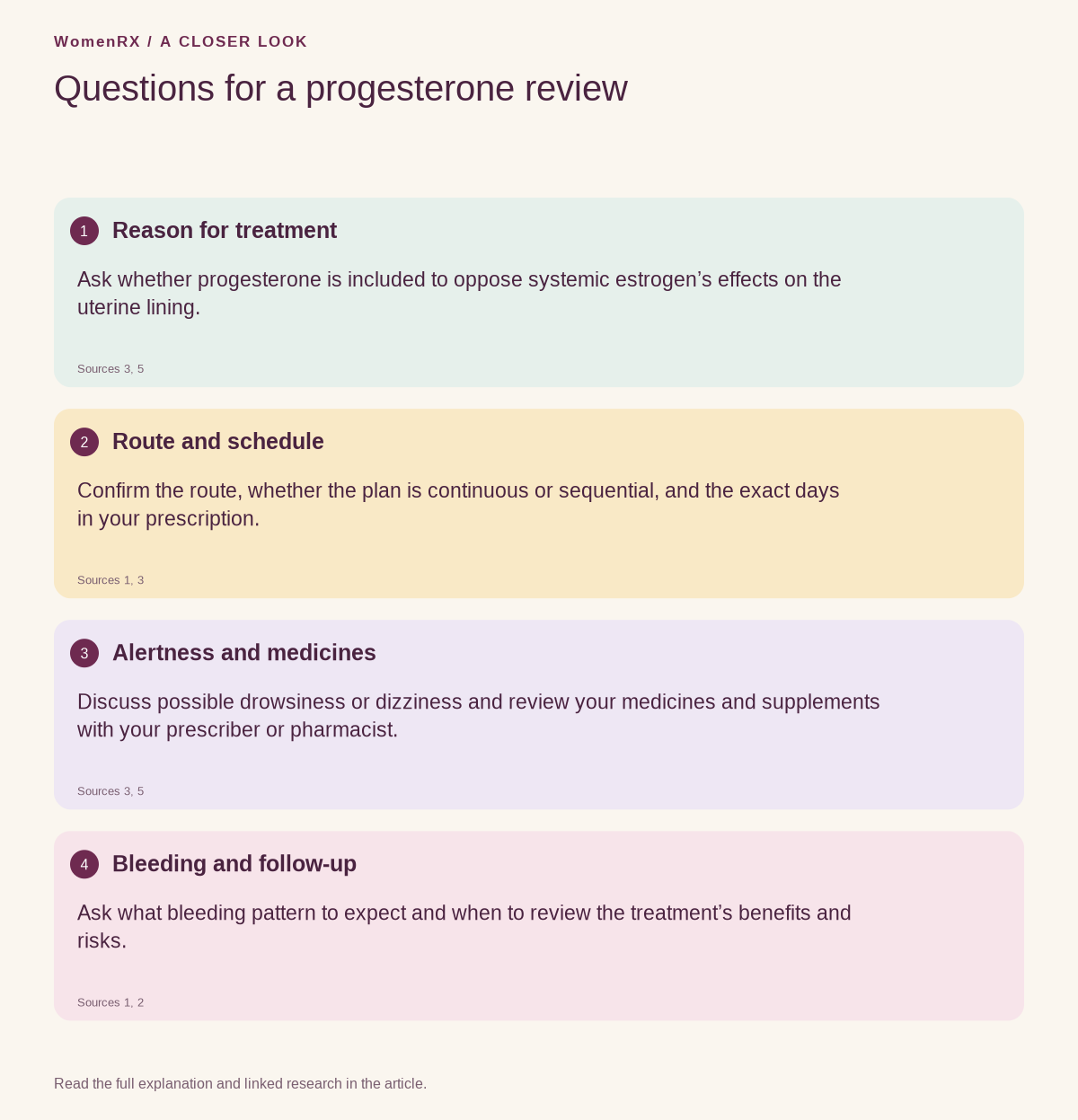
Questions for a progesterone review
Reason for treatment: Ask whether progesterone is included to oppose systemic estrogen’s effects on the uterine lining.35
Route and schedule: Confirm the route, whether the plan is continuous or sequential, and the exact days in your prescription.13
Alertness and medicines: Discuss possible drowsiness or dizziness and review your medicines and supplements with your prescriber or pharmacist.35
Bleeding and follow-up: Ask what bleeding pattern to expect and when to review the treatment’s benefits and risks.12
Read the figure as text
Use these prompts to clarify why progesterone is included, how to follow your prescribed plan, and what to revisit.- Reason for treatment: Ask whether progesterone is included to oppose systemic estrogen’s effects on the uterine lining.35
- Route and schedule: Confirm the route, whether the plan is continuous or sequential, and the exact days in your prescription.13
- Alertness and medicines: Discuss possible drowsiness or dizziness and review your medicines and supplements with your prescriber or pharmacist.35
- Bleeding and follow-up: Ask what bleeding pattern to expect and when to review the treatment’s benefits and risks.12
More questions, answered
Does everyone taking estrogen need progesterone?
Not necessarily. Whether a progestogen belongs in a hormone therapy plan depends on individual circumstances, including the treatment being used. Ask the prescriber to explain the reason for it in your plan rather than assuming it is needed by everyone. 12
Can I substitute a vaginal product for oral micronized progesterone?
Don’t assume the routes or products are interchangeable. A trial found that one particular vaginal progesterone gel regimen with oral estradiol did not fully oppose estrogen’s effects on the endometrium. Ask the prescriber before changing route or product. 4
Sources you can check
- Recommendations | Menopause: identification and management | Guidance | NICEAccessed 2026-09-25Return to first citation
- The 2022 hormone therapy position statement of The North American Menopause Society.“The 2022 Hormone Therapy Position Statement of The North American Menopause Society” Advisory Panel. · Menopause (New York, N.Y.) · 2022Return to first citation
- Chlormadinone acetate versus micronized progesterone in the sequential combined hormone replacement therapy of the menopause.Pélissier C, Maroni M, Yaneva H, Brin S, Peltier-Pujol F, Jondet M. · Maturitas · 2001Return to first citation
- Use of oral estradiol plus vaginal progesterone in healthy postmenopausal women.Sriprasert I, Mert M, Mack WJ, Hodis HN, Shoupe D. · Maturitas · 2021Return to first citation
- Diagnostic and therapeutic use of oral micronized progesterone in endocrinology.Memi E, Pavli P, Papagianni M, Vrachnis N, Mastorakos G. · Reviews in endocrine & metabolic disorders · 2024Return to first citation