Mood Swings in Perimenopause: What Your Pattern Can Tell You
Mood changes can be part of perimenopause, but sleep, persistence, and their effect on your life matter more than a label.
Yes, mood swings can happen during perimenopause, sometimes alongside changing periods and disrupted sleep. A brief irritable day isn’t the same as feeling low or losing interest in life most of the day, nearly every day. Notice when changes happen and how much they affect you. If symptoms persist, interfere with daily life, or make you feel unsafe, seek help rather than waiting for another cycle. 12
Mood swings are common, but they’re not all the same
Perimenopause can bring changes in mood as well as changes in periods, hot flashes, and sleep. Some women have little trouble with these symptoms; for others, they affect work, relationships, or home life. Sleep is one piece worth noticing: trouble falling or staying asleep can leave you feeling irritable, stressed, or anxious, and night sweats can make sleep harder. 12
That doesn’t mean every difficult mood is caused by hormones. Depression can involve biological, psychological, and life circumstances together. More intense irritability, anxiety, sadness, or loss of enjoyment during perimenopause may be signs of depression rather than a passing mood swing. 1 The useful question isn’t simply, “Is this hormonal?” It’s, “What’s happening, how long does it last, and what is it stopping me from doing?”
Make a record you can actually use
For a short daily note, write down four things: your mood in plain words, whether you slept well or had night sweats, any bleeding or spotting, and one line about functioning. For example: “Irritable after a night of waking; period started; got through work but canceled plans.” On a better day, note that too. This is a way to compare your own days, not a diagnostic test or a score you need to get right.
Then look for differences. Does irritability show up mainly after broken sleep? Does a low mood lift, or does it remain through otherwise ordinary days? Are you still able to work, connect with people, and enjoy things you usually enjoy? Periods may become more or less frequent and bleeding may change during perimenopause, so a single date on the calendar may not tell you much about a cycle pattern. Recording bleeding alongside mood gives you context; it doesn’t prove that bleeding or hormone changes caused the mood change. 12
If you’ve experienced depression before, include that in any conversation about a new mood change. You don’t have to decide for yourself whether this is a recurrence or something different. Likewise, a log of shifting moods cannot diagnose depression or bipolar disorder. It can help you describe what you’re experiencing without collapsing every change into “just menopause.”
When to move from noticing to getting help
A hard afternoon that passes is different from symptoms that take over most days. The National Institute of Mental Health advises talking with a health care provider if depression symptoms occur most of the day, nearly every day, for at least two weeks. Symptoms can include more than sadness: loss of enjoyment and difficulty thinking, working, sleeping, eating, or managing daily life also matter. You don’t need to wait two weeks if a change is already seriously disrupting your life. 12
Safety takes priority over pattern-finding. If you’re having thoughts of suicide or struggling to stay safe, call or text 988 for the Suicide & Crisis Lifeline, or use its online chat. In a life-threatening situation, call 911. Don’t wait to see whether the feeling passes with a period or a better night’s sleep. 1
Your notes can make the next conversation more specific: “This comes and goes after poor sleep,” or “I’ve felt unlike myself nearly every day, including on nights I slept.” Both deserve to be heard. The pattern helps describe the problem, while its persistence, impact, and your safety guide how soon to get support. 12
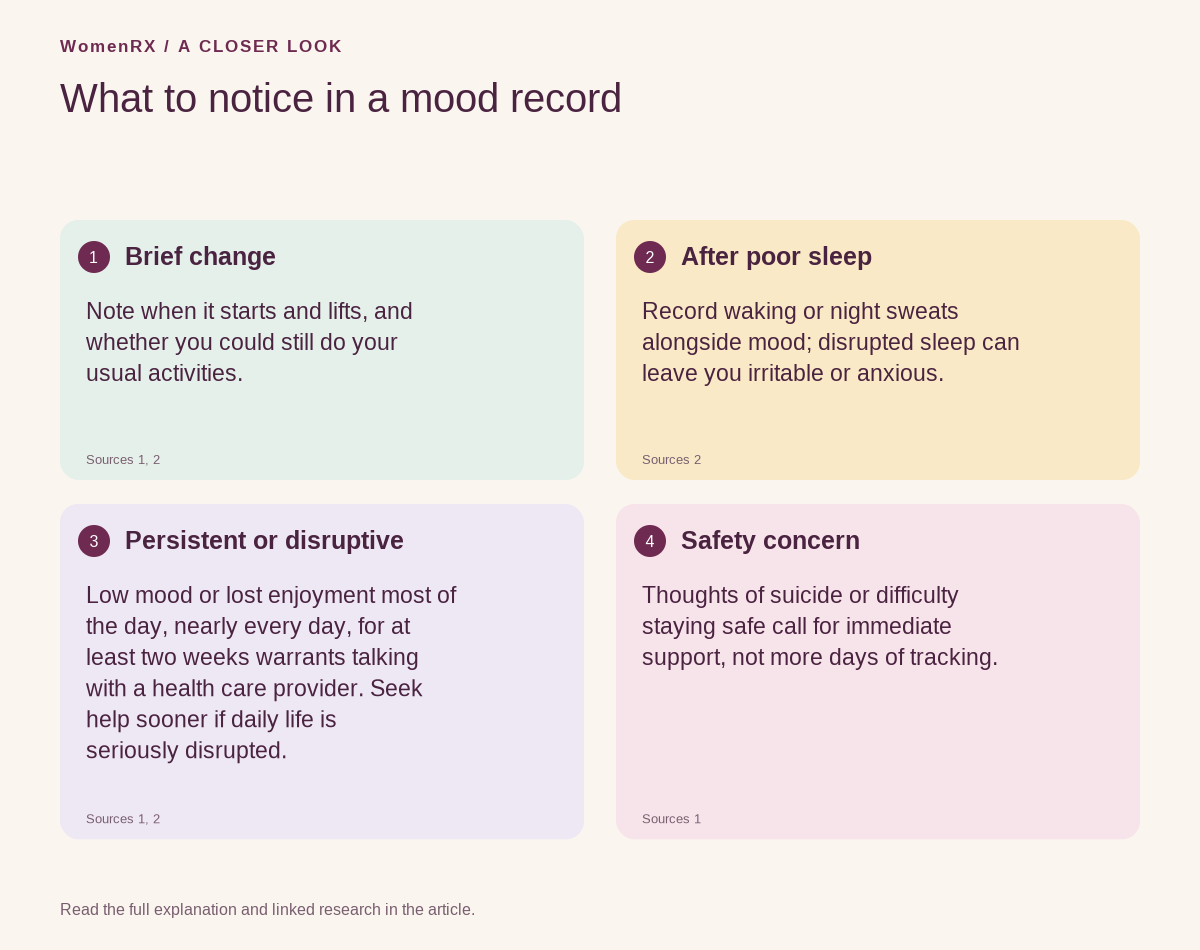
What to notice in a mood record
Brief change: Note when it starts and lifts, and whether you could still do your usual activities.12
After poor sleep: Record waking or night sweats alongside mood; disrupted sleep can leave you irritable or anxious.2
Persistent or disruptive: Low mood or lost enjoyment most of the day, nearly every day, for at least two weeks warrants talking with a health care provider. Seek help sooner if daily life is seriously disrupted.12
Safety concern: Thoughts of suicide or difficulty staying safe call for immediate support, not more days of tracking.1
Read the figure as text
Use the same brief note for mood, sleep, bleeding, and daily functioning; these distinctions help you decide what needs attention.- Brief change: Note when it starts and lifts, and whether you could still do your usual activities.12
- After poor sleep: Record waking or night sweats alongside mood; disrupted sleep can leave you irritable or anxious.2
- Persistent or disruptive: Low mood or lost enjoyment most of the day, nearly every day, for at least two weeks warrants talking with a health care provider. Seek help sooner if daily life is seriously disrupted.12
- Safety concern: Thoughts of suicide or difficulty staying safe call for immediate support, not more days of tracking.1
More questions, answered
If my mood changes happen before a period, does that rule out perimenopause?
No. Periods can become irregular during perimenopause, and a repeated pre-period pattern is worth noting rather than using to rule anything in or out. Record both the mood change and when bleeding starts so you can describe what you’ve noticed. 2