Menopause, Weight, and the Changes the Scale Misses
Body shape and lean mass can shift around menopause even when the number on the scale barely changes.
Weight changes around menopause aren’t explained by one hormone, and they aren’t inevitable. Research describes a pattern of more abdominal fat and less lean mass during the transition, which may not show up as a large change in total weight. The scale, waist, and other health measures each tell you something different, so it helps to consider them together. 4 5 1
The scale gives you a total, not the whole picture
Body weight includes fat, muscle, bone, and water. A stable number can hide a shift in body composition, while a changing number doesn’t tell you what changed. BMI has a similar limitation: it compares weight with height but can’t distinguish fat from muscle or bone. 1
During the menopausal transition and early menopause, research describes a pattern of increased body fat, particularly around the abdomen, alongside lower lean mass. These changes don’t necessarily mean a large increase in total body weight. A retrospective cross-sectional study of 325 women at different menopause stages found differences in fat and lean mass; because it compared groups at one point in time, it shows a pattern, not proof that menopause caused the differences. 4 5
So “weight gain” might mean the scale has gone up, your waist has changed, or your body feels different even though your weight is steady. Experiences vary: interviews with 17 women in perimenopause described different weight and body-shape changes, rather than one shared trajectory. 3
Menopause matters, but it isn’t the only explanation
A clinical review describes body-composition changes around menopause as occurring independently of chronological age. That supports considering menopause as part of the picture, but it doesn’t tell you what caused your particular change. The cross-sectional study also notes that age differences and study design complicate comparisons between menopause groups. Together, this research describes a menopause-associated pattern, not a way to calculate how much of one woman’s change came from menopause, aging, or other influences. 6 4
Symptoms and other life circumstances can also make health habits harder to maintain. In the small interview study, participants described menopause-related symptoms and other life factors as barriers to lifestyle changes. Their accounts help explain why a one-size-fits-all plan may not fit your life, though they can’t tell us how common those barriers are. 3
Match the measure to the question
If you’re trying to understand what has changed, separate a few questions:
- Has my total weight changed? The scale can show a trend, but not whether it reflects fat, muscle, bone, or water. 1
- Has my fat distribution changed? Waist circumference adds information that weight alone can’t provide. More fat around the abdomen rather than the hips is associated with higher risk of heart disease and type 2 diabetes. 1
- What does this mean for my health? BMI and waist are pieces of context, not a complete assessment. Health history and measures such as cholesterol add useful information. 1
These measures aren’t interchangeable. For example, a waist change with little scale movement raises a different question than a sudden change in total weight. You don’t need to treat every body change as a problem, but looking beyond one number can help you choose a more relevant health goal.
Choose a sustainable goal, not a quick fix
A review of weight management in menopause reports that combined diet and exercise approaches can improve weight, body composition, and metabolic risk factors. That supports working on eating and movement habits you can maintain, rather than chasing rapid weight loss. It doesn’t establish one best routine for everyone. A registered dietitian can offer nutrition support if you’d like help making changes that fit your needs. 5 1
Menopause hormone therapy shouldn’t be treated as a weight-loss method. A clinical review says it may help limit central fat accumulation or preserve favorable body composition, but it isn’t a primary weight-loss or obesity treatment. Hormone therapy has established uses such as treating bothersome hot flashes and preventing bone loss; whether it makes sense depends on its benefits and risks for you, not a goal of lowering the scale. 6 2
If your weight changes suddenly or without an obvious reason, that’s different from a gradual change in shape or weight. MedlinePlus advises discussing unexpected gain or loss with a healthcare provider because it can signal a medical problem. 1
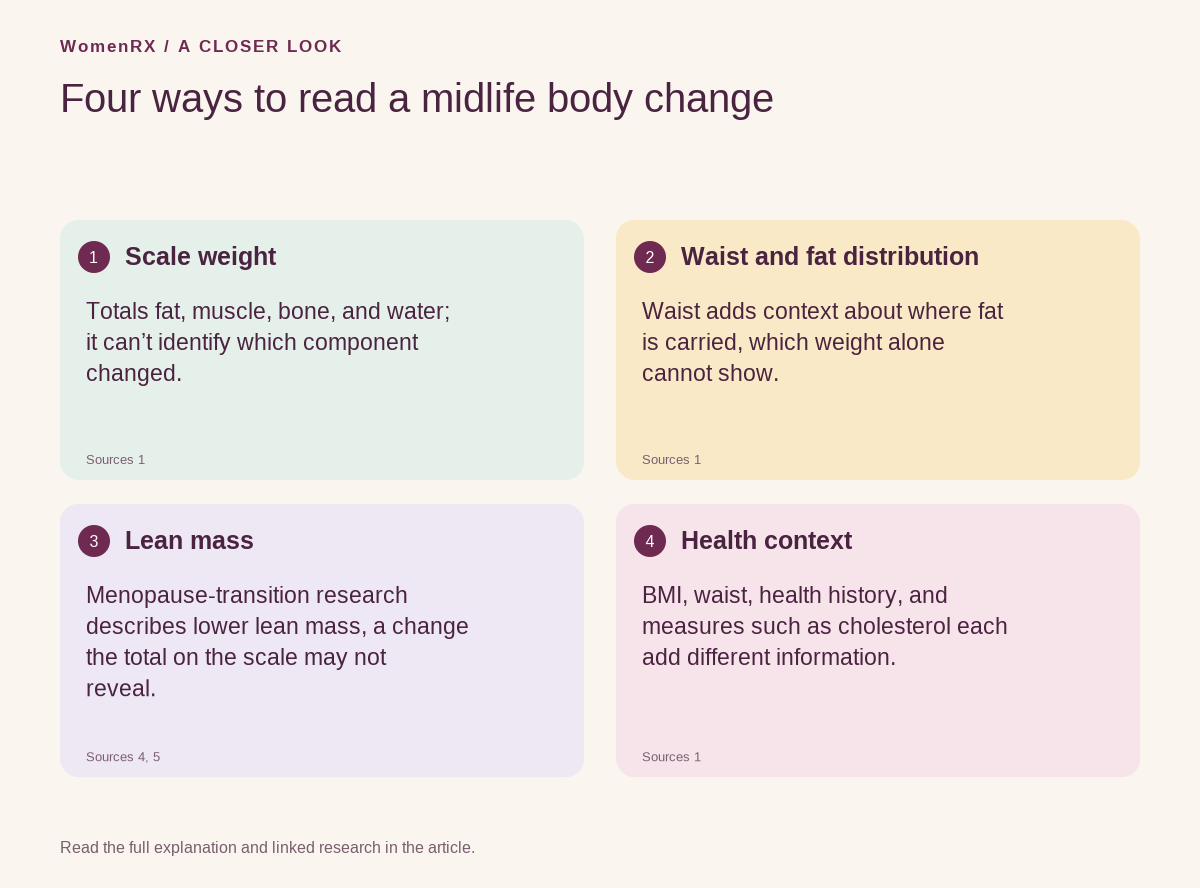
Four ways to read a midlife body change
Scale weight: Totals fat, muscle, bone, and water; it can’t identify which component changed.1
Waist and fat distribution: Waist adds context about where fat is carried, which weight alone cannot show.1
Lean mass: Menopause-transition research describes lower lean mass, a change the total on the scale may not reveal.45
Health context: BMI, waist, health history, and measures such as cholesterol each add different information.1
Read the figure as text
Each measure answers a different question. A change in one doesn’t automatically tell you what has changed in the others.- Scale weight: Totals fat, muscle, bone, and water; it can’t identify which component changed.1
- Waist and fat distribution: Waist adds context about where fat is carried, which weight alone cannot show.1
- Lean mass: Menopause-transition research describes lower lean mass, a change the total on the scale may not reveal.45
- Health context: BMI, waist, health history, and measures such as cholesterol each add different information.1
More questions, answered
Can my body composition change if my weight stays the same?
Yes. Weight totals fat, muscle, bone, and water, so the scale can’t show which component has changed. Menopause-transition research describes shifts in fat and lean mass that may not be reflected in total weight. 1 4
Will hormone therapy make me lose weight?
It shouldn’t be counted on for weight loss. A clinical review says hormone therapy may affect central fat accumulation or body composition, but it isn’t a primary weight-loss treatment. 6
Sources you can check
- Body Weight: MedlinePlusAccessed 2026-09-25Return to first citation
- The 2022 hormone therapy position statement of The North American Menopause Society.“The 2022 Hormone Therapy Position Statement of The North American Menopause Society” Advisory Panel. · Menopause (New York, N.Y.) · 2022Return to first citation
- Experiences of weight and body shape changes during perimenopause.Murphy MB, Lane A, Cuskelly G, Heavey PM. · Women & health · 2025Return to first citation
- The Impact of the Menopausal Transition on Body Composition and Abdominal Fat Redistribution.Szeliga A, Chedraui P, Meczekalski B. · Journal of clinical medicine · 2026Return to first citation
- Weight Management in Menopause: Diet, Physical Activity, Medication, and Surgery.Lu V, Tayachew B, Chevtsov A, Nicklas JM. · Obstetrics and gynecology clinics of North America · 2026Return to first citation
- Clinical review: Menopause hormone therapy in weight management.Younglove C. · Obesity pillars · 2026Return to first citation