Low Desire Around Menopause: Causes and Options to Discuss
Desire can change during perimenopause and after menopause, and comfort, mood, sleep, medication, and relationships may all be part of the picture.
A change in desire around menopause isn’t automatically a problem that needs fixing. First consider whether sex is uncomfortable because of vaginal dryness or pain, or whether desire has changed even when sex feels comfortable. Menopause-related symptoms, mood, sleep, health, medications, and relationship factors can all matter, so possible next steps depend on what’s affecting you most. 4 1
Start with what has changed
There’s no single level of sexual desire you’re supposed to have. Some women notice less desire during perimenopause or after menopause; others describe stable or increased desire. A change matters most if it bothers you or affects the kind of intimacy you want. Desire is connected to more than hormone levels: research in menopausal women also links it with sexual comfort, sleep, general health, mood, body image, and relationship experiences. 4
A useful first distinction is whether you’re avoiding sex because it hurts, or because you don’t feel interested even when sex is comfortable. Those can overlap, but they point toward different conversations.
If dryness or pain is getting in the way
Vaginal dryness and pain with sex can make intimacy less comfortable, and avoiding sex for fear of pain can become part of the pattern. In a cross-sectional study of 266 couples aged 50 to 70, women’s reports of dryness and pain during sex were associated with lower sexual function and avoiding sex because of pain or lack of desire. That association doesn’t prove one symptom caused the other, but it supports taking discomfort seriously rather than treating it as a lack of interest. 3
Dryness, painful sex, and some urinary symptoms can be part of genitourinary syndrome of menopause (GSM). If these symptoms are part of your experience, a conversation can focus on treating them directly. The North American Menopause Society’s 2022 position statement recommends considering low-dose vaginal estrogen, vaginal dehydroepiandrosterone, or oral ospemifene for bothersome GSM symptoms that haven’t improved with over-the-counter therapies, when systemic hormone therapy isn’t otherwise indicated. Which option fits depends on your symptoms and circumstances. 2
If you’re considering hormone therapy, distinguish treatment aimed at vaginal and urinary symptoms from treatment aimed at desire itself. The guidance above addresses GSM; it doesn’t mean estrogen or testosterone is right for every woman or that treating vaginal symptoms will resolve every change in desire. 2 4
If sex feels comfortable but desire is different
Consider what else has changed around the same time. Menopause-related sleep disruption, anxiety or depression, general health, body image, and relationship satisfaction have all been linked with desire in perimenopausal and postmenopausal women. Medicines can also affect sexual desire or performance. These factors don’t rule out a hormonal contribution; they help make the question more specific than “Is my libido low?” 4 1
Depending on what you notice, useful topics to raise might include a medication review, changes in sleep or mood, whether other menopause symptoms are affecting your wellbeing, and what kinds of intimacy feel appealing or comfortable now. If relationship circumstances or communication are part of the picture, that belongs in the conversation too. You don’t have to assume the cause is only physical or only emotional.
A short way to frame the conversation
You might say: “My desire has changed, and I want to work out whether pain, dryness, sleep, mood, medication, or something else is contributing.” Then add what you want help with: less discomfort, more interest, a clearer understanding of possible causes, or simply reassurance that your current level of desire is okay with you.
The next step should match that goal. If discomfort is central, ask about GSM treatment options. If comfort is not the issue, describe the changes in your health, mood, sleep, medications, or relationship that seem relevant. Desire can have several influences at once, and the right conversation doesn’t assume there’s one hormone or one treatment that explains it all. 4 2
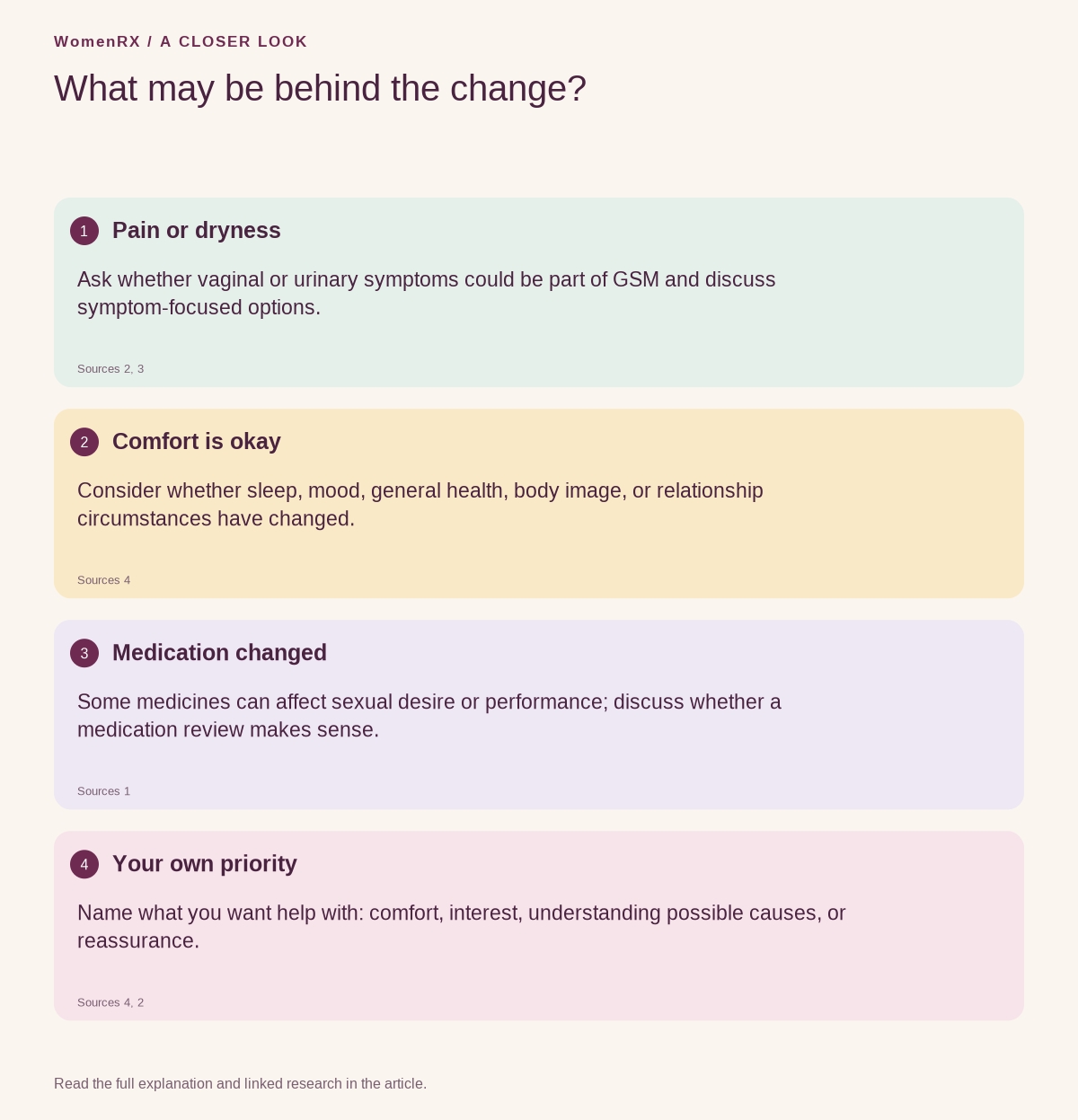
What may be behind the change?
Pain or dryness: Ask whether vaginal or urinary symptoms could be part of GSM and discuss symptom-focused options.23
Comfort is okay: Consider whether sleep, mood, general health, body image, or relationship circumstances have changed.4
Medication changed: Some medicines can affect sexual desire or performance; discuss whether a medication review makes sense.1
Your own priority: Name what you want help with: comfort, interest, understanding possible causes, or reassurance.42
Read the figure as text
Separate discomfort during sex from a change in interest, then consider other influences that may shape what you want to discuss.- Pain or dryness: Ask whether vaginal or urinary symptoms could be part of GSM and discuss symptom-focused options.23
- Comfort is okay: Consider whether sleep, mood, general health, body image, or relationship circumstances have changed.4
- Medication changed: Some medicines can affect sexual desire or performance; discuss whether a medication review makes sense.1
- Your own priority: Name what you want help with: comfort, interest, understanding possible causes, or reassurance.42
More questions, answered
Does low desire by itself mean something is wrong?
No. Desire varies, and some women report stable or increased desire after menopause. A change is worth addressing if it bothers you or interferes with the intimacy you want, not simply because it differs from someone else’s experience. 4
Can vaginal dryness and low desire be related?
They can occur together. Dryness or pain may make sex less comfortable and contribute to avoiding it, though a reported association doesn’t establish that one symptom caused the other. If discomfort is part of the change, it’s worth discussing GSM treatment separately from desire itself. 3 2
Sources you can check
- Sexual Health | MedlinePlusAccessed 2026-09-25Return to first citation
- The 2022 hormone therapy position statement of The North American Menopause Society.“The 2022 Hormone Therapy Position Statement of The North American Menopause Society” Advisory Panel. · Menopause (New York, N.Y.) · 2022Return to first citation
- Genitourinary syndrome of menopause and sexual function, partner knowledge, and the impact on coupled sexual relationships.Costa-Paiva L, Perini MP, de Padua KS, Valadares ALR. · Menopause (New York, N.Y.) · 2025Return to first citation
- A scoping review of the biopsychosocial factors influencing sexual desire in menopause.Metcalfe KB, Meston CM. · Sexual medicine reviews · 2026Return to first citation