Hydration on a GLP-1: When Are Electrolytes Useful?
Most days call for regular fluids, while vomiting, diarrhea, and heavy sweating change what your body needs to replace.
You don’t need an electrolyte drink just because you take a GLP-1 medication. Drink fluids regularly, and try small sips if nausea makes drinking difficult. Vomiting, diarrhea, or heavy sweating can mean you’re losing both fluid and salts; an oral rehydration solution may help with gastrointestinal losses. Persistent symptoms, trouble keeping fluids down, or confusion call for medical help rather than another drink mix. 12345
Start with the kind of day you’re having
On a day without vomiting, diarrhea, or heavy sweating, the practical goal is to keep drinking fluids regularly. Water is a reasonable everyday choice. The four-society nutrition advisory for people using GLP-1 therapy recommends adequate fluids. Individual fluid needs differ, and pale-colored urine can be a useful everyday cue that you’re drinking enough. 123
Nausea can make a full glass unappealing even when you aren’t losing fluid. Try small sips rather than forcing a large drink at once. For example, you might keep water nearby and sip between meals. Nausea alone doesn’t mean you need to add electrolytes. What matters is whether you can continue drinking and whether vomiting or diarrhea begins. 2345
Why vomiting and diarrhea change the picture
Dehydration happens when you lose more fluid than you take in. Vomiting and diarrhea can cause that loss, and heat or exercise can increase it through sweating. With substantial losses, replacing water may not be the whole task: electrolytes are minerals, including sodium and potassium, that help your body maintain fluid balance. 23
This matters on a GLP-1 because stomach and bowel side effects can sometimes lead to dehydration. US prescribing information for liraglutide and tirzepatide describes reports of acute kidney injury associated with fluid depletion; most of the reported cases involved gastrointestinal reactions such as nausea, vomiting, or diarrhea. That’s a reason to take persistent symptoms seriously, not a reason to buy electrolyte products for symptom-free days. 45
If you’re vomiting or have diarrhea and are losing a lot of fluid, an oral rehydration solution is a more purposeful option to ask about than a routine flavored electrolyte drink: it’s intended to replace fluid along with lost salts and sugar. A pharmacist can help you choose one. If you’re nauseated, start with small sips. If you’re sweating heavily in hot weather or during exercise, extra fluids matter; a sports drink may help when you’ve lost a lot of minerals in sweat, though some contain a lot of sugar. 23
Know when drinking at home isn’t enough
If nausea, vomiting, or diarrhea doesn’t go away, contact the clinician who prescribes your medication promptly. The liraglutide and tirzepatide medication guides both call for reporting these symptoms because dehydration can affect the kidneys. If you can’t keep even small sips down, seek prompt medical advice rather than waiting for an electrolyte drink to fix the problem. 245
Get medical help right away if you become confused. Confusion can be a sign of severe dehydration. 2 Get emergency help if your skin, lips, or tongue look blue, grey, pale, or blotchy. On darker skin, these changes may be easier to see on the palms or soles. They can be signs of shock. 3 Also seek prompt assessment for persistent or severe abdominal pain, particularly if it reaches your back, whether or not you’re vomiting. That pattern is a warning sign described in the medication information for pancreatitis and isn’t something to treat as ordinary dehydration. 45
Your usual needs and the right response to fluid loss can differ if you have a condition such as kidney disease or diabetes. If you have one of these conditions and you’re vomiting, having diarrhea, or struggling to drink, ask for advice tailored to your situation. 23 If you’re pregnant or breastfeeding, it’s worth asking your pregnancy or postpartum care team for individualized advice too, especially if you’re losing fluid or having trouble drinking. There’s no single hydration number or electrolyte product that answers all of those circumstances.
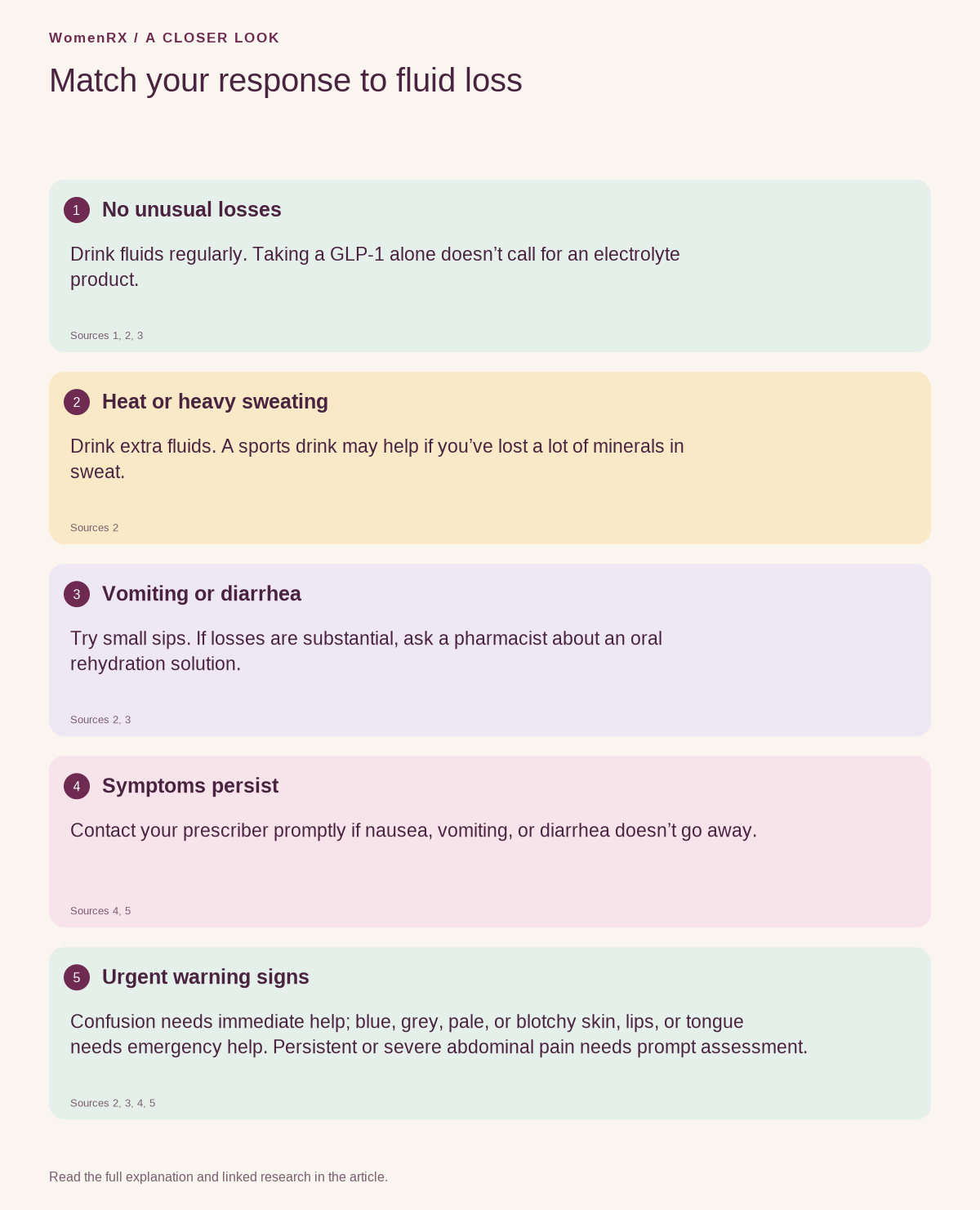
Match your response to fluid loss
No unusual losses: Drink fluids regularly. Taking a GLP-1 alone doesn’t call for an electrolyte product.123
Heat or heavy sweating: Drink extra fluids. A sports drink may help if you’ve lost a lot of minerals in sweat.2
Vomiting or diarrhea: Try small sips. If losses are substantial, ask a pharmacist about an oral rehydration solution.23
Symptoms persist: Contact your prescriber promptly if nausea, vomiting, or diarrhea doesn’t go away.45
Urgent warning signs: Confusion needs immediate help; blue, grey, pale, or blotchy skin, lips, or tongue needs emergency help. Persistent or severe abdominal pain needs prompt assessment.2345
Read the figure as text
The useful dividing line is whether you’re drinking normally, losing fluid, or developing symptoms that drinking alone may not address.- No unusual losses: Drink fluids regularly. Taking a GLP-1 alone doesn’t call for an electrolyte product.123
- Heat or heavy sweating: Drink extra fluids. A sports drink may help if you’ve lost a lot of minerals in sweat.2
- Vomiting or diarrhea: Try small sips. If losses are substantial, ask a pharmacist about an oral rehydration solution.23
- Symptoms persist: Contact your prescriber promptly if nausea, vomiting, or diarrhea doesn’t go away.45
- Urgent warning signs: Confusion needs immediate help; blue, grey, pale, or blotchy skin, lips, or tongue needs emergency help. Persistent or severe abdominal pain needs prompt assessment.2345
Sources you can check
- Nutritional priorities to support GLP-1 therapy for obesity: four-society joint advisory2025Return to first citation
- Dehydration: MedlinePlusAccessed 2026-09-25Return to first citation
- Dehydration - NHSAccessed 2026-09-25Return to first citation
- SAXENDA (LIRAGLUTIDE) INJECTION, SOLUTION [NOVO NORDISK PHARMACEUTICAL INDUSTRIES, LP] | US prescribing information and patient instructionsAccessed 2026-09-25Return to first citation
- ZEPBOUND (TIRZEPATIDE) INJECTION, SOLUTION ZEPBOUND (TIRZEPATIDE) INJECTION, SOLUTION ZEPBOUND KWIKPEN (TIRZEPATIDE) INJECTION, SOLUTION [ELI LILLY AND COMPANY] | US prescribing information and patient instructionsAccessed 2026-09-25Return to first citation