Diarrhea During Menopause: Causes and When to Get Care
Menopause timing doesn’t identify the cause of diarrhea; how long it lasts and what comes with it can help guide your next step.
Diarrhea can happen during perimenopause or after menopause, but timing alone doesn’t show that menopause caused it. Infections and bowel conditions are possible causes. Replace lost fluids during a mild, recent episode. Contact a health care provider if diarrhea lasts more than two days, or arrange a routine evaluation if episodes keep returning. Blood in the stool or sudden, sharp abdominal pain needs immediate medical help. 1 2
Menopause may be the timing, not the explanation
If diarrhea starts during perimenopause or after your periods have stopped, it’s natural to connect the two. But a change occurring around the same time doesn’t establish its cause. Menopause stage is useful context to share, not a diagnosis that explains persistent or recurring diarrhea.
Diarrhea means loose stools at least three times in a day. Common causes include infections from bacteria, viruses, or parasites; irritable bowel syndrome; and, for some people, faster movement of food through the gut after stomach surgery. A brief episode often settles on its own, but diarrhea that lasts more than a few days can signal a problem that needs attention. 2
If symptoms began after a change in your health or medicines, mention that timing when describing what’s happening to your care team. Don’t assume that a menopause connection rules out an infection or another gut cause.
Choose your next step by duration and warning signs
If symptoms are mild and recent: Replace fluids while you watch how things develop. MedlinePlus lists water and salty broth among drink options for adults with diarrhea. As symptoms improve, soft, bland foods may be easier to manage. 2
If diarrhea continues beyond two days: Contact a health care provider. That’s a practical point to stop relying on self-care alone, even if menopause seems like a possible explanation. A clinician may ask about other symptoms and examine you; stool or blood tests may be used when needed to investigate infection or other causes. 2
Get medical help immediately for blood in your stool or sudden, sharp abdominal pain. Black, tarry stools, severe abdominal or rectal pain, or a fever of 102°F or higher are also reasons for an adult to contact a provider. 1 2
Dehydration happens when you lose more fluid than you take in. Diarrhea can cause it; feeling very thirsty or having sunken-looking eyes are listed signs in adults. Contact a health care provider if you notice signs of dehydration. Confusion with dehydration symptoms needs immediate medical help. If you’re having trouble keeping liquids down, small sips of water may be easier than drinking a lot at once. 2 3
If it keeps coming back
Repeated episodes deserve more attention than a single brief spell, especially if they interfere with daily life or occur alongside other symptoms. Arrange a routine evaluation if diarrhea keeps returning, even when each episode settles within two days. Chronic diarrhea is defined as lasting at least four weeks, and it can come and go. You don’t need to wait four weeks to raise a recurring pattern; the separate guidance to contact a provider after two days applies to an episode that’s still going. 2
When you describe the problem, useful details include when it started, how often you’re having loose stools, whether there’s blood or black, tarry stool, and any fever or abdominal pain. Mention menopause stage and any recent health or medicine changes as context, not as proof of the cause.
The practical distinction is simple: use fluids and brief observation only for mild, recent symptoms without warning signs; get medical advice when an episode lasts more than two days or arrange a routine evaluation when episodes keep returning; and act immediately when serious warning signs appear.
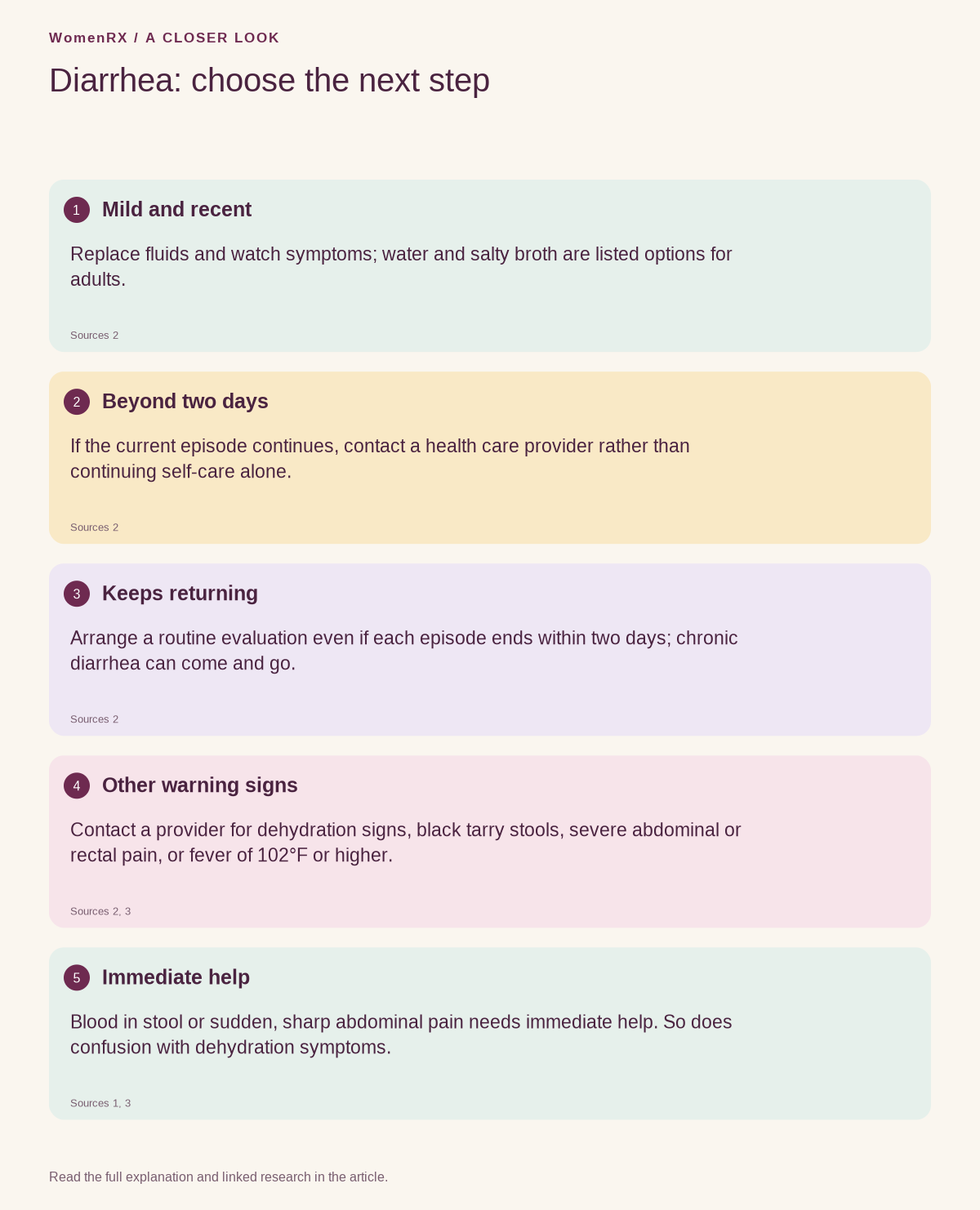
Diarrhea: choose the next step
Mild and recent: Replace fluids and watch symptoms; water and salty broth are listed options for adults.2
Beyond two days: If the current episode continues, contact a health care provider rather than continuing self-care alone.2
Keeps returning: Arrange a routine evaluation even if each episode ends within two days; chronic diarrhea can come and go.2
Other warning signs: Contact a provider for dehydration signs, black tarry stools, severe abdominal or rectal pain, or fever of 102°F or higher.23
Immediate help: Blood in stool or sudden, sharp abdominal pain needs immediate help. So does confusion with dehydration symptoms.13
Read the figure as text
Use duration, recurrence, and warning signs to distinguish brief self-care from routine evaluation or faster medical help.- Mild and recent: Replace fluids and watch symptoms; water and salty broth are listed options for adults.2
- Beyond two days: If the current episode continues, contact a health care provider rather than continuing self-care alone.2
- Keeps returning: Arrange a routine evaluation even if each episode ends within two days; chronic diarrhea can come and go.2
- Other warning signs: Contact a provider for dehydration signs, black tarry stools, severe abdominal or rectal pain, or fever of 102°F or higher.23
- Immediate help: Blood in stool or sudden, sharp abdominal pain needs immediate help. So does confusion with dehydration symptoms.13
More questions, answered
How many loose stools count as diarrhea?
Three or more loose stools in one day meets the definition used by MedlinePlus. Duration and other symptoms help determine what to do next. 2
Does recurring diarrhea mean it is caused by menopause?
No. Recurrence alone doesn’t identify the cause. Chronic diarrhea can come and go, and bowel conditions and infections are among the possible causes of diarrhea. Arrange a routine evaluation if episodes keep returning, even if each ends within two days. Contact a provider if an ongoing episode lasts more than two days. 2
Sources you can check
- Abdominal Pain | MedlinePlusAccessed 2026-09-25Return to first citation
- Diarrhea | MedlinePlusAccessed 2026-09-25Return to first citation
- Dehydration: MedlinePlusAccessed 2026-09-25Return to first citation