Do You Need Electrolytes on a GLP-1 Medicine?
If you feel well and are drinking normally, taking a GLP-1 medicine isn’t a reason to assume you need electrolyte supplements; trouble drinking or ongoing vomiting or diarrhea changes what to do next.
Not automatically. If you’re drinking normally and have no ongoing fluid loss, taking a GLP-1 medicine alone isn’t a reason to assume you need electrolyte supplements. The concern is losing fluid or not drinking enough, especially with ongoing vomiting or diarrhea. Keep fluids within reach, and contact your prescriber if these symptoms persist. Confusion calls for medical help right away; blue, gray, unusually pale, or blotchy skin, lips, or tongue calls for emergency help now. 123
Start with the reason, not the product
Electrolytes such as sodium and potassium help regulate fluid balance. If you’re drinking normally and aren’t losing fluid, taking a GLP-1 medicine alone isn’t a reason to assume you’re low in electrolytes or need a supplement. The practical question is whether you’re losing more fluid than you can replace, or drinking less than usual. 1
Semaglutide products can cause gastrointestinal effects, including nausea, vomiting, and diarrhea. If these make it hard to drink or keep fluids down, fluid loss can lead to dehydration. Semaglutide prescribing information also warns that dehydration related to these symptoms can contribute to kidney problems. 34
Match the response to what’s happening
If you’re eating less but drinking normally and feel well: An electrolyte product isn’t automatically needed. Keep water or other suitable fluids available and drink regularly. Fluid needs vary, so a single daily target won’t fit everyone. 12
If nausea is making drinking difficult: Try small sips and gradually drink more as you’re able. This may make fluids easier to tolerate, but it doesn’t replace medical advice if symptoms persist or worsen. 12
If vomiting or diarrhea is ongoing: Don’t rely on an electrolyte drink to solve the underlying problem. Contact your prescriber promptly about persistent or extended symptoms. They can assess whether you’re dehydrated, whether your kidney function or electrolyte levels need checking, and what kind of fluid replacement is appropriate. 134
For fluid losses from vomiting or diarrhea, an oral rehydration solution is one option to ask about. These products are intended to replace water and some of the sugar, salts, and minerals lost. A sports drink isn’t automatically the same choice: some contain a lot of sugar, and whether a product fits depends on the situation. 12
Check the label before you choose
If you’re considering a product, look at the amount of sodium and potassium per serving, how much water it’s meant to be mixed with, and any added sugar or other ingredients. Those details help you ask a specific question; they can’t tell you whether you have an electrolyte problem. Blood tests may be used to check sodium and potassium, as well as kidney function, when a clinician thinks they’re needed. 1
Your circumstances matter, too. If you have kidney problems, ask your clinician how much fluid is appropriate for you. Kidney problems can increase dehydration risk, but they don’t, by themselves, establish a need for an electrolyte supplement. 1 If you’re pregnant or breastfeeding, have a heart condition, or take medicines that affect fluid balance, mention that when asking your clinician about your fluid needs. None of these circumstances alone establishes a need for an electrolyte supplement.
Know when a supplement isn’t enough
Contact your prescriber promptly if nausea, vomiting, or diarrhea doesn’t go away. Get medical help right away for confusion. If skin, lips, or tongue look blue, gray, unusually pale, or blotchy, get emergency help now. These can be signs of serious dehydration. In those situations, trying another powder or drink could delay the assessment you need. 1234
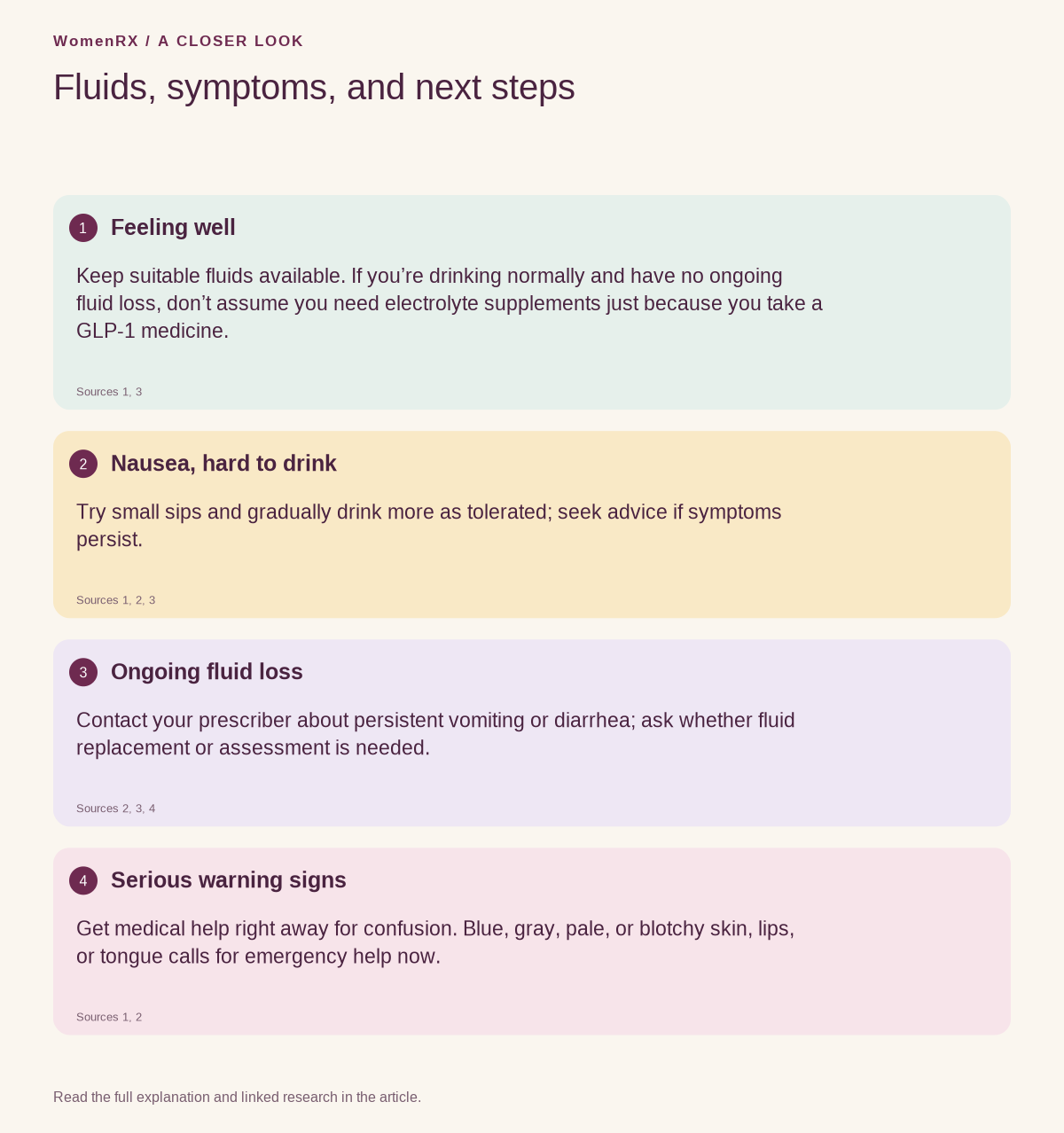
Fluids, symptoms, and next steps
Feeling well: Keep suitable fluids available. If you’re drinking normally and have no ongoing fluid loss, don’t assume you need electrolyte supplements just because you take a GLP-1 medicine.13
Nausea, hard to drink: Try small sips and gradually drink more as tolerated; seek advice if symptoms persist.123
Ongoing fluid loss: Contact your prescriber about persistent vomiting or diarrhea; ask whether fluid replacement or assessment is needed.234
Serious warning signs: Get medical help right away for confusion. Blue, gray, pale, or blotchy skin, lips, or tongue calls for emergency help now.12
Read the figure as text
Use the symptom pattern to distinguish ordinary fluid needs from situations where a supplement is not enough.- Feeling well: Keep suitable fluids available. If you’re drinking normally and have no ongoing fluid loss, don’t assume you need electrolyte supplements just because you take a GLP-1 medicine.13
- Nausea, hard to drink: Try small sips and gradually drink more as tolerated; seek advice if symptoms persist.123
- Ongoing fluid loss: Contact your prescriber about persistent vomiting or diarrhea; ask whether fluid replacement or assessment is needed.234
- Serious warning signs: Get medical help right away for confusion. Blue, gray, pale, or blotchy skin, lips, or tongue calls for emergency help now.12
More questions, answered
Does a smaller appetite mean I need electrolytes?
Not by itself. A smaller appetite doesn’t establish that you’re dehydrated or low in electrolytes. Pay attention to whether you’re also drinking less, vomiting, or having diarrhea. 13
Can I use a sports drink instead?
Sports drinks may help replace electrolytes lost in some situations, but some contain a lot of sugar. If you’re losing fluids through ongoing vomiting or diarrhea, ask your prescriber whether an oral rehydration solution or another approach is suitable. 12
Sources you can check
- Dehydration: MedlinePlusAccessed 2026-09-25Return to first citation
- Dehydration - NHSAccessed 2026-09-25Return to first citation
- WEGOVY (SEMAGLUTIDE) INJECTION, SOLUTION WEGOVY (SEMAGLUTIDE) TABLET [NOVO NORDISK PHARMACEUTICAL INDUSTRIES, LP] | US prescribing information and patient instructionsAccessed 2026-09-25Return to first citation
- OZEMPIC (SEMAGLUTIDE) INJECTION, SOLUTION [A-S MEDICATION SOLUTIONS] | US prescribing information and patient instructionsAccessed 2026-09-25Return to first citation