How Much Protein Do You Need During GLP-1 Treatment?
A useful protein target depends on more than your weight, especially when treatment makes it harder to eat enough overall.
The four-society nutrition advisory doesn’t establish a protein requirement specific to women taking GLP-1 medicines. The general adult reference amount is 0.8 grams per kilogram of body weight daily, while higher amounts have been proposed during active weight loss. Neither is an automatic personal target. The weight used in the calculation, your health, how much you can eat, and strength training all matter.14
Why protein gets attention during treatment
Protein helps your body build and maintain muscle, bone and other tissues. During weight loss, the question isn’t simply whether you’re eating some protein. It’s whether your smaller food intake still meets your needs while you’re trying to maintain strength.14
A four-society advisory on nutrition during GLP-1 treatment discusses protein alongside adequate food and fluids and structured strength training. It’s expert guidance, not a trial showing that one protein target prevents muscle loss for every person taking semaglutide, liraglutide or tirzepatide. The advisory says more protein alone is unlikely to preserve muscle without strength training.1
Three numbers you may hear, and what each means
The general adult recommended dietary allowance is 0.8 grams of protein per kilogram of body weight per day. That’s a population reference, not a target designed for medication-associated weight loss. During active weight reduction, 1.2 to 1.6 grams per kilogram per day has been proposed as a higher range. The advisory also mentions 80 to 120 grams per day as a simpler possible target for some people. These are different ways of approaching the question, not three instructions to follow at once.1
Even the arithmetic needs a decision first: Which weight belongs in the calculation? For someone with obesity, using current body weight can substantially overestimate protein needs. The advisory says there’s no consensus on whether to use actual weight, an adjusted or ideal weight, or fat-free mass. A fat-free-mass calculation requires body-composition information that may not be available.1
For example, multiplying 75 kilograms by 0.8 gives 60 grams; multiplying it by 1.2 to 1.6 gives 90 to 120 grams. That shows how much the chosen reference changes the result. It does not establish that either amount is right for a particular 75-kilogram person, especially when current weight may be the wrong starting point.1
Make the target work with the food you can eat
A number is only useful if your eating pattern can support it. If your appetite is much smaller or large meals feel unappealing, the advisory suggests regular, smaller meals, adequate fluids and a varied selection of foods rather than long stretches without eating. A registered dietitian can help fit a nutrition plan to your needs and preferences.1
As an example of how that might look, breakfast could include yogurt with fruit; a later meal could pair tofu or fish with vegetables and a whole grain; and a snack could be vegetables with hummus. These are food combinations, not a tested GLP-1 menu or a promise that they add up to your protein target. Dairy, eggs, fish, tofu, tempeh, beans, lentils, nuts and seeds are all protein options. Check portions and food labels if you need to estimate how much your own meals provide.123
Protein is only one part of the plan. A varied diet still needs room for produce, whole grains and other foods that help meet overall nutrition needs. And if maintaining muscle is a priority, ask how strength training fits your abilities and health: protein intake by itself is unlikely to do the whole job.13
Does your life stage change the conversation?
Age, health and activity affect protein needs. If you’re older, age belongs in the discussion about your target, but the advisory does not give a separate protein number for older women taking GLP-1 medicines. Nor does it give separate targets for women in their cycling years, perimenopause or postmenopause. Don’t assume the proposed weight-loss range has been established for any one of these groups.14
Pregnancy and breastfeeding call for a separate conversation rather than applying a figure proposed for active weight loss. The advisory does not present its figures as pregnancy- or breastfeeding-specific targets.1 If you’re breastfeeding and have questions about medicines, MedlinePlus advises checking with your healthcare provider.5
A short worksheet for choosing your number
Bring these questions to the clinician or registered dietitian helping with your treatment. They’re meant to turn a general range into a plan you can actually use:
- What is the goal right now? Is the priority meeting general protein needs, supporting nutrition during active weight loss, or addressing another health concern?14
- Which weight should we calculate from? Ask whether current weight would overestimate your needs and whether a different weight basis or body-composition information would change the estimate.1
- What else affects my target? Include your age, activity and medical conditions.4 If you’re pregnant or breastfeeding, say so rather than assuming a general weight-loss figure fits; if you’re breastfeeding, raise any questions about medicines too.15
- Can I meet it while eating enough overall? Walk through a usual day of meals, including days when appetite is low, and discuss food choices and a realistic strength-training plan.12
The useful outcome isn’t the highest number on the page. It’s a target with a clear reason behind it, a calculation you understand, and a way to meet it without letting the rest of your nutrition fall away.1
What the protein numbers actually describe
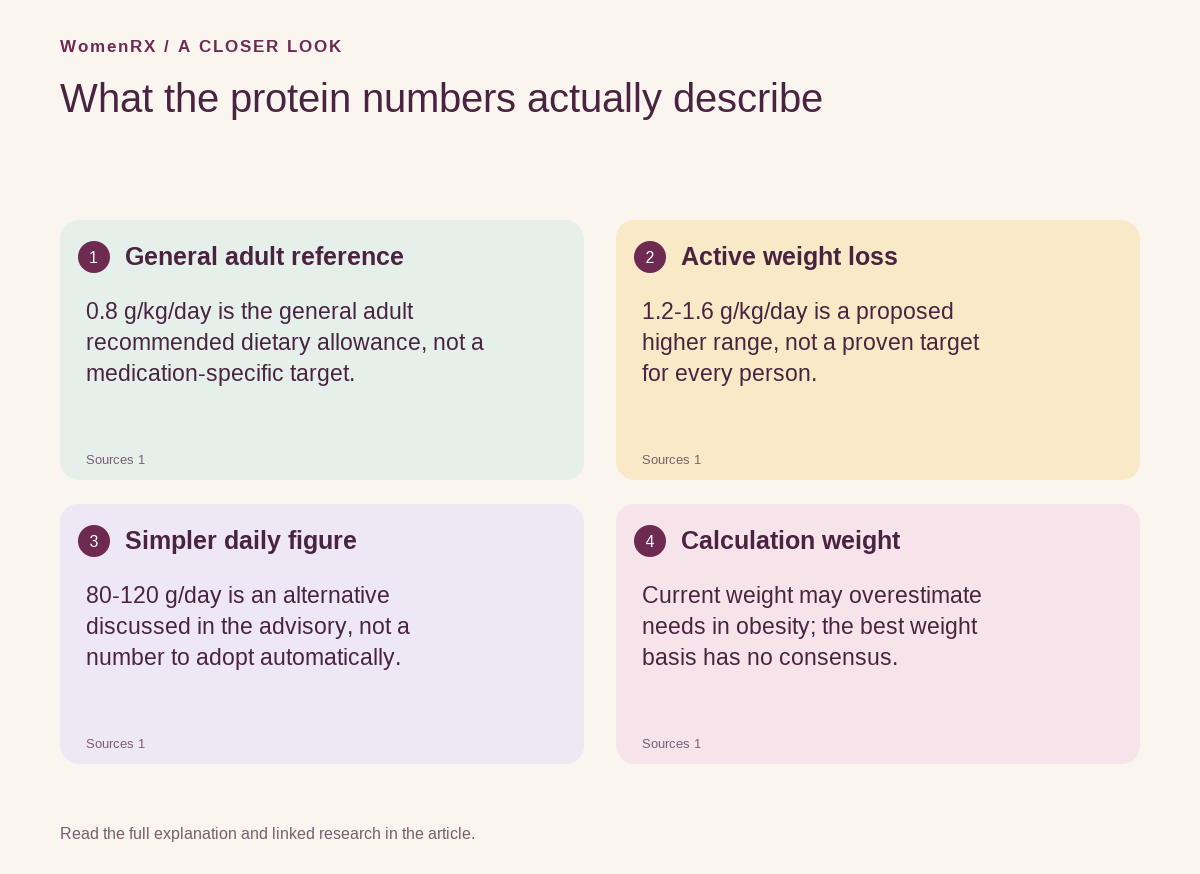
General adult reference: 0.8 g/kg/day is the general adult recommended dietary allowance, not a medication-specific target.1
Active weight loss: 1.2-1.6 g/kg/day is a proposed higher range, not a proven target for every person.1
Simpler daily figure: 80-120 g/day is an alternative discussed in the advisory, not a number to adopt automatically.1
Calculation weight: Current weight may overestimate needs in obesity; the best weight basis has no consensus.1
Read the figure as text
These figures answer different questions. None establishes a personal GLP-1 protein requirement.- General adult reference: 0.8 g/kg/day is the general adult recommended dietary allowance, not a medication-specific target.1
- Active weight loss: 1.2-1.6 g/kg/day is a proposed higher range, not a proven target for every person.1
- Simpler daily figure: 80-120 g/day is an alternative discussed in the advisory, not a number to adopt automatically.1
- Calculation weight: Current weight may overestimate needs in obesity; the best weight basis has no consensus.1
More questions, answered
Does plant protein count?
Yes. Tofu, tempeh, beans, lentils, nuts and seeds can contribute protein. Eating a variety of plant protein foods over the day helps provide the amino acids your body needs; animal foods aren’t required to get dietary protein.24
Sources you can check
- Nutritional priorities to support GLP-1 therapy for obesity: four-society joint advisory2025Return to first citation
- MedlinePlus: Protein in diet, including tofu and other plant sourcesAccessed 2026-09-25Return to first citation
- MedlinePlus: Managing weight with healthy eatingAccessed 2026-09-25Return to first citation
- Dietary Proteins: MedlinePlusAccessed 2026-09-25Return to first citation
- Breastfeeding | Benefits of Breastfeeding | MedlinePlusAccessed 2026-09-25Return to first citation