How to Get Fiber During GLP-1 Treatment
Small, gradual additions from foods can be easier to tolerate than trying to make up for a low-fiber day all at once.
If your appetite is smaller during GLP-1 treatment, try adding a modest portion of a fiber-containing food, such as oats, fruit, vegetables, or whole grains, rather than making a sudden, large increase. Increase slowly because fiber added too quickly can cause gas, bloating, or cramps. If you’re constipated, also consider fluids and activity; if you have diarrhea, focus on fluids and follow the guidance for symptoms that need care. 2 3 1
Start with what feels manageable
You don’t have to fit a large bowl of high-fiber food into a meal when your appetite is reduced. Instead, look for a small, tolerable addition to something you already eat: for example, oats with breakfast, fruit as a snack, vegetables alongside a meal, or a whole-grain choice when it suits you. These are examples, not a prescribed menu. Fruit, vegetables, and whole grains are sources of dietary fiber. 2
A smaller portion can be a practical starting point when usual portions feel like too much. Fiber can help with fullness, so adding a lot at once may make it harder to eat comfortably. The useful tradeoff is gradual: add a little, see how your body responds, and build from there only if it feels manageable. Increasing fiber too quickly can cause gas, bloating, and cramps. 2
Nausea, vomiting, diarrhea, and constipation are reported with GLP-1 and related weight-loss medicines. 5 6 That makes tolerance, not a push to maximize fiber at every meal, a sensible guide.
Choose your next step by your symptoms
If constipation is the main issue: Increase fiber gradually through foods you can tolerate, and pay attention to fluids and movement too. MedlinePlus lists fruits, vegetables, and grains, plenty of liquids, and enough exercise among steps that can help prevent constipation. It also notes that you don’t need a bowel movement every day; a change in your bowel habits is a reason to check with your provider. You can ask whether a medicine might be contributing. 3
If bloating or gas shows up: Don’t keep increasing fiber just because you’re aiming for more. A fast increase can cause or worsen gas, bloating, and cramps. Slow the increase or stay with the amount that feels comfortable rather than adding several new high-fiber foods at once. 2
If you have diarrhea: Don’t assume that adding fiber is the fix. Prioritize replacing lost fluids. MedlinePlus says adults should contact a health care provider for signs of dehydration, diarrhea lasting more than two days, or severe abdominal or rectal pain; as symptoms improve, soft, bland foods may be easier to eat. 1
This symptom-based approach matters because “more fiber” isn’t a universal answer to every bowel change. If constipation persists or your usual bowel pattern changes, ask your provider about it rather than relying on food changes alone. 3
Make room for your own health context
Constipation is common during pregnancy and after giving birth. 4 If you’re pregnant, recently gave birth, or breastfeeding, use food and fluid guidance that fits your situation rather than assuming the same approach works for everyone.
Likewise, if another health condition or care plan has given you limits on foods or fluids, don’t override those limits just to raise fiber or fluid intake. If you’re unsure how to adjust, ask the clinician who knows your care plan. MedlinePlus also recommends asking a provider whether medicines you take may contribute to constipation. 3
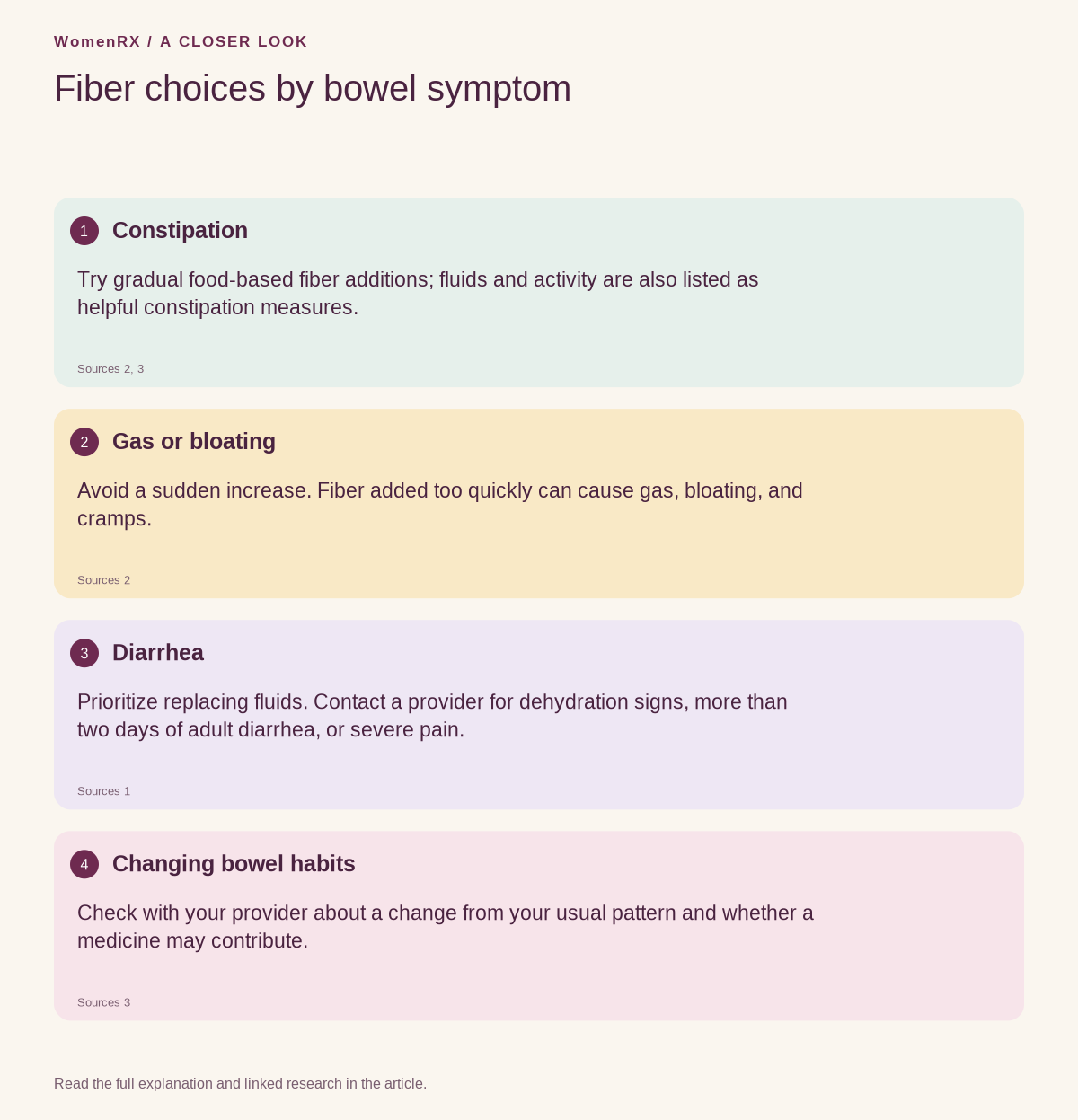
Fiber choices by bowel symptom
Constipation: Try gradual food-based fiber additions; fluids and activity are also listed as helpful constipation measures.23
Gas or bloating: Avoid a sudden increase. Fiber added too quickly can cause gas, bloating, and cramps.2
Diarrhea: Prioritize replacing fluids. Contact a provider for dehydration signs, more than two days of adult diarrhea, or severe pain.1
Changing bowel habits: Check with your provider about a change from your usual pattern and whether a medicine may contribute.3
Read the figure as text
Use your current symptom to choose a cautious next step; fiber is not the answer to every bowel change.- Constipation: Try gradual food-based fiber additions; fluids and activity are also listed as helpful constipation measures.23
- Gas or bloating: Avoid a sudden increase. Fiber added too quickly can cause gas, bloating, and cramps.2
- Diarrhea: Prioritize replacing fluids. Contact a provider for dehydration signs, more than two days of adult diarrhea, or severe pain.1
- Changing bowel habits: Check with your provider about a change from your usual pattern and whether a medicine may contribute.3
More questions, answered
Do I need a bowel movement every day?
No. MedlinePlus says it’s not important to have a bowel movement every day. A change in your usual bowel habits is a reason to check with your provider. 3
What should I do if diarrhea starts?
Focus on replacing lost fluids rather than assuming fiber is the solution. Contact a health care provider for signs of dehydration, diarrhea lasting more than two days in an adult, or severe abdominal or rectal pain. 1
Sources you can check
- Diarrhea | MedlinePlusAccessed 2026-09-25Return to first citation
- Dietary Fiber: MedlinePlusAccessed 2026-09-25Return to first citation
- Constipation | MedlinePlusAccessed 2026-09-25Return to first citation
- Constipation - NHSAccessed 2026-09-25Return to first citation
- Approved weight loss drugs for obesity with a thorough emphasis on GLP-1 agonist medications: A systematic review.Gunasekaran P, Inban P, Agrawal A, Thai A, Aravazhi PS, Tariq H, Prajjwal P, John J. · Disease-a-month : DM · 2026Return to first citation
- Gastrointestinal Adverse Effects of Anti-Obesity Medications in Non-Diabetic Adults: A Systematic Review.Takrori E, Peshin S, Singal S. · Medicina (Kaunas, Lithuania) · 2025Return to first citation