Adding Fiber to Meals While Taking a GLP-1
Start with a small addition to a meal you already eat, then let your appetite and comfort guide the next one.
Start with one modest fiber addition, such as a small bowl of apple oats, and see how you feel before adding another. Increase fiber gradually because a quick jump can bring gas, bloating, or cramps. If constipation is part of the picture, pay attention to fluids too: not drinking enough can contribute to constipation. 13
Build fiber in small steps
There’s no need to turn every meal into a high-fiber meal. Fiber can help digestion and prevent constipation, but increasing it too quickly can cause gas, bloating, and cramps. A gradual approach lets you notice what feels manageable while your appetite and meal size may already be different on a GLP-1 medicine. 15
Try choosing one addition at a time. For example, you might start with the small oat bowl below at breakfast. Once that feels comfortable, you could try fruit as a snack on another day, then add vegetables to dinner or swap in a whole-grain food. If you enjoy beans, they’re another option to try later. Whole grains, fruits, vegetables, and legumes are fiber sources; oats, bran, and linseed are also listed as options in constipation guidance. These are examples, not a required menu or a promise that a particular food will suit everyone. 135
A small apple-oat bowl
Makes one small bowl; the whole bowl is one serving. You’ll need 2 tablespoons rolled oats, ½ cup water, and 1 tablespoon diced apple. Put the oats and water in a small saucepan. Bring to a gentle simmer, stirring until the oats soften. Spoon into a bowl and add the apple. Oats and fruit are ways to bring fiber into a familiar breakfast without making a large batch. 13
Lentil soup for lunch
For a lunch option, Tufts Health & Nutrition Letter publishes a lentil soup made with lentils, carrots, onion, and garlic. The full batch makes eight one-cup servings. You’ll need 1 tablespoon vegetable oil; 1½ cups chopped onion; 1 cup carrots; 2 teaspoons minced garlic; 1½ teaspoons dried thyme; 4 cups low-sodium chicken or vegetable broth; one 14.5-ounce can diced tomatoes; 1¼ cups dry brown lentils; 1¼ cups water; 1 bay leaf; 6 cups baby spinach or 2 cups frozen spinach; 1 tablespoon lemon juice; ½ teaspoon salt; and ⅛ teaspoon pepper. 6
Soften the onion in the oil for 5-7 minutes. Add the carrots, garlic, and thyme and stir briefly. Add the broth, tomatoes, lentils, water, and bay leaf. Cover and simmer for 50-60 minutes, until the lentils are tender. Remove the bay leaf, stir in the spinach until wilted, then add the lemon juice, salt, and pepper. Its stated nutrition per one-cup serving of that published recipe is 160 calories, 5 grams of fiber, and 10 grams of protein. Those figures don’t describe the oat bowl or a changed portion of the soup. 6
If an addition sits comfortably, keep it and try another small one later. If it brings more discomfort, scale it back or pause rather than pushing toward a larger serving. The aim is a pattern you can eat, not a fiber challenge.
Let appetite and comfort shape the portion
GLP-1 medicines can reduce appetite, and a review discusses how reduced food intake may make it harder to get enough fiber-rich foods. Fiber can also make you feel full sooner. So a large bowl of a high-fiber food may not be the most comfortable first experiment if you’re already getting full quickly. 15
A practical adjustment is to put a small fiber-containing food into a meal or snack you already tolerate, instead of adding a separate large portion. If early fullness, nausea, or other gastrointestinal symptoms are making it hard to eat, don’t assume that more fiber is the fix. These medicines can be associated with gastrointestinal reactions; the liraglutide prescribing information, for example, reports severe gastrointestinal reactions in clinical trials. 4
Use symptoms as feedback
- The change feels comfortable: Keep it in your rotation. When you’re ready, add another modest source rather than increasing several foods at once.
- You notice gas, bloating, or cramps: Reduce or pause the newest addition. A rapid increase in fiber can cause these symptoms. 1
- Constipation is a concern: Look at your overall pattern, including fluids. Not drinking enough can contribute to constipation, and general constipation guidance includes drinking plenty of water and other liquids. This is general constipation advice, not a special fluid prescription for everyone taking a GLP-1 medicine. 23
- Your bowel habits change: Check with your prescriber rather than assuming more fiber is the answer. 2
- Nausea, fullness, or other digestive symptoms persist or make it hard to eat: Let your prescriber know instead of continuing to experiment with fiber. GLP-1 medicines can cause gastrointestinal reactions, sometimes severe, and food changes aren’t a substitute for assessing symptoms that continue. 45
These suggestions focus on foods; they don’t establish that fiber supplements prevent or treat medication side effects.
Keep the goal realistic
You don’t have to reach a particular target in one day to make a useful change. Choose foods you like, add them gradually, and adjust based on how your body responds. If you’re pregnant or planning a pregnancy, make medication safety a separate question for your prescriber; food-based fiber suggestions can’t answer it.
No single meal plan will feel right for everyone taking a GLP-1 medicine.
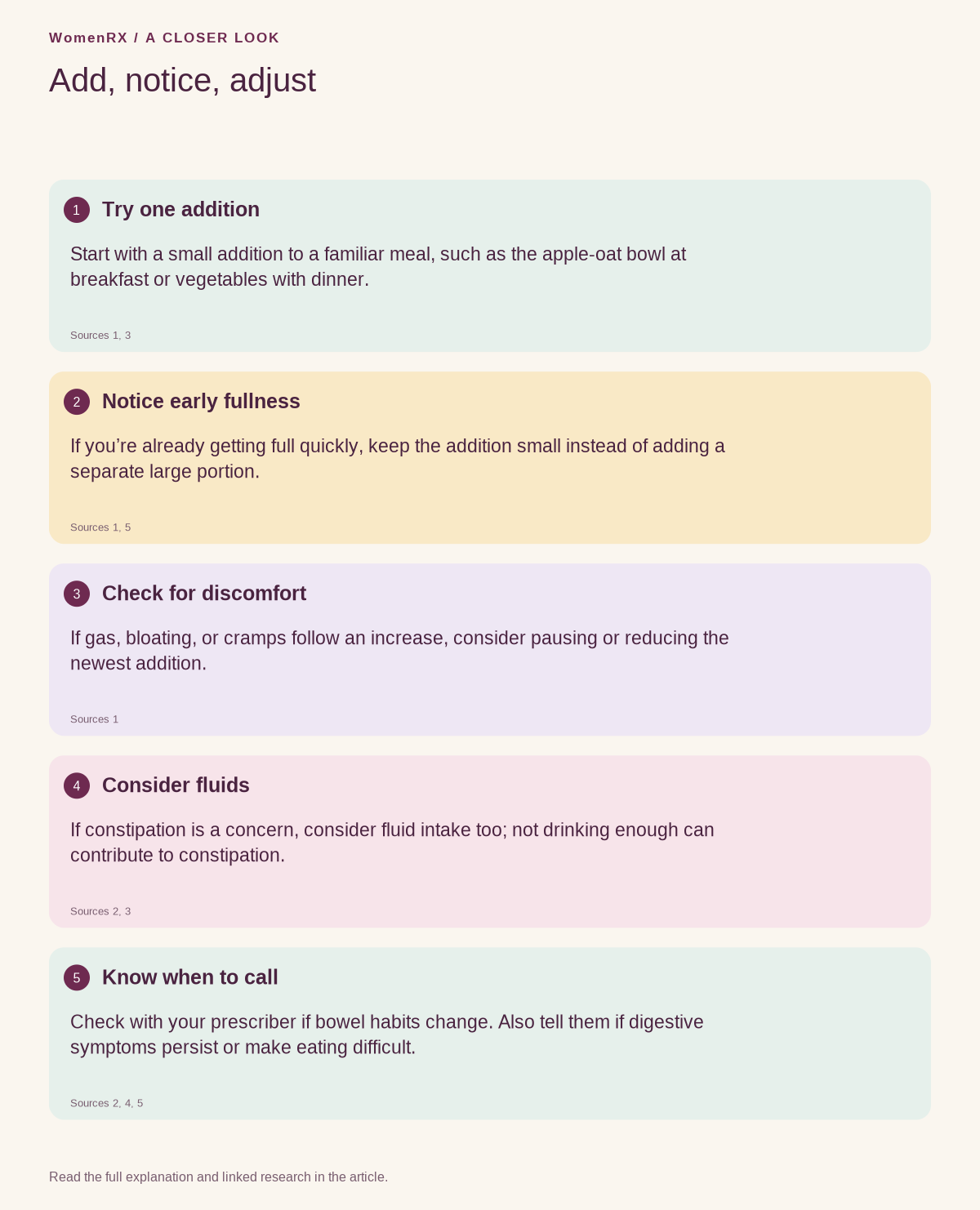
Add, notice, adjust
Try one addition: Start with a small addition to a familiar meal, such as the apple-oat bowl at breakfast or vegetables with dinner.13
Notice early fullness: If you’re already getting full quickly, keep the addition small instead of adding a separate large portion.15
Check for discomfort: If gas, bloating, or cramps follow an increase, consider pausing or reducing the newest addition.1
Consider fluids: If constipation is a concern, consider fluid intake too; not drinking enough can contribute to constipation.23
Know when to call: Check with your prescriber if bowel habits change. Also tell them if digestive symptoms persist or make eating difficult.245
Read the figure as text
A food-first decision path that accounts for appetite, digestive comfort, and fluids.- Try one addition: Start with a small addition to a familiar meal, such as the apple-oat bowl at breakfast or vegetables with dinner.13
- Notice early fullness: If you’re already getting full quickly, keep the addition small instead of adding a separate large portion.15
- Check for discomfort: If gas, bloating, or cramps follow an increase, consider pausing or reducing the newest addition.1
- Consider fluids: If constipation is a concern, consider fluid intake too; not drinking enough can contribute to constipation.23
- Know when to call: Check with your prescriber if bowel habits change. Also tell them if digestive symptoms persist or make eating difficult.245
More questions, answered
Can fiber treat GLP-1 nausea or other side effects?
Don’t assume adding fiber will fix nausea. GLP-1 medicines can cause gastrointestinal reactions, while increasing fiber too quickly can add gas, bloating, or cramps. If your bowel habits change, or digestive symptoms persist or make eating difficult, tell your prescriber. 4125
What if I’m pregnant or planning a pregnancy?
Ask your prescriber specifically about medication safety. These food suggestions don’t address whether a particular medicine is appropriate during pregnancy or when planning one.
Sources you can check
- Dietary Fiber: MedlinePlusAccessed 2026-09-25Return to first citation
- Constipation | MedlinePlusAccessed 2026-09-25Return to first citation
- Constipation - NHSAccessed 2026-09-25Return to first citation
- SAXENDA (LIRAGLUTIDE) INJECTION, SOLUTION [NOVO NORDISK PHARMACEUTICAL INDUSTRIES, LP] | US prescribing information and patient instructionsAccessed 2026-09-25Return to first citation
- Psyllium and Glucomannan as Viscous Fiber Modulators of the Gut-Microbiome-Incretin Axis: Molecular Links to Metabolic Inflammation, Barrier Function, and GLP-1 Receptor Agonist Therapy.Yoon Y, Hwang J, Yang CM, Moon M, Lee JJ, Lam KHS, Castro JC, Suryadi T, Suhaimi A, Lee J. · International journal of molecular sciences · 2026Return to first citation
- Simple Lentil Soup - Tufts Health & Nutrition LetterAccessed 2026-09-25Return to first citation