Hormones in Your 60s: What Postmenopause Can Bring
Menopause symptoms can persist after periods end, but vaginal bleeding afterward should always be checked.
Postmenopause begins after 12 months without a menstrual period. Hormone levels are lower than before menopause, but symptoms don’t follow one schedule: some can persist, while new symptoms may have causes other than menopause. Vaginal bleeding after menopause, even once or when you’re unsure it’s blood, should be assessed. 134
After menopause, the pattern can still vary
Menopause is identified after 12 consecutive months without a menstrual period. The years after that are postmenopause, not a continuation of perimenopause. Estrogen and progesterone levels are lower than before menopause, though hormone patterns and experiences vary. 34
Some symptoms can continue after the final period. Hot flashes, for example, may persist; there isn’t one schedule that applies to everyone. Symptoms that began around menopause may still be worth discussing if they’re affecting sleep or daily life. 23
Genitourinary symptoms means concerns involving the genital or urinary area. If these symptoms are bothersome and over-the-counter options haven’t helped, the North American Menopause Society lists low-dose vaginal estrogen and other treatments as options for some people who don’t have an indication for systemic hormone therapy. 2
A symptom that has continued since menopause isn’t automatically something you have to put up with. At the same time, don’t assume a new or changing symptom is simply due to hormones or aging. Notice what has changed and how it affects you; the appropriate next step depends on the symptom.
Bleeding after menopause needs assessment
Any bleeding from the vagina after menopause should be checked, even if it happened once or you aren’t sure it was blood. Postmenopausal bleeding is not usually caused by cancer, but it can sometimes be a sign of cancer, so don’t wait for it to happen again before seeking medical advice. 1
There are several possible causes. These include polyps, a thickened uterine lining, vaginal or endometrial atrophy, and a side effect of hormone therapy. Cancer is a less common cause. The bleeding alone can’t tell you which explanation applies. 1
If you’re uncertain where the blood came from, say that when you seek advice. The key distinction is simple: bleeding after menopause is a specific reason to get assessed, not a symptom to write off as normal aging. 1
If you’re considering hormone therapy in your 60s
Hormone therapy remains the most effective treatment for hot flashes and other vasomotor symptoms. But the balance of benefits and risks appears less favorable when someone first starts it after age 60 or more than 10 years after menopause. The position statement notes higher absolute risks of coronary heart disease, stroke, blood clots, and dementia in these groups. This is a consideration for an individual decision, not a rule that everyone using hormone therapy must stop at 60. 2
For people who continue hormone therapy, the statement recommends periodically reviewing its benefits and risks. Longer use should be tied to a documented reason, such as persistent vasomotor symptoms, and shared decision-making. 2
The practical takeaway: ongoing symptoms may still have treatment options, but bleeding after menopause needs assessment even if it happens just once.
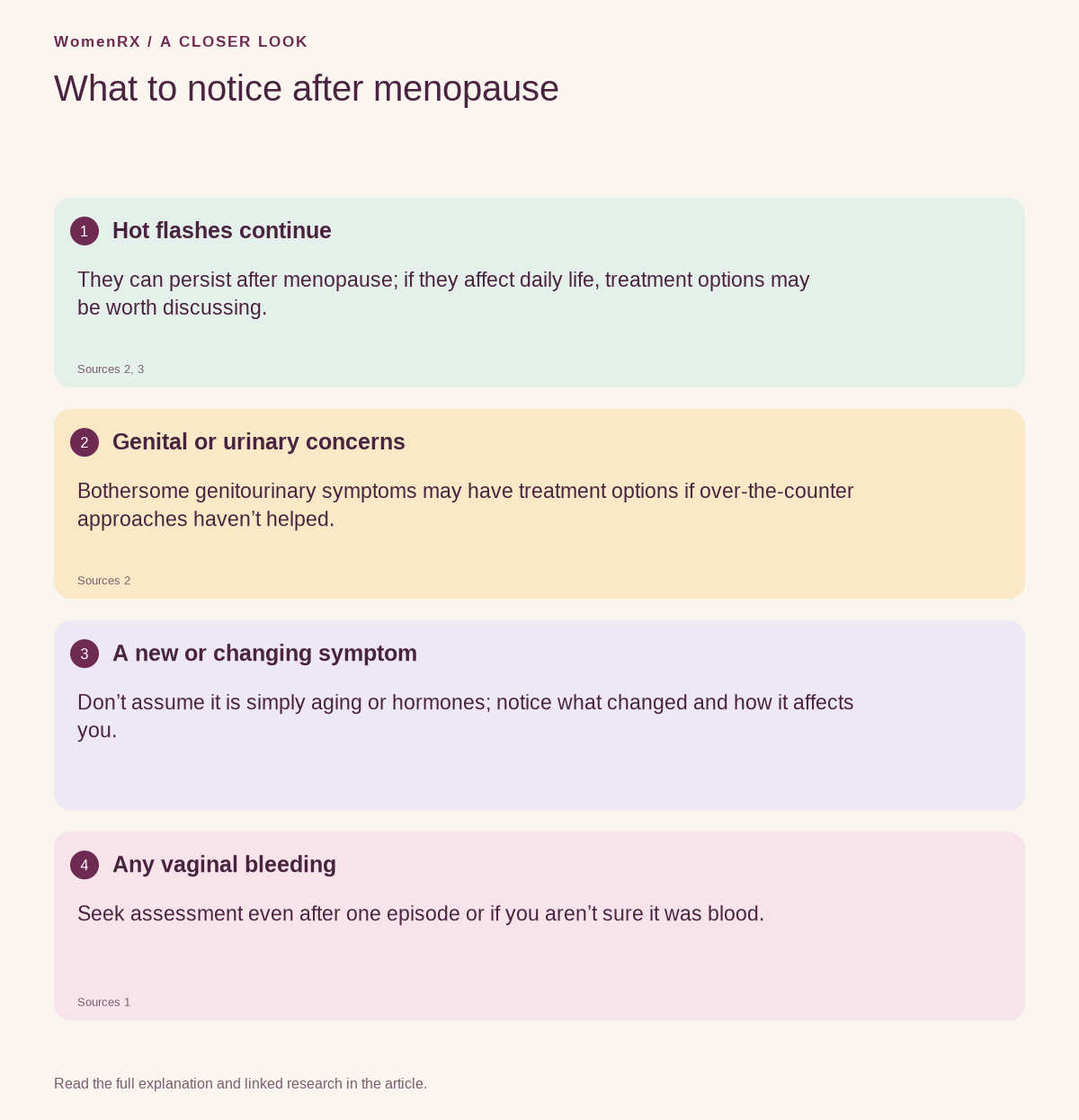
What to notice after menopause
Hot flashes continue: They can persist after menopause; if they affect daily life, treatment options may be worth discussing.23
Genital or urinary concerns: Bothersome genitourinary symptoms may have treatment options if over-the-counter approaches haven’t helped.2
A new or changing symptom: Don’t assume it is simply aging or hormones; notice what changed and how it affects you.
Any vaginal bleeding: Seek assessment even after one episode or if you aren’t sure it was blood.1
Read the figure as text
Separate symptoms that may continue from the specific sign that should be assessed.- Hot flashes continue: They can persist after menopause; if they affect daily life, treatment options may be worth discussing.23
- Genital or urinary concerns: Bothersome genitourinary symptoms may have treatment options if over-the-counter approaches haven’t helped.2
- A new or changing symptom: Don’t assume it is simply aging or hormones; notice what changed and how it affects you.
- Any vaginal bleeding: Seek assessment even after one episode or if you aren’t sure it was blood.1
More questions, answered
Does hormone therapy automatically have to stop at 60?
No. The position statement says the benefit-risk balance appears less favorable when hormone therapy is first started after age 60, but it also recommends periodic review for people who continue it. The decision depends on the reason for treatment and individual circumstances. 2
Sources you can check
- Postmenopausal bleeding - NHSAccessed 2026-09-25Return to first citation
- The 2022 hormone therapy position statement of The North American Menopause Society.“The 2022 Hormone Therapy Position Statement of The North American Menopause Society” Advisory Panel. · Menopause (New York, N.Y.) · 2022Return to first citation
- Metabolic Changes of Perimenopause and Nutritional Advice.Bonnes SLR, Nordhues H, Sood R, Kulick D, Muratore A, Bischof E. · Current nutrition reports · 2026Return to first citation
- Estrogen deficiency in the menopause and the role of hormone therapy: integrating the findings of basic science research with clinical trials.Yang JL, Hodara E, Sriprasert I, Shoupe D, Stanczyk FZ. · Menopause (New York, N.Y.) · 2024Return to first citation