Heart Palpitations During Perimenopause: What to Check
A symptom diary can help you describe what you feel, but it can’t show what your heart was doing during an episode.
Palpitations are a sensation, not a rhythm diagnosis: they can happen during a normal heartbeat or alongside a rhythm change. In a small study of midlife women, researchers recorded both. Note what the sensation feels like, when it happens, how long it lasts, and what else is going on. Discuss recurring or changing episodes with a clinician, and seek prompt assessment if palpitations come with breathlessness.15
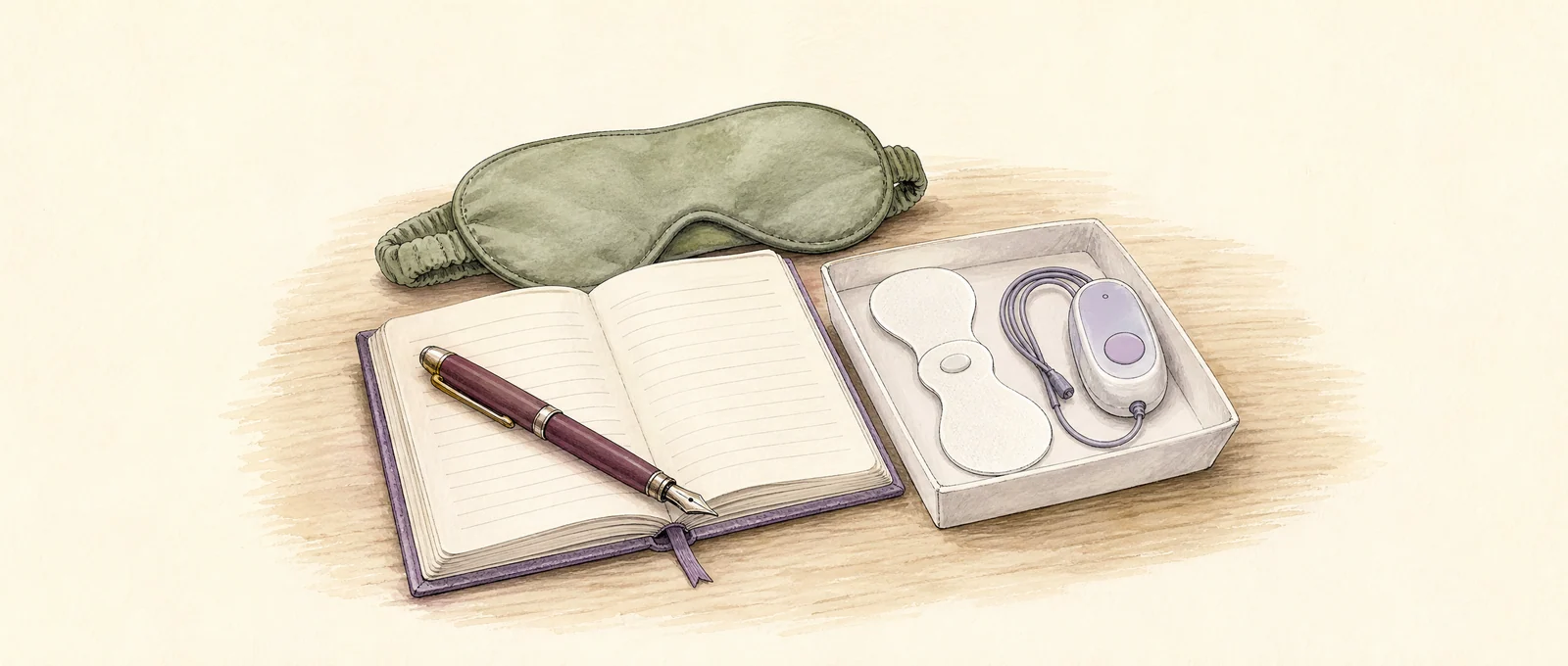
A skipped-beat feeling doesn’t identify the rhythm
A racing, pounding, fluttering, or skipped-beat sensation is called a palpitation. It tells you what you felt, not whether your heart rhythm was normal or whether you had an arrhythmia. In a small pilot study of 30 midlife women, reported palpitations occurred during both altered rhythms and normal sinus rhythm. Symptoms during normal rhythm seemed more common at night. A symptom by itself can’t show what your heart was doing.1
Palpitations are reported during perimenopause and early postmenopause, and their timing may overlap with symptoms such as hot flashes and sleep problems. That overlap doesn’t prove hormones caused a particular episode, and it doesn’t rule out other explanations.23
Keep a brief record of what happens
A few consistent notes can make it easier to explain the pattern at an appointment. Record:
- What it feels like: racing, pounding, fluttering, skipped beats, or another sensation.
- When it happens: the date and time, and whether you were resting, active, asleep, or awake.
- How it starts and stops: whether it seemed sudden or gradual, how long it lasted, and whether it returned. These details describe your experience; they don’t diagnose the rhythm.
- What else you noticed: for example, a hot flash, poor sleep, or breathlessness.
- Relevant context: medication or supplement changes, and any heart or cardiovascular history you want to discuss.
There isn’t one consistent way palpitations have been measured in menopause research. A review found differences in symptom wording, recall periods, and response options. Your notes don’t need to match a research form; the useful part is describing your own episodes clearly.4
When to bring it up
Arrange a clinical discussion if the episodes keep returning, are changing, or concern you. Bring your notes and a list of medicines and supplements. A clinician can decide whether an examination or a heart-rhythm recording is appropriate. In the pilot study, researchers used an ambulatory ECG patch alongside diaries and event-button reports to compare symptoms with recorded rhythms. That illustrates why a diary is useful context, but can’t confirm the rhythm.1
If palpitations come with breathlessness, seek prompt assessment rather than assuming the symptoms are hormonal. Breathlessness and palpitations can overlap with menopause symptoms, but they can also occur with cardiac problems.5
Age, medicines, and cardiovascular history also matter when putting symptoms in context. The menopause transition may be part of the picture, but it isn’t the only detail relevant to an evaluation.
What population studies can and can’t say
In SWAN, researchers identified different patterns of reported palpitations among 3,276 women across the menopause transition. For the analysis of subclinical cardiovascular disease, they used a subset of 1,559 women. In that subset, palpitation patterns were not associated with the study’s measures of carotid atherosclerosis or arterial stiffness. This group-level finding doesn’t show that an individual’s palpitations are harmless or reveal the rhythm during an episode.2
The separate 30-woman pilot found some differences in ECG measures between women with and without palpitations, but its authors described the results as a reason for further research. Neither study can diagnose what is causing your symptoms. A useful next step is to record the pattern, share relevant health context, and discuss whether rhythm evaluation makes sense for you.1
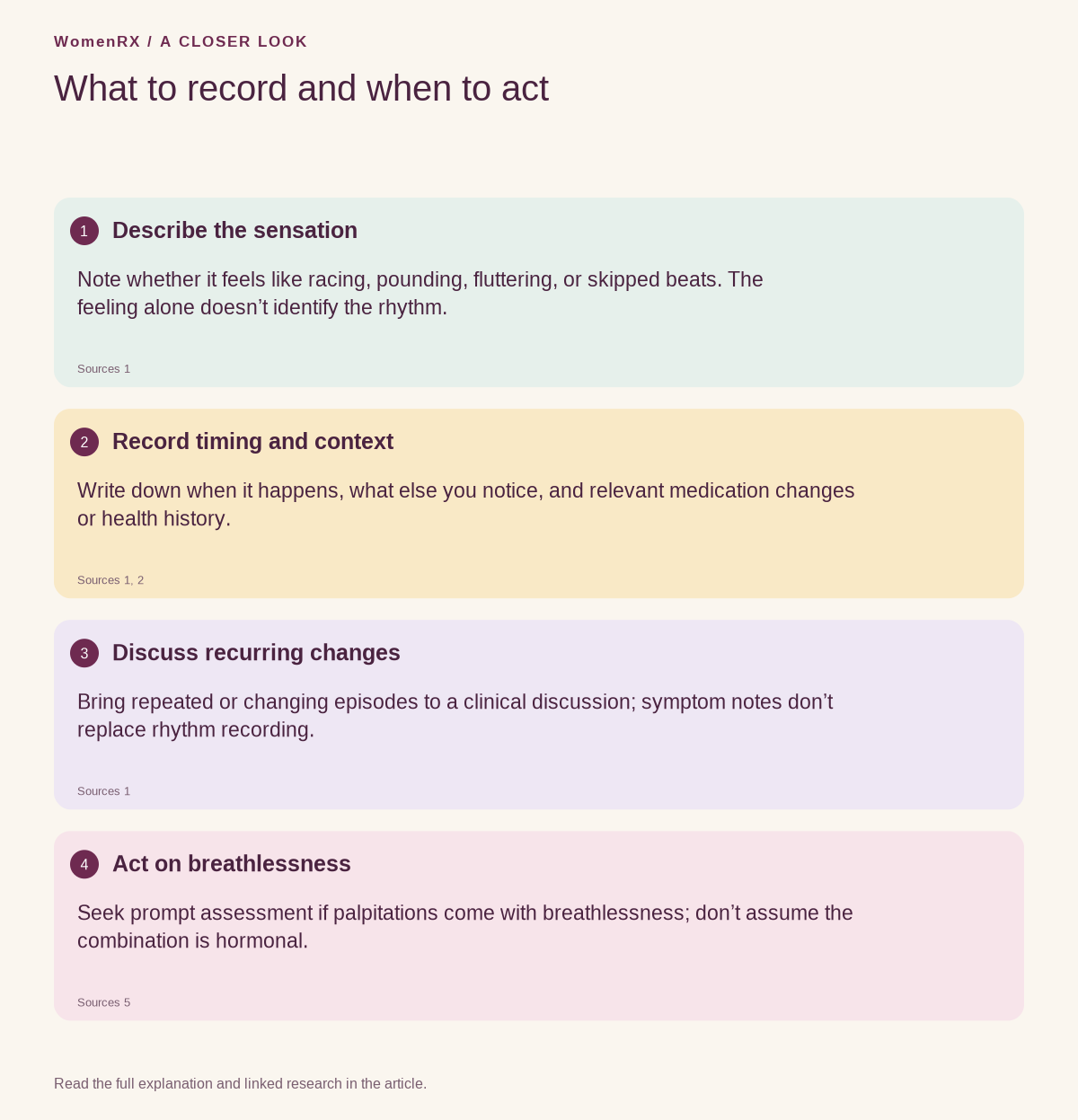
What to record and when to act
Describe the sensation: Note whether it feels like racing, pounding, fluttering, or skipped beats. The feeling alone doesn’t identify the rhythm.1
Record timing and context: Write down when it happens, what else you notice, and relevant medication changes or health history.12
Discuss recurring changes: Bring repeated or changing episodes to a clinical discussion; symptom notes don’t replace rhythm recording.1
Act on breathlessness: Seek prompt assessment if palpitations come with breathlessness; don’t assume the combination is hormonal.5
Read the figure as text
Separate the symptom details you can write down from questions that need clinical assessment. A diary adds context but can’t confirm a heart rhythm.- Describe the sensation: Note whether it feels like racing, pounding, fluttering, or skipped beats. The feeling alone doesn’t identify the rhythm.1
- Record timing and context: Write down when it happens, what else you notice, and relevant medication changes or health history.12
- Discuss recurring changes: Bring repeated or changing episodes to a clinical discussion; symptom notes don’t replace rhythm recording.1
- Act on breathlessness: Seek prompt assessment if palpitations come with breathlessness; don’t assume the combination is hormonal.5
More questions, answered
Does having palpitations mean I have an arrhythmia?
Not necessarily. Palpitations describe a sensation. In a small pilot study of midlife women, symptoms occurred during both normal sinus rhythm and altered rhythms, so the sensation alone can’t establish whether an arrhythmia is present.1
Does perimenopause cause palpitations?
Palpitations are reported during the menopause transition, but timing alone can’t establish the cause of an individual episode. Research has found possible links with symptoms such as hot flashes and sleep problems, while evidence about what contributes to palpitations remains limited.23
Sources you can check
- Palpitations in midlife women: the Menopause Racing Heart Pilot Study.Carpenter JS, Jaynes HA, Alzahrani MA, Chen PS, Kovacs RJ, Tisdale JE. · Menopause (New York, N.Y.) · 2025Return to first citation
- Palpitations across the menopause transition in SWAN: trajectories, characteristics, and associations with subclinical cardiovascular disease.Carpenter JS, Cortés YI, Tisdale JE, Sheng Y, Jackson EA, Barinas-Mitchell E, Thurston RC. · Menopause (New York, N.Y.) · 2023Return to first citation
- Correlates of palpitations during menopause: A scoping review.Carpenter JS, Sheng Y, Pike C, Elomba CD, Alwine JS, Chen CX, Tisdale JE. · Women's health (London, England) · 2022Return to first citation
- Review of menopausal palpitations measures.Sheng Y, Carpenter JS, Elomba CD, Alwine JS, Yue M, Pike CA, Chen CX, Tisdale JE. · Women's midlife health · 2021Return to first citation
- Overlap Between Heart Failure and Menopause: Diagnostic Challenges and Clinical Implications.Kwan TN, Yan A, Jain P, Raju H, Muthiah K. · Heart, lung & circulation · 2026Return to first citation