Headaches During Menopause: Find the Pattern and Next Step
A changing headache may coincide with menopause, but its symptoms and timing matter more than the menopause label.
If a headache is new or distinctly different, arranging a medical review is a cautious next step rather than assuming hormones are the cause. Recurring, worsening, or non-improving headaches are also reasons to seek review. Track the pain, accompanying symptoms, timing, sleep, and medicines. Get help right away for a headache after a head injury or with serious accompanying symptoms. 12
Start with what the headache feels like
The menopause transition can be part of the story, but it isn’t a headache diagnosis. A headache that feels like your usual tight, aching pain may call for a different discussion from one that pulses and comes with nausea or sensitivity to light. Neither description tells you the cause by itself. 13
Migraine is a recurring condition that often causes moderate to severe throbbing or pulsing pain, sometimes on one side. Nausea and sensitivity to light or sound can come with it. Some people also have aura, which may include flashing lights or zigzag lines. Tension-type headaches are another common pattern; tight muscles in the neck, shoulders, scalp, or jaw can play a part. 13
What menopause timing can and can’t tell you
If you still have periods, note whether headaches tend to arrive before or during bleeding. Menstruation can be a migraine trigger, and attacks around a period may be longer or more severe than attacks at other times. A pattern is useful to report, but it doesn’t prove that every headache at that time is migraine or that hormones are its only cause. 34
After menopause, you no longer have period dates to compare with headaches. Migraine often improves after menopause, but that’s a tendency, not a promise about your headaches. Keep other possibilities in view: too little sleep, missed meals, stress, and alcohol can be associated with headaches, and taking too many painkillers can contribute to them. If night sweats are disturbing your sleep, it’s worth recording both, without assuming one explains the other. 124
Make a short record that answers useful questions
For each headache, write down when it started and how long it lasted; where it hurt and what the pain felt like; and whether you had nausea, light or sound sensitivity, or visual changes. Add period timing if relevant, plus sleep, missed meals, stress, and any medicines you took for the pain. A headache diary may help reveal patterns or possible triggers. It can’t diagnose a headache on its own. 234
Pay particular attention to how often you need pain medicine. The NHS migraine guidance warns that taking painkillers more than two days a week can cause more headaches and make migraine harder to treat. That detail helps make a treatment conversation more useful than simply saying the headaches are happening more often. 4
Choose the next step based on the change
If a headache is new or distinctly different from your usual headaches, arranging a medical review is a cautious choice rather than assuming menopause explains it. That’s a prudent next step, not a claim that every new or changed headache signals a serious problem. Separately, contact a clinician if headaches keep returning, are getting worse, or aren’t improving with the steps you’ve tried. 2
For a familiar, mild headache, drinking water, avoiding skipped meals, and making time to relax are reasonable first steps. If an attack has migraine features, lying in a darkened room may help. These measures are less useful as a plan when the pattern keeps changing or you repeatedly need pain medicine. 24
For pain during an attack, acetaminophen or ibuprofen are common pain-relief options; migraine treatment may also include medicine for nausea. What makes sense depends on the headache pattern and how often you need relief. 24 Frequent or severe migraine attacks may call for a separate discussion about medicine to prevent attacks, rather than relying only on treatment when pain starts. 3 In a post-hoc registry analysis of women with difficult-to-treat migraine, headache-day improvements during fremanezumab treatment were comparable between premenopausal and postmenopausal groups. That finding concerns one preventive treatment for migraine, not headaches in general. 6
Menopausal hormone therapy shouldn’t be treated as a general headache remedy. Its established uses include treating bothersome hot flashes and night sweats, while the mention of hormone therapy as a possible migraine aid in MedlinePlus concerns some women with migraines linked to their menstrual cycle. Those are different treatment questions. If you’re considering treatment for menopause symptoms too, bring up the headaches as part of that discussion rather than assuming one treatment will address both. 35
Warning signs that change the plan
Get medical help right away for a headache after a blow to the head, or a headache with a stiff neck, fever, confusion, loss of consciousness, or pain in the eye or ear. If a headache is sudden and severe, let a healthcare provider know promptly rather than waiting to see whether it becomes a pattern. A headache with vision or eye problems, jaw pain when eating, or a sore, tender scalp also warrants urgent assessment. New vision or eye problems belong in this urgent category, not just in your headache record. 12
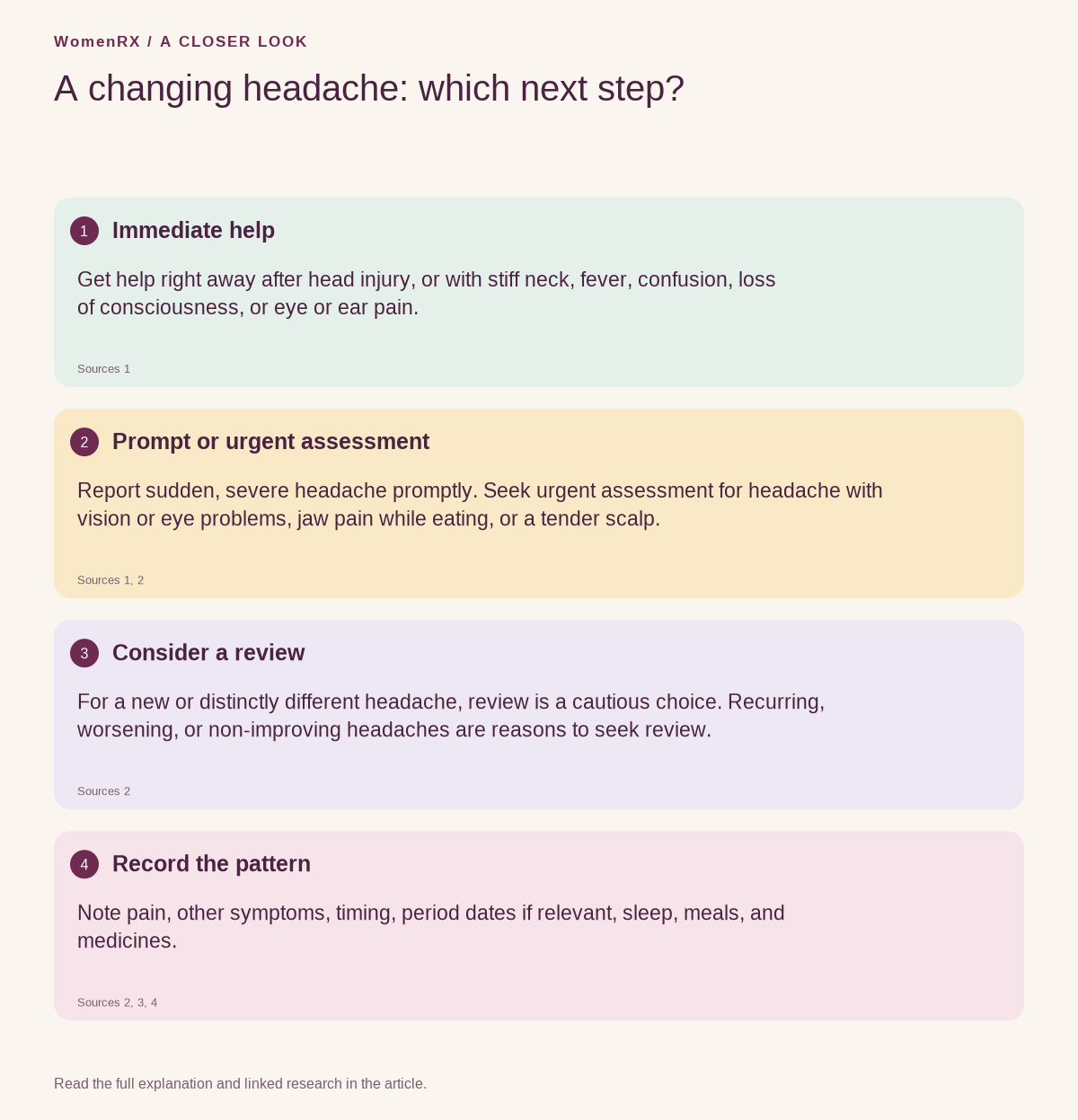
A changing headache: which next step?
Immediate help: Get help right away after head injury, or with stiff neck, fever, confusion, loss of consciousness, or eye or ear pain.1
Prompt or urgent assessment: Report sudden, severe headache promptly. Seek urgent assessment for headache with vision or eye problems, jaw pain while eating, or a tender scalp.12
Consider a review: For a new or distinctly different headache, review is a cautious choice. Recurring, worsening, or non-improving headaches are reasons to seek review.2
Record the pattern: Note pain, other symptoms, timing, period dates if relevant, sleep, meals, and medicines.234
Read the figure as text
Start with warning signs, then consider whether the headache is new, changing, or familiar. These branches guide the next step, not a diagnosis.- Immediate help: Get help right away after head injury, or with stiff neck, fever, confusion, loss of consciousness, or eye or ear pain.1
- Prompt or urgent assessment: Report sudden, severe headache promptly. Seek urgent assessment for headache with vision or eye problems, jaw pain while eating, or a tender scalp.12
- Consider a review: For a new or distinctly different headache, review is a cautious choice. Recurring, worsening, or non-improving headaches are reasons to seek review.2
- Record the pattern: Note pain, other symptoms, timing, period dates if relevant, sleep, meals, and medicines.234
More questions, answered
Does a headache during menopause mean it’s migraine?
No. Migraine may involve pulsing pain, nausea, and sensitivity to light or sound, but tension-type and other headaches occur too. Describe the symptoms and any change from your usual pattern rather than relying on the timing alone. 13
Sources you can check
- Headache | MedlinePlusAccessed 2026-09-25Return to first citation
- Headaches - NHSAccessed 2026-09-25Return to first citation
- Migraine | MedlinePlusAccessed 2026-09-25Return to first citation
- Migraine - NHSAccessed 2026-09-25Return to first citation
- The 2022 hormone therapy position statement of The North American Menopause Society.“The 2022 Hormone Therapy Position Statement of The North American Menopause Society” Advisory Panel. · Menopause (New York, N.Y.) · 2022Return to first citation
- Menopause and its impact on the effectiveness of fremanezumab for migraine prophylaxis: post-hoc analysis of a prospective, real-world Greek registry.Argyriou AA, Dermitzakis EV, Xiromerisiou G, Rikos D, Rallis D, Soldatos P, Litsardopoulos P, Andreou AP, Vikelis M. · Expert review of neurotherapeutics · 2024Return to first citation