Hair Shedding During Tirzepatide: What to Look For
Hair shedding has been reported during tirzepatide treatment, but current evidence can’t tell whether the medicine itself, weight loss, or another cause is responsible.
A link between tirzepatide and hair shedding is possible, but it hasn’t been established as a direct drug effect. Reviews and an observational study report hair-loss associations, while the research remains limited and inconsistent. Substantial weight loss or reduced food intake may contribute, too. Track when shedding began, changes in weight and eating, and whether thinning is diffuse or patterned. 2 3 4
What the evidence can, and can’t, say
Hair loss has been reported by people taking GLP-1 medicines, including tirzepatide. But a report or association doesn’t show that the medicine directly caused the shedding. A 2025 review found a small, varied collection of studies, many without a dermatologist-confirmed diagnosis. Another review also described inconsistent evidence and called for larger studies to clarify the relationship. 2 5
A 2026 retrospective study found higher odds of some types of nonscarring hair loss among adults taking tirzepatide than among matched nonusers. The study also found lower follow-up body mass index among users who had hair-loss outcomes than among users who did not. Because it looked back at health records rather than assigning treatment, it can show an association, not prove what caused it. 4
So the useful answer is neither “tirzepatide definitely causes hair loss” nor “it’s unrelated.” Shedding is a reported concern, but its frequency, causes, and connection to treatment aren’t yet clear enough to predict who will experience it. 2 3
Weight change may be part of the picture
One possible explanation is the strain of substantial weight loss or eating much less. A review of the emerging research describes rapid weight change, calorie restriction, and nutritional changes as possible contributors to telogen effluvium, a type of shedding. That explanation is plausible, but it doesn’t establish that weight loss is the cause in any particular person, or rule out a direct medication effect. 2 3
A lower appetite can also make it harder to eat enough overall. Poor nutrition and a low-protein diet are among the general causes of hair loss listed by MedlinePlus. A review of GLP-1 medicines discusses possible nutritional deficiencies, including iron and protein, but that does not mean shedding proves you have a deficiency. 1 3
That distinction matters: starting supplements without knowing whether you need them may miss the real issue. If your eating has become very limited or your weight is changing substantially, describe that alongside the hair changes. A clinician can decide whether your history calls for a nutritional or medical assessment. 1 3
Notice the pattern, not just the number of hairs
Hair loss isn’t one single condition. Reviews of GLP-1 medicines describe both telogen effluvium and androgenetic alopecia among reported types, but the available research doesn’t reliably tell us which pattern a particular person will develop. 2 3
A practical record can help make the conversation more specific:
- When it started: Note when you first noticed extra shedding and how it has changed.
- What changed around then: Record treatment start or changes, weight changes, reduced appetite or intake, and major illness or stress. These details may help identify possible triggers; they don’t establish the cause. 1 3
- Where you notice it: Describe whether the change seems spread across the scalp or more concentrated in particular areas. If you’re unsure, a few occasional photos in consistent lighting may help you describe what you’re seeing.
- Other health context: Mention any known thyroid condition, past pattern of thinning, or recent nutritional concerns. Thyroid problems and poor nutrition are among the recognized possible causes of hair loss. 1
For women, it’s worth mentioning any relevant reproductive history, including a recent pregnancy or postpartum period, as part of the timeline. The research summarized here does not establish postpartum shedding as a tirzepatide effect or explain how it might interact with treatment. Don’t assume that postpartum timing, a possible nutrient issue, or the medication alone explains the change.
What to discuss before changing treatment
If shedding is bothering you, is continuing, or is changing noticeably, bring the timeline and your concerns to the clinician managing your treatment. Ask what other explanations fit your history and whether an assessment of nutrition or another health condition makes sense. Hair loss can have multiple causes, and treatment depends on the cause. 1
Don’t stop or change tirzepatide on your own based only on an online report of hair loss. The evidence doesn’t identify a single cause or show that every person with shedding needs to stop treatment. A clinician can weigh the hair concern against the reason you’re taking the medication and discuss an appropriate next step.
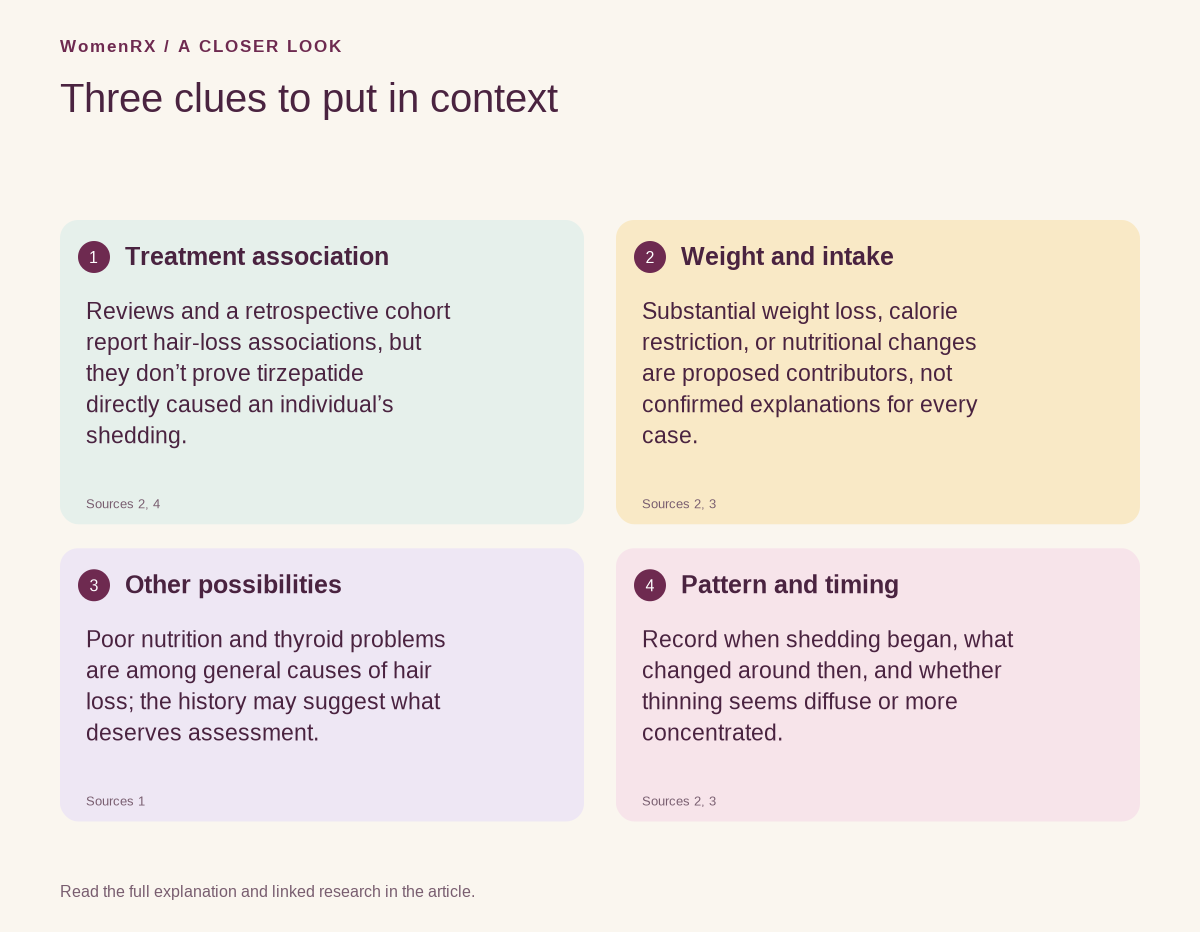
Three clues to put in context
Treatment association: Reviews and a retrospective cohort report hair-loss associations, but they don’t prove tirzepatide directly caused an individual’s shedding.24
Weight and intake: Substantial weight loss, calorie restriction, or nutritional changes are proposed contributors, not confirmed explanations for every case.23
Other possibilities: Poor nutrition and thyroid problems are among general causes of hair loss; the history may suggest what deserves assessment.1
Pattern and timing: Record when shedding began, what changed around then, and whether thinning seems diffuse or more concentrated.23
Read the figure as text
Hair shedding during tirzepatide treatment can have more than one possible explanation. These clues help organize what to discuss without assigning a cause.- Treatment association: Reviews and a retrospective cohort report hair-loss associations, but they don’t prove tirzepatide directly caused an individual’s shedding.24
- Weight and intake: Substantial weight loss, calorie restriction, or nutritional changes are proposed contributors, not confirmed explanations for every case.23
- Other possibilities: Poor nutrition and thyroid problems are among general causes of hair loss; the history may suggest what deserves assessment.1
- Pattern and timing: Record when shedding began, what changed around then, and whether thinning seems diffuse or more concentrated.23
More questions, answered
Does hair shedding mean I’m low in iron or protein?
No. Poor nutrition or a low-protein diet can be among possible causes, and a review discusses nutritional deficiencies as one possible contributor during GLP-1 treatment. But shedding alone can’t identify a deficiency. Share changes in appetite and eating with your clinician rather than assuming a supplement is the answer. 1 3
Can I tell whether the cause is tirzepatide or weight loss?
Not from timing alone. Hair-loss associations have been reported during GLP-1 treatment, and substantial weight change or reduced intake may also contribute. Record when shedding began and what else changed, then discuss the pattern and your health history with your clinician. Current evidence can’t reliably separate these causes for an individual. 2 3 4
Sources you can check
- Hair Loss | Alopecia | Alopecia Areata | MedlinePlusAccessed 2026-09-25Return to first citation
- Alopecia as an Emerging Adverse Effect Associated With Glucagon-Like Peptide-1 (GLP-1) Receptor Agonists for Weight Loss: A Scoping Review.Rojas Lopez RF, Lynett Barrera D, Amaya Muñoz MC, Saavedra Diaz MP. · Cureus · 2025Return to first citation
- GLP-1 therapies and hair loss: A systematic review of current evidence and implications for counseling.Gupta AK, Teasell EM, Economopoulos V, Mirmirani P. · Science progress · 2026Return to first citation
- Nonscarring Alopecia in Adults Treated With GLP-1s: A Propensity Score Matched TriNetX Cohort Study.Katragadda R, Hayden J, Saltagi AK, Welschmeyer AF, Quereshy HA, Karasik D, Rabbani CC, Gourishetti SC, Goslawski AM. · The Laryngoscope · 2026Return to first citation
- The Role of Glucagon-Like Peptide-1 Receptor Agonists in Hair Loss: Clinical Evidence and Proposed Mechanisms.Zarabian N, Farah M, Stines A, Friedman A. · Dermatologic surgery : official publication for American Society for Dermatologic Surgery [et al.] · 2026Return to first citation