Gut Symptoms in Perimenopause: What We Know and What Helps
Digestive symptoms can overlap with the menopause transition, but a change in your gut isn’t proof that hormones are the cause.
A study of women aged 45 to 55 found that stronger menopause symptoms tended to occur alongside stronger gastrointestinal symptoms, but its cross-sectional design can’t show that hormonal changes caused the gut symptoms. Broader reviews describe possible effects of menopause on gut function and microbes, while noting that research is limited. Track patterns, try modest changes for common bloating triggers, and get persistent or concerning symptoms assessed. 1 3 4
The connection is possible, not settled
Bloating, gas, or a change in bowel habits can show up during the same years as perimenopause. That timing may be worth noticing, but it doesn’t establish the cause. Digestive symptoms can have several explanations, including gas related to food, fizzy drinks, or swallowing air. Some people also feel bloated around their period. 1
One study asked 212 women aged 45 to 55 who used social media to complete menopause and gastrointestinal symptom questionnaires. Women reporting more menopause symptoms also tended to report more gastrointestinal symptoms. Because the study was cross-sectional, it captures a relationship at one point in time; it can’t tell whether menopause symptoms led to gut symptoms, whether one influenced the other, or whether another factor contributed. The participants’ age range also doesn’t mean every woman in the study was confirmed to be in perimenopause. 3
A 2025 review describes possible menopause-related effects on gut movement and the gut microbiota, but also emphasizes that relatively few studies have examined gastrointestinal symptoms and quality of life across this transition. Much of the discussion about hormones and gut bacteria is a developing explanation, not a way to diagnose why your symptoms are happening. 4
Look for a pattern without assuming the cause
For a couple of weeks, make a simple note when symptoms occur. Include what you notice, such as bloating, gas, constipation, or diarrhea; when it happens; and whether it seems to relate to meals or menstrual bleeding. This isn’t a diagnostic test. It can help you see whether a pattern repeats and give you a clearer account if you seek care.
If bloating is the main issue, consider one small change at a time. Examples include eating more slowly and chewing with your mouth closed, cutting back on fizzy drinks, taking regular movement breaks or exercising, and reducing a food you already know reliably causes gas. Avoid making broad food restrictions based only on a suspected hormone connection. 1
A pattern around bleeding may be useful to record, since some people experience bloating around their period. But a symptom that happens at other times, persists, or keeps returning shouldn’t automatically be written off as perimenopause. 1
Microbiome claims are ahead of clear treatment evidence
Reviews discuss possible links among changing hormone levels, gut microbes, and gastrointestinal function. They also describe prebiotics and probiotics as potential approaches. That is not the same as showing that a microbiome supplement reliably treats bowel symptoms in perimenopause. The review literature identifies limited evidence about the underlying mechanisms, so a probiotic or prebiotic shouldn’t be treated as an established solution for this specific problem. 4 5 6
When to get symptoms checked
Arrange medical evaluation if bloating is frequent, doesn’t go away, or comes with blood in your stool or unintended weight loss. Seek urgent medical care for bloating with vomiting, diarrhea or constipation, abdominal pain, or fever. A swollen abdomen with sudden, severe abdominal pain needs emergency assessment. 1
If you already have a digestive condition, new or worsening symptoms deserve attention in their own right. The menopause literature on gastrointestinal conditions is still limited, so the timing alone can’t tell you whether a known condition has changed or whether something else is going on. 2 4
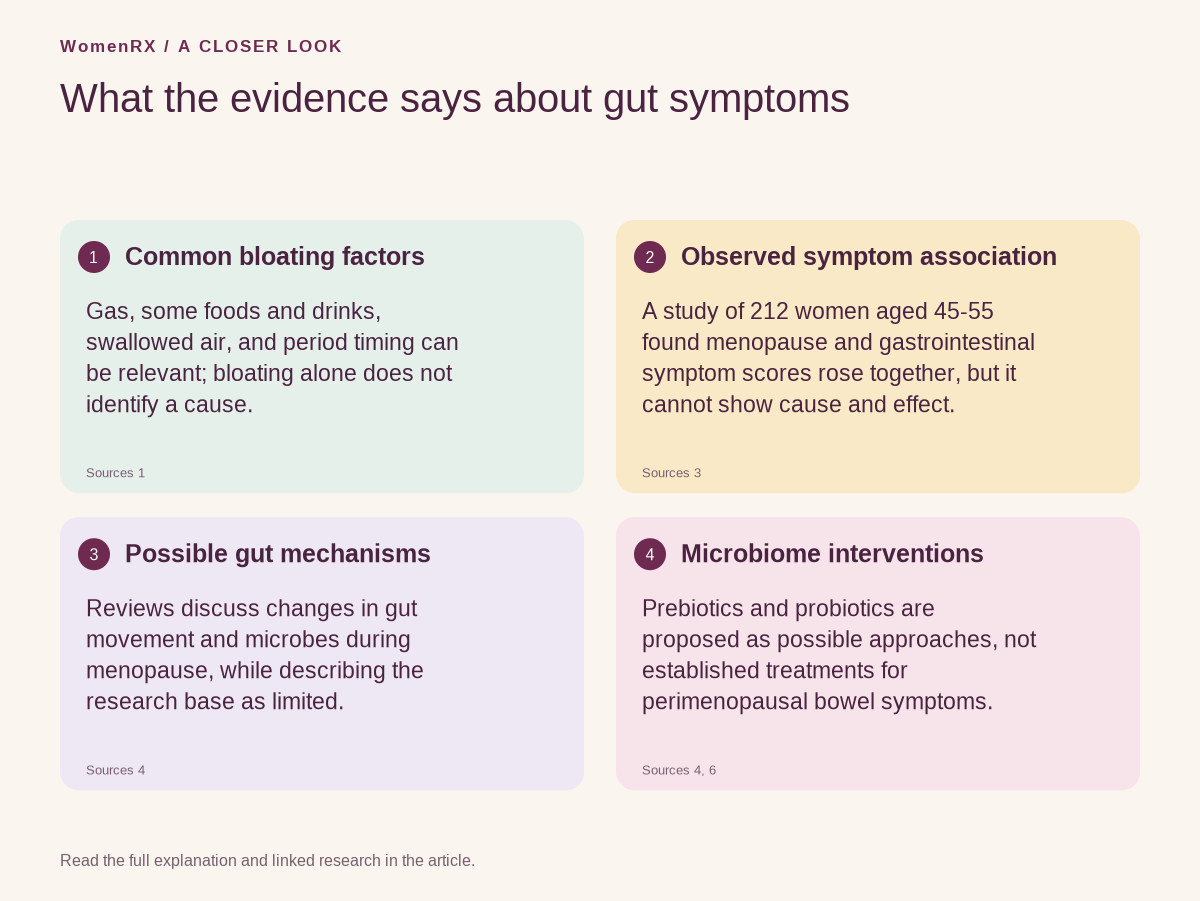
What the evidence says about gut symptoms
Common bloating factors: Gas, some foods and drinks, swallowed air, and period timing can be relevant; bloating alone does not identify a cause.1
Observed symptom association: A study of 212 women aged 45-55 found menopause and gastrointestinal symptom scores rose together, but it cannot show cause and effect.3
Possible gut mechanisms: Reviews discuss changes in gut movement and microbes during menopause, while describing the research base as limited.4
Microbiome interventions: Prebiotics and probiotics are proposed as possible approaches, not established treatments for perimenopausal bowel symptoms.46
Read the figure as text
These distinctions separate observed symptom patterns from possible explanations and established practical advice.- Common bloating factors: Gas, some foods and drinks, swallowed air, and period timing can be relevant; bloating alone does not identify a cause.1
- Observed symptom association: A study of 212 women aged 45-55 found menopause and gastrointestinal symptom scores rose together, but it cannot show cause and effect.3
- Possible gut mechanisms: Reviews discuss changes in gut movement and microbes during menopause, while describing the research base as limited.4
- Microbiome interventions: Prebiotics and probiotics are proposed as possible approaches, not established treatments for perimenopausal bowel symptoms.46
Sources you can check
- Bloating - NHSAccessed 2026-09-25Return to first citation
- Menopause and Inflammatory Bowel Disease: A Systematic Review.Kale T, Yoo L, Kroeger E, Iqbal A, Kane S, Shihab S, Conley S, Kamp K. · Inflammatory bowel diseases · 2025Return to first citation
- Investigating the relationship between menopausal symptoms and gastrointestinal symptoms.Nacar G, Hazar S, Hatun B. · Menopause (New York, N.Y.) · 2026Return to first citation
- Menopause and gastrointestinal health and disease.Ley D, Saha S. · Nature reviews. Gastroenterology & hepatology · 2025Return to first citation
- Sex hormones and functional gastrointestinal disorders in menopausal women.Li Z, Zheng Y, Shen F, Zhou X. · Frontiers in endocrinology · 2026Return to first citation
- The gut microbiota in menopause: Is there a role for prebiotic and probiotic solutions?Liaquat M, Minihane AM, Vauzour D, Pontifex MG. · Post reproductive health · 2025Return to first citation