What Probiotics Actually Do for Gut Health
Some probiotics have helped specific digestive symptoms in trials, but the strain and the problem being studied matter more than a broad “gut health” promise.
A probiotic may be worth considering for a specific symptom, but it isn’t a general fix for digestion. A small trial found less bloating with one multi-strain product in adults with functional bowel disorders; another reported digestive improvements with a named strain in adults selected for elevated weight and body fat. Neither finding applies to every probiotic or every gut complaint. 2 3
If you’re looking at probiotics because your stomach feels “off,” start with the symptom, not the supplement shelf. Recurrent bloating, constipation and diarrhea aren’t one condition. A study showing that one formulation helped one group of people can’t tell you whether a different product will help your particular problem.
Where the findings are most useful
Recurrent bloating with a functional bowel disorder: In a randomized, placebo-controlled trial, 38 adults with functional constipation, functional diarrhea or functional abdominal bloating and distension received either a multi-strain probiotic or a placebo for eight weeks. The researchers reported less severe bloating and less interference from bloating in daily life with the probiotic. That’s a reason to take the formulation seriously as a research finding, but the trial was small and combined people with different bowel problems. It doesn’t show that probiotics reliably correct constipation or diarrhea on their own. 3
Several digestive symptoms in a selected adult group: A separate placebo-controlled trial tested Lactobacillus plantarum GKM3 for four weeks in 59 adults ages 20 to 40 selected for elevated weight and body fat. Researchers reported more frequent bowel movements and improvements in symptoms including reflux, nausea, abdominal pain and constipation. The result concerns GKM3 in that population. It doesn’t establish that another L. plantarum strain will do the same thing, or that GKM3 treats a diagnosed digestive disease. 2
Acute infectious diarrhea in children: This is a different question from an adult’s ongoing bowel symptoms. Reviews described by the NIH Office of Dietary Supplements suggest that certain probiotics may shorten acute diarrhea in children, but trials disagree, and effectiveness in developed countries remains unclear. That pediatric evidence isn’t a reason to assume a probiotic will help an adult with persistent diarrhea. 1
Notice what changes across these examples: the condition, the people studied, the probiotic and the outcome measured. “Supports gut health” leaves out the details you’d need to judge a product.
Check the strain, not just the familiar name
Probiotics are identified by genus, species and strain. Two products can both say Lactobacillus plantarum yet contain different strains; GKM3 is the strain designation in the trial above. Probiotic effects can be strain-specific, so a species match alone isn’t a match to the research. If a label doesn’t identify the strains in its product, you can’t use that label to confirm that it contains the formulation studied. 1 2
Probiotics may influence the microbes in your digestive tract, but they don’t necessarily move in permanently. Whether they temporarily colonize the gut varies with the strain, the person’s existing microbiota and the part of the gut examined. A microbiome change is interesting; what matters to you is whether the symptom you hoped to improve actually improves. 1
Here’s a practical way to make the decision: name the symptom you want help with, then look for research on the same strain or blend, in people with a similar problem, measuring an outcome you care about. If you try a product and that symptom isn’t improving, don’t keep taking it just because the label promises better gut health. If symptoms are worsening or keep coming back, getting them assessed is more useful than cycling through supplements.
Is there a different answer for women?
These adult findings don’t establish that probiotics work better for women than for men, or that menstrual cycling or menopause changes the expected benefit. The functional-bowel trial excluded pregnant and breastfeeding women, so its findings don’t answer the question for those life stages. The GKM3 trial’s reported results likewise don’t establish a women-specific effect. For you, the more useful match is still the particular symptom, strain and study population, rather than a product marketed broadly “for women.” 2 3
Match the complaint to the study
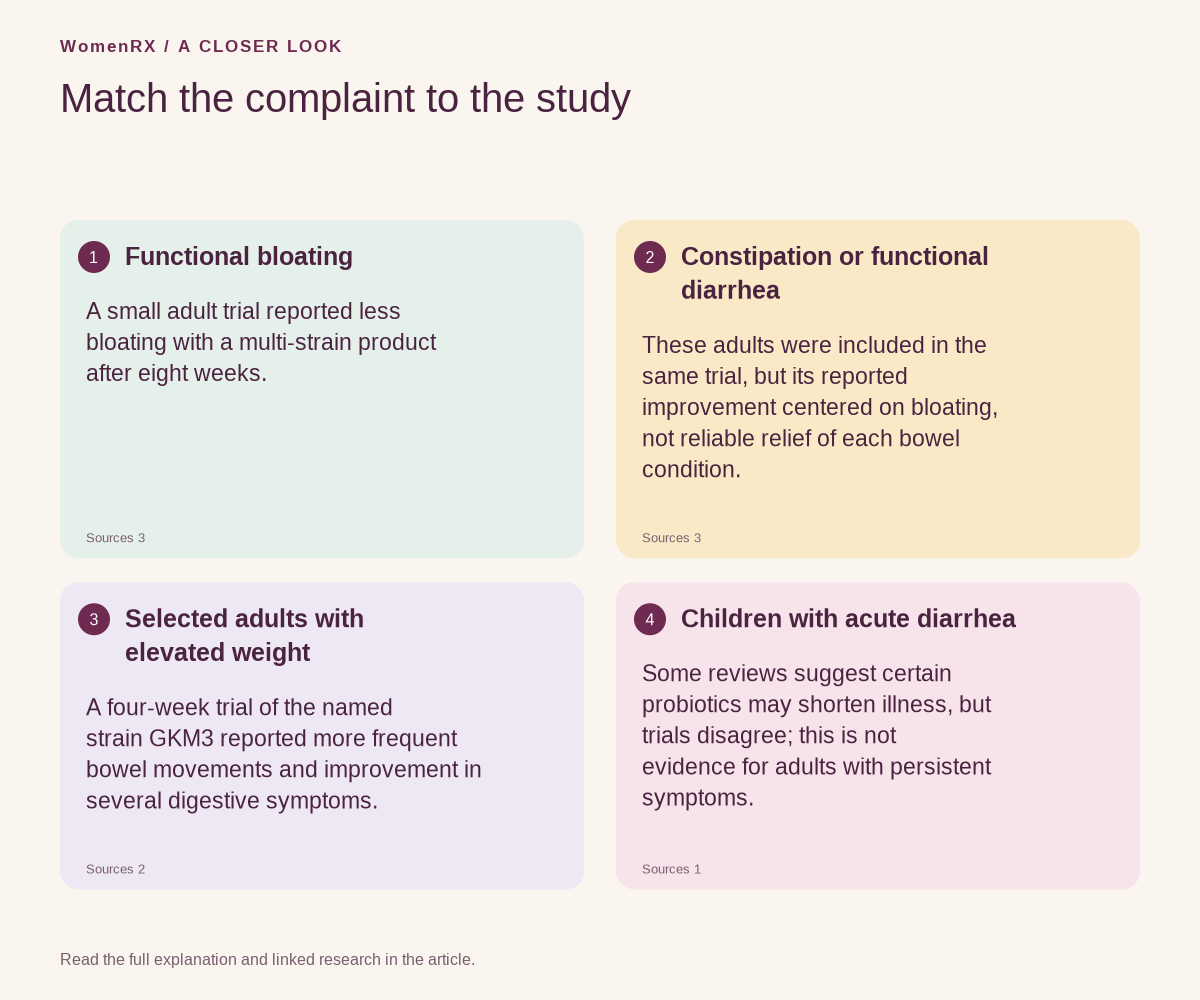
Functional bloating: A small adult trial reported less bloating with a multi-strain product after eight weeks.3
Constipation or functional diarrhea: These adults were included in the same trial, but its reported improvement centered on bloating, not reliable relief of each bowel condition.3
Selected adults with elevated weight: A four-week trial of the named strain GKM3 reported more frequent bowel movements and improvement in several digestive symptoms.2
Children with acute diarrhea: Some reviews suggest certain probiotics may shorten illness, but trials disagree; this is not evidence for adults with persistent symptoms.1
Read the figure as text
The probiotic evidence changes with the symptom, formulation and people studied.- Functional bloating: A small adult trial reported less bloating with a multi-strain product after eight weeks.3
- Constipation or functional diarrhea: These adults were included in the same trial, but its reported improvement centered on bloating, not reliable relief of each bowel condition.3
- Selected adults with elevated weight: A four-week trial of the named strain GKM3 reported more frequent bowel movements and improvement in several digestive symptoms.2
- Children with acute diarrhea: Some reviews suggest certain probiotics may shorten illness, but trials disagree; this is not evidence for adults with persistent symptoms.1
Sources you can check
- Probiotics - Health Professional Fact SheetAccessed 2026-09-25Return to first citation
- Impact of probiotic Lactobacillus plantarum GKM3 on gastrointestinal health in overweight and obese individuals: A randomized clinical trial.Tsai YS, Lin XB, Lin SW, Chen YL, Hsu CL, Chen CC. · Clinical nutrition ESPEN · 2025Return to first citation
- Therapeutic Modulation of the Gut Microbiome by Supplementation with Probiotics (SCI Microbiome Mix) in Adults with Functional Bowel Disorders: A Randomized, Double-Blind, Placebo-Controlled Trial.Bang WY, Moon JS, Kim H, Lee HB, Kim D, Shin M, Jung YH, Shin J, Yang J. · Microorganisms · 2025Return to first citation