Bloating During Perimenopause: Patterns, Possible Causes, and Next Steps
Bloating can overlap with cycle changes, gas, or constipation, so the pattern is useful information, not proof that hormones are the cause.
Bloating can happen around menstrual periods, and digestive causes such as gas or constipation are common. Research has suggested that gut symptoms may change around menstruation and perimenopause, but it doesn’t show that new or ongoing bloating should automatically be blamed on hormones. Track when it happens, bowel changes, meals, and cycle or bleeding dates; seek assessment if it’s frequent, persistent, or comes with concerning symptoms. 1 2
Start with the pattern, not the label
A full or uncomfortable belly, or feeling that your abdomen is bigger than usual, can count as bloating. Gas is a common cause; some foods and fizzy drinks, swallowing air while eating, and constipation can contribute. Some people also notice bloating around their period. 1
That makes timing worth noticing, but it doesn’t make bloating a menopause symptom by default. A review of research on women with and without irritable bowel syndrome (IBS) described gastrointestinal symptoms around menstruation and perimenopause. It discussed changing ovarian hormone levels as one possible contributor, but also called for more research to confirm the role of hormones. The findings don’t establish that hormones explain an individual person’s symptoms. 2
Keep a simple record, even if periods are irregular
For a few weeks, make a brief note when bloating occurs and when it eases. Include:
- Timing: Note the date, whether bloating comes and goes or stays, and when you have any bleeding. If your cycles are irregular, record the dates rather than trying to assign symptoms to a predictable cycle phase.
- Food and drinks: Record what you ate or drank before symptoms, including fizzy drinks. Look for a pattern rather than assuming one food is responsible.
- Bowel changes: Note whether you’re constipated, having diarrhea, or passing stool as usual. Constipation can contribute to bloating, though addressing constipation doesn’t relieve bloating for everyone. 1 3
- Other symptoms: Note pain, vomiting, fever, or changes in your weight or stool, if present. These details can help distinguish an occasional digestive pattern from symptoms that deserve assessment. 1
This is a practical record, not a validated test for a hormonal or digestive condition. It can help you describe what’s happening without treating an apparent pattern as a diagnosis.
What the pattern may suggest
If bloating clusters around bleeding and then settles, a cycle-related pattern is possible. Period-related bloating is recognized, and research reviews have reported digestive symptoms around menstrual phases. But a cycle link doesn’t rule out a separate digestive cause, especially if symptoms persist between periods or change over time. 1 2
If bloating tends to occur alongside constipation or changes after meals, those details may point toward digestive factors worth discussing. Gas is a common cause, and constipation is one known contributor. Bloating itself is nonspecific, so a record can suggest questions to explore but can’t identify the cause on its own. 1 3
Try low-risk adjustments without cutting out whole food groups
If you notice a consistent connection, you could try one small change at a time, such as reducing a fizzy drink that seems to trigger symptoms, then note whether anything changes. Chewing with your mouth closed may reduce swallowed air, and regular movement can support digestion and may help when you feel bloated. 1
Avoid making a long list of foods off-limits based on a few uncomfortable days. A pattern is more useful when you can compare similar situations, and broad restriction can make it harder to tell what is actually associated with symptoms.
When to seek an assessment
Arrange medical assessment if bloating is frequent, feels severe, or doesn’t go away, rather than assuming it’s part of perimenopause. Seek advice sooner if it comes with unintentional weight loss or blood in your stool. Bloating with vomiting, diarrhea or constipation, abdominal pain, or fever also warrants prompt attention. 1
A swollen abdomen with severe, sudden-onset abdominal pain needs emergency care. 1
Bring your notes if you have them, but you don’t need to wait until you’ve tracked symptoms for weeks to seek care when symptoms are persistent or concerning.
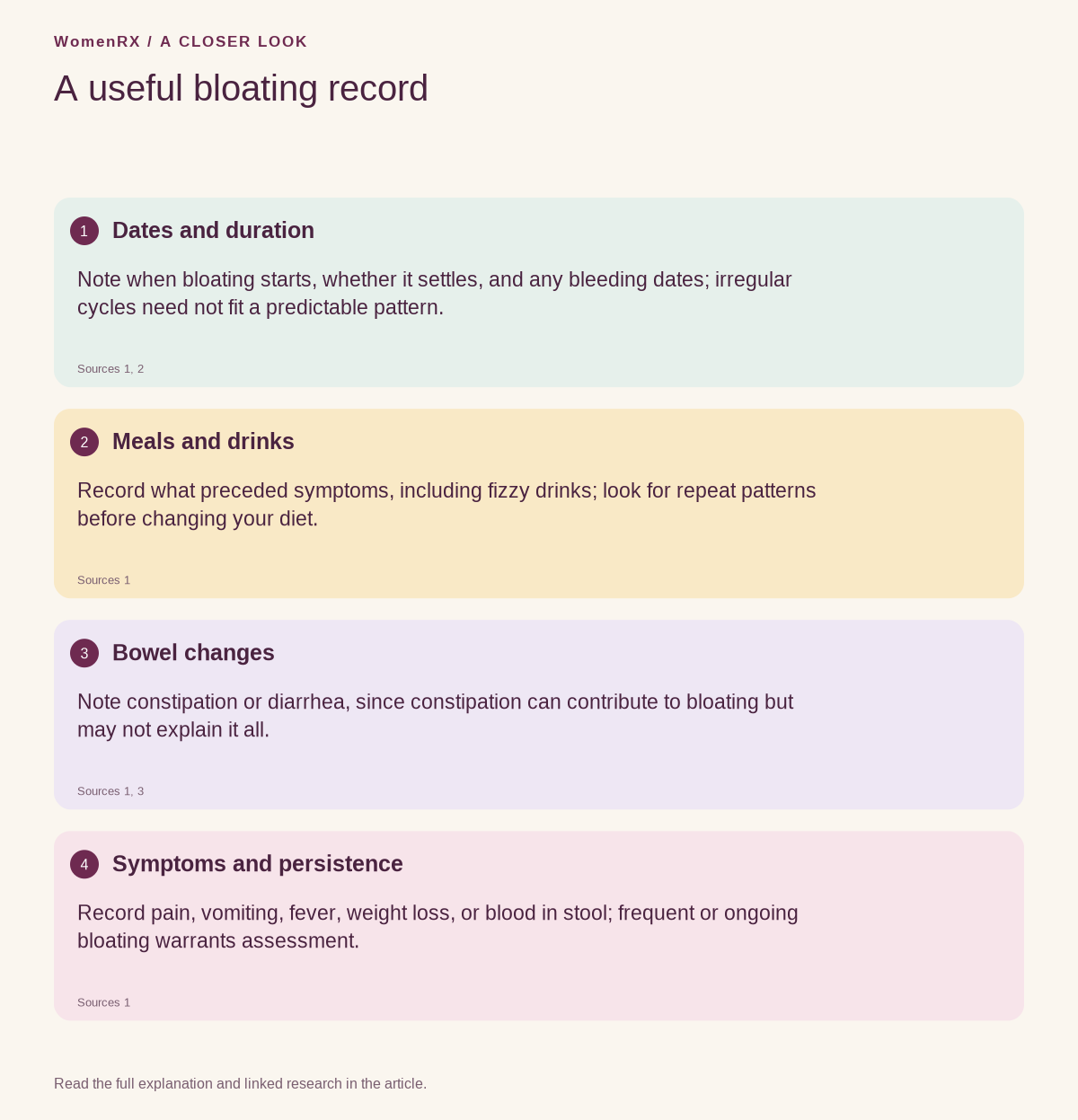
A useful bloating record
Dates and duration: Note when bloating starts, whether it settles, and any bleeding dates; irregular cycles need not fit a predictable pattern.12
Meals and drinks: Record what preceded symptoms, including fizzy drinks; look for repeat patterns before changing your diet.1
Bowel changes: Note constipation or diarrhea, since constipation can contribute to bloating but may not explain it all.13
Symptoms and persistence: Record pain, vomiting, fever, weight loss, or blood in stool; frequent or ongoing bloating warrants assessment.1
Read the figure as text
Record the timing and accompanying details to notice patterns without treating them as a diagnosis.- Dates and duration: Note when bloating starts, whether it settles, and any bleeding dates; irregular cycles need not fit a predictable pattern.12
- Meals and drinks: Record what preceded symptoms, including fizzy drinks; look for repeat patterns before changing your diet.1
- Bowel changes: Note constipation or diarrhea, since constipation can contribute to bloating but may not explain it all.13
- Symptoms and persistence: Record pain, vomiting, fever, weight loss, or blood in stool; frequent or ongoing bloating warrants assessment.1
More questions, answered
Does bloating around a period mean hormones are the cause?
Not necessarily. Some people feel bloated around their period, and research reviews describe digestive symptoms around menstrual phases. That timing can be a clue, but it doesn’t prove hormones are the cause or rule out digestive issues such as gas or constipation. 1 2
Should I cut out foods to see if bloating improves?
Start by recording meals and symptoms, and look for a repeatable pattern. If one food or drink seems linked, a small, focused change may be more informative than removing several foods at once. Gas can be related to some foods and fizzy drinks, but bloating has more than one possible cause. 1
Sources you can check
- Bloating - NHSAccessed 2026-09-25Return to first citation
- Do fluctuations in ovarian hormones affect gastrointestinal symptoms in women with irritable bowel syndrome?Heitkemper MM, Chang L. · Gender medicine · 2009Return to first citation
- Constipation with bloating: a clinical approach to evaluation and management.Cangemi DJ, Laitman AP, Faiman O, Chang BW. · Annals of medicine · 2026Return to first citation