Bloating in Perimenopause: What to Track and When to Get Checked
A brief pattern log can help separate meal or bowel-related bloating from symptoms that are persistent, worsening, or need assessment.
If you’re often bloated, feel very bloated, or it doesn’t go away, arrange a medical assessment rather than assuming perimenopause is the cause. Track whether you feel pressure or fullness, see your abdomen swell, or both, along with meals, bowel changes, bleeding dates, and other symptoms. Seek prompt medical advice if bloating comes with vomiting, diarrhea, constipation, a stomach ache, or fever. 1 2 4
Bloating can be a passing discomfort, but a recurring pattern deserves more than a guess that it’s “just hormones.” In perimenopause, note when it happens and what comes with it. If it’s frequent, persistent, getting worse, or new for you, arrange an assessment. 1 2
First, separate the feeling from what you can see
Bloating usually means a sensation of fullness, pressure, or trapped gas. Distension means your abdomen visibly or measurably expands. They often happen together, but either can occur without the other. 4
This distinction makes a diary more useful. If you feel full but don’t see a change in your abdomen, record that. If your abdomen visibly swells, note when it starts and whether it eases. You don’t need to measure yourself repeatedly; a simple description is enough.
Bloating can have several explanations, including gas, constipation, food intolerance, or digestive conditions. In irritable bowel syndrome (IBS), bloating or distension may occur alongside abdominal pain or discomfort and a change in bowel habits, such as constipation, diarrhea, or both. 2 3 4
Some people notice bloating around their period, so recording bleeding dates may help you see whether there’s a recurring timing pattern. That observation can be useful, but it doesn’t prove that perimenopause is causing the symptom. 2
Keep a short, practical pattern log
For each episode, jot down:
- What you felt or saw: pressure, fullness, trapped gas, visible swelling, or a combination.
- When it happened: date and time, and whether it was near a bleeding day.
- What else was going on: meals and drinks, constipation or diarrhea, abdominal or pelvic discomfort, and whether you felt full unusually quickly.
- How it changed: whether it settled, kept returning, became more frequent, or persisted.
A pattern can offer a useful starting point for a conversation with a clinician. For example, bloating after certain meals is different information from bloating that is present most days alongside a change in bowel habits. Neither pattern identifies a diagnosis on its own. If you’re considering a food change, use the notes to identify a possible pattern rather than cutting out many foods at once.
When to arrange an assessment
Make an appointment if you’re often bloated, feel very bloated, or the symptom doesn’t go away. It’s particularly worth getting checked when bloating is new, persistent, or becoming more frequent, or when it comes with pelvic or abdominal pain, feeling full quickly, needing to urinate urgently or more often, or unexpected vaginal bleeding. These symptoms are common and can have many causes; they don’t by themselves mean you have cancer. But ongoing symptoms deserve assessment rather than being attributed to menopause without checking. 1 2
Unintentional weight loss or blood in your stool alongside bloating are also reasons to seek medical advice. 2
When to seek prompt advice: If bloating comes with vomiting, diarrhea, constipation, a stomach ache, or fever, don’t wait for a routine appointment. 2
A clinician can ask about the pattern and other symptoms and decide whether an examination or tests are appropriate. If symptoms continue or worsen after an earlier assessment, go back and say so. 1
The useful takeaway
Use the diary to describe the pattern, not to diagnose yourself. Record whether the problem is a sensation, visible swelling, or both; note bowel and meal patterns and bleeding dates; and arrange assessment if it’s frequent or persistent, especially with other symptoms. Perimenopause is context, not an explanation to assume.
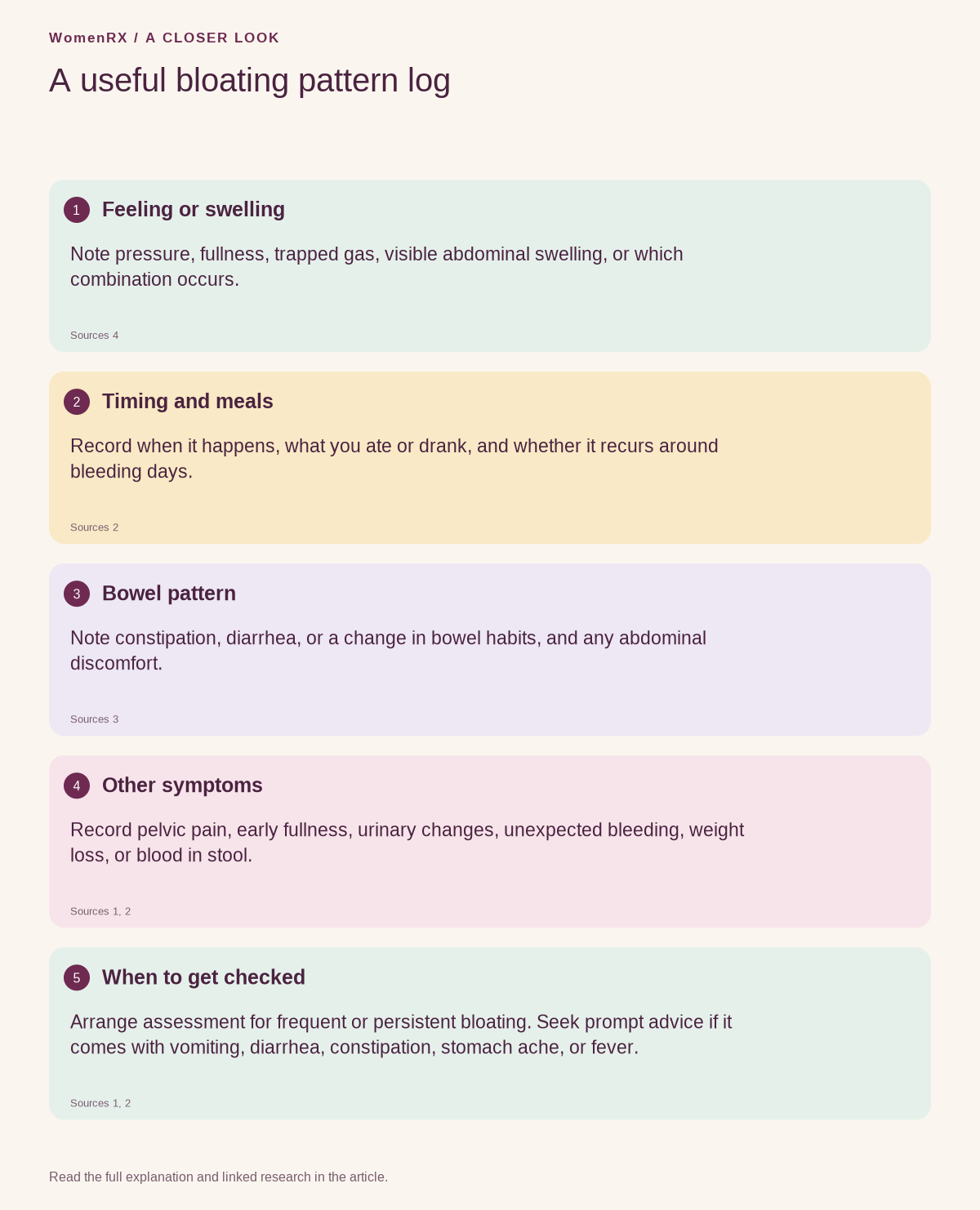
A useful bloating pattern log
Feeling or swelling: Note pressure, fullness, trapped gas, visible abdominal swelling, or which combination occurs.4
Timing and meals: Record when it happens, what you ate or drank, and whether it recurs around bleeding days.2
Bowel pattern: Note constipation, diarrhea, or a change in bowel habits, and any abdominal discomfort.3
Other symptoms: Record pelvic pain, early fullness, urinary changes, unexpected bleeding, weight loss, or blood in stool.12
When to get checked: Arrange assessment for frequent or persistent bloating. Seek prompt advice if it comes with vomiting, diarrhea, constipation, stomach ache, or fever.12
Read the figure as text
Record the symptom and its context, then note whether it needs a routine assessment or prompt advice.- Feeling or swelling: Note pressure, fullness, trapped gas, visible abdominal swelling, or which combination occurs.4
- Timing and meals: Record when it happens, what you ate or drank, and whether it recurs around bleeding days.2
- Bowel pattern: Note constipation, diarrhea, or a change in bowel habits, and any abdominal discomfort.3
- Other symptoms: Record pelvic pain, early fullness, urinary changes, unexpected bleeding, weight loss, or blood in stool.12
- When to get checked: Arrange assessment for frequent or persistent bloating. Seek prompt advice if it comes with vomiting, diarrhea, constipation, stomach ache, or fever.12
More questions, answered
Does bloating around a period prove hormones are the cause?
No. Some people report bloating around their period, but timing alone doesn’t establish the cause. A recurring pattern is useful to share, while persistent or frequent symptoms still warrant assessment. 1 2
What if I’m bloated but my abdomen doesn’t look swollen?
That can still be bloating. The sensation of pressure, fullness, or trapped gas and visible abdominal distension can occur separately. Note which one you experience. 4
Sources you can check
- Ovarian cancer - Symptoms - NHSAccessed 2026-09-25Return to first citation
- Bloating - NHSAccessed 2026-09-25Return to first citation
- Irritable bowel syndrome in adults: diagnosis and management2017Return to first citation
- Management of Chronic Abdominal Distension and Bloating.Lacy BE, Cangemi D, Vazquez-Roque M. · Clinical gastroenterology and hepatology : the official clinical practice journal of the American Gastroenterological Association · 2021Return to first citation