Belly Changes at Midlife: Fat, Bloating, or a Reason to Get Checked?
A gradual waist change and a newly swollen, persistently bloated abdomen are different clues, and neither appearance nor one measurement can identify the cause.
A gradual change in waist size is different from an abdomen that feels full, uncomfortable, or persistently bigger than usual. Recurrent or ongoing bloating, especially with pelvic pain, unintentional weight loss, feeling full quickly, appetite loss, or lasting bowel changes, warrants a medical discussion. Sudden, sharp abdominal pain or a hard, tender abdomen needs urgent attention. 1 2 3
First, notice what kind of change it is
A waist measurement describes size; it doesn’t show what’s causing a change. A gradual shift in how clothes fit may be different from bloating, which can feel like fullness or discomfort and make your abdomen seem larger than usual. Bloating can come and go, but frequent or persistent bloating is worth discussing with a clinician. 3
Waist size is one way researchers assess abdominal fat in women after menopause, but it has limits. In a study of 345 postmenopausal women attending a menopause clinic, researchers measured waist circumference and noted that it could not directly quantify fat around the internal organs. The study measured women at one point in time, so it cannot show whether or why a woman’s fat distribution changed through menopause. 4
Menopause may be part of the context you want to discuss, but a change around your abdomen isn’t proof that menopause caused it, or that something is wrong. Whether you’re still having periods or are past menopause, don’t assume that new, persistent fullness is simply a change in body fat. How it feels and what else is happening matter more for deciding when to get it checked. 2 3
What to track before you reach out
You don’t need a perfect log. A few clear details can help describe the change:
- How it feels: Does your abdomen feel full or uncomfortable, or is the main change how your waist or clothes fit? Bloating may involve fullness, discomfort, or an abdomen that feels bigger than usual. 3
- When it happens: Note when you first noticed the change and whether the fullness comes and goes or seems to persist. This is a way to describe your concern, not a diagnostic rule.
- What else has changed: Mention pelvic pain, losing weight without trying, feeling full quickly, reduced appetite, or constipation or diarrhea that doesn’t go away. These symptoms alongside persistent or recurrent bloating make a medical discussion more timely. 2
- Whether there is pain or a lump: Report pain and any swelling or lump you can feel. A hard, tender abdomen or sudden, sharp pain calls for urgent attention, rather than waiting for a routine appointment. 1 3
When to make it urgent
Arrange a medical discussion if you’re often bloated or the bloating doesn’t go away. Do the same for recurring or persistent pelvic pain, especially with unintentional weight loss, early fullness, appetite loss, or bowel changes that persist. These symptoms can have different causes; they don’t diagnose one on their own. 2 3
Seek urgent medical care for sudden, sharp abdominal pain, a hard and tender abdomen, vomiting blood, or blood in your stool. Inability to pass stool, especially with vomiting, is another urgent warning sign. 1 If bloating comes with vomiting, a stomach ache, a lump or swelling, or being unable to pee, have a bowel movement, or pass gas, seek prompt medical care. 3
If the change is gradual and you otherwise feel well, your notes can still help you bring it up at a routine visit, particularly if you’re concerned. The useful distinction is not whether your abdomen looks a certain way; it’s whether you’re noticing a lasting or recurring feeling of swelling, pain, or other changes alongside it.
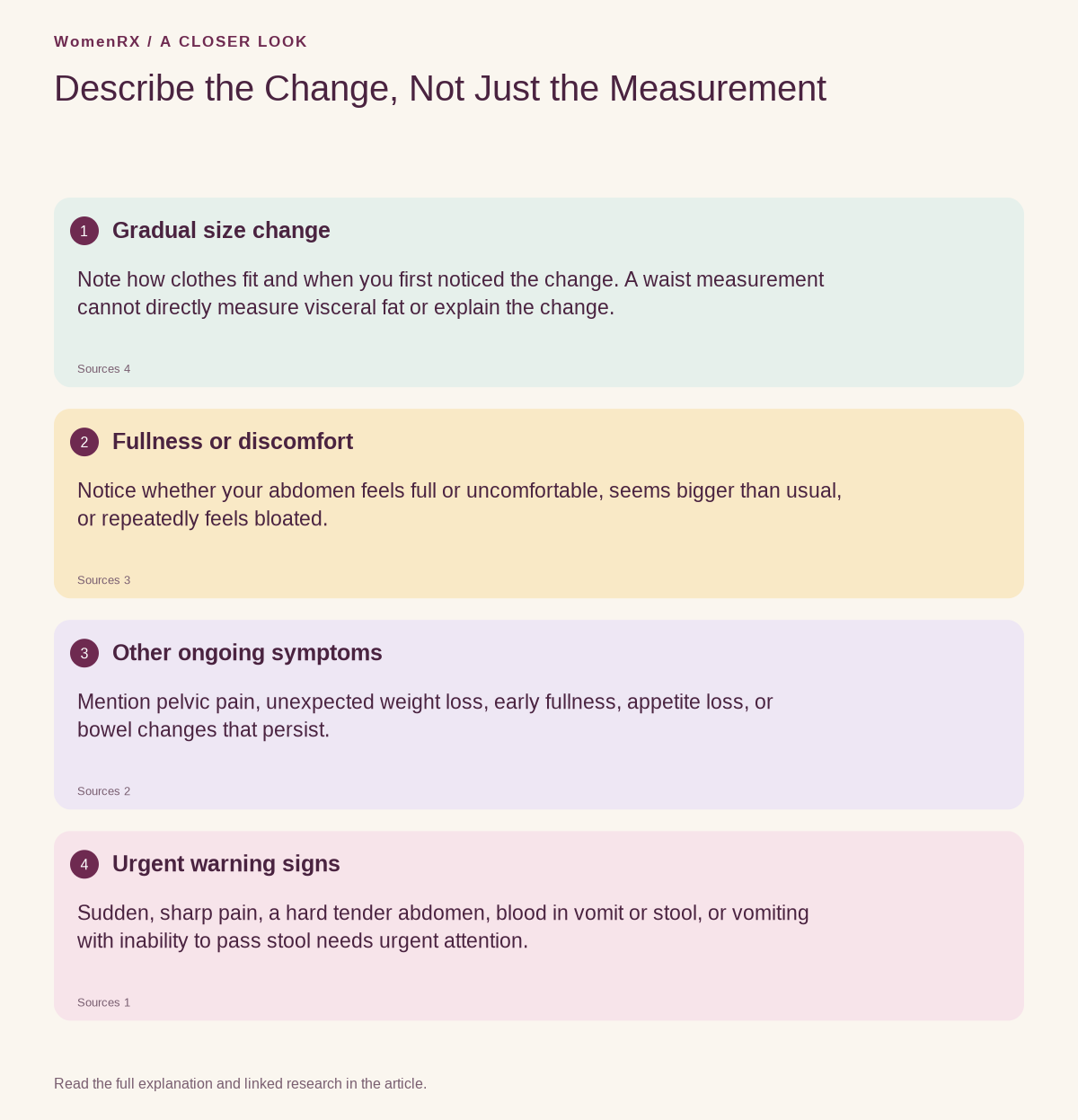
Describe the Change, Not Just the Measurement
Gradual size change: Note how clothes fit and when you first noticed the change. A waist measurement cannot directly measure visceral fat or explain the change.4
Fullness or discomfort: Notice whether your abdomen feels full or uncomfortable, seems bigger than usual, or repeatedly feels bloated.3
Other ongoing symptoms: Mention pelvic pain, unexpected weight loss, early fullness, appetite loss, or bowel changes that persist.2
Urgent warning signs: Sudden, sharp pain, a hard tender abdomen, blood in vomit or stool, or vomiting with inability to pass stool needs urgent attention.1
Read the figure as text
Use these prompts to distinguish a gradual waist-size change from fullness, discomfort, or abdominal enlargement with symptoms that merit attention.- Gradual size change: Note how clothes fit and when you first noticed the change. A waist measurement cannot directly measure visceral fat or explain the change.4
- Fullness or discomfort: Notice whether your abdomen feels full or uncomfortable, seems bigger than usual, or repeatedly feels bloated.3
- Other ongoing symptoms: Mention pelvic pain, unexpected weight loss, early fullness, appetite loss, or bowel changes that persist.2
- Urgent warning signs: Sudden, sharp pain, a hard tender abdomen, blood in vomit or stool, or vomiting with inability to pass stool needs urgent attention.1
More questions, answered
Can a waist measurement tell me whether it’s belly fat?
No. It records your waist size, not the reason it changed, and it cannot directly measure fat around your internal organs. If your abdomen also feels full or uncomfortable, note whether that feeling comes and goes or persists; that detail is useful when describing bloating. 3 4
Does a bigger abdomen mean menopause caused it?
Not by itself. An abdominal change doesn’t identify its cause. If you also have persistent or recurrent bloating, pelvic pain, early fullness, appetite loss, or lasting bowel changes, discuss those symptoms with a clinician rather than assuming they’re part of menopause. 2 3
Sources you can check
- Abdominal Pain | MedlinePlusAccessed 2026-09-25Return to first citation
- Pelvic pain - NHSAccessed 2026-09-25Return to first citation
- Bloating - NHSAccessed 2026-09-25Return to first citation
- Independent Associations of Appendicular Skeletal Muscle Mass Index and Waist Circumference with Site-Specific Bone Mineral Density in Postmenopausal Women: A Real-World Cross-Sectional Study.Tongdee P, Kupittayanant S, Marungrueng K, Ongsricharoenbhorn S, Nimkuntod P. · Healthcare (Basel, Switzerland) · 2026Return to first citation