Menopause and Belly Fat: What Changes, What Helps
The scale, waist measurement, and body-fat distribution tell different parts of the story, so no single number can explain a midlife change.
During the menopause transition, some women gain abdominal fat or notice it shifting toward the waist, but weight gain also reflects ageing and other influences, and experiences vary. Track weight and waist separately if that feels useful; neither diagnoses menopause. Regular physical activity and nutrition changes may help support weight and health, but evidence for menopause-specific belly-fat strategies is limited. 1 2 5
One change can show up in different ways
Your weight is the combined mass of fat, muscle, bone, and water. It can change without telling you which component changed. Waist circumference adds a different clue: where fat is carried. BMI, meanwhile, compares weight with height but doesn’t distinguish fat from muscle or bone. These measures aren’t interchangeable, and none can tell you on its own whether a body change is caused by menopause. 1
A larger waist can matter for health even when the scale hasn’t changed much. Fat carried around the abdomen, rather than around the hips, is associated with higher risk of heart disease and type 2 diabetes. That makes waist one useful piece of a health picture, not a verdict about your body. 1
Menopause may contribute, but it isn’t the whole explanation
The menopause transition can coincide with increases in abdominal fat and changes in body composition. But it’s hard to separate the contribution of menopause from ageing: a review reported that average weight gain during the transition was similar to that of women of the same age before menopause. The pattern isn’t identical for everyone, either. 4 5
One prospective study followed 94 women who transitioned through menopause. It found different patterns of abdominal-fat change among Black and white participants. That small cohort can’t predict what will happen to an individual woman, but it’s a reminder that there isn’t one universal menopause body pattern. 4
Sleep, mood, activity, and other midlife health changes may also overlap with this period. A review describes physical activity as beneficial for cardiometabolic and other aspects of health in midlife women, but that doesn’t mean exercise can target fat from one specific area. 3
Choose what to track for the question you have
If you want to understand a change, consider tracking weight and waist as separate measures, under similar conditions each time. You might also notice whether everyday activity, energy, or how clothes fit is changing. Tracking is optional; if measurements are stressful or don’t help you make decisions, you don’t need to collect them.
A single weigh-in can’t distinguish fat from water or muscle, and an isolated waist measurement doesn’t explain why it changed. Look for a pattern rather than treating one reading as a diagnosis. If weight changes suddenly without you trying, MedlinePlus advises discussing it with a health care provider, since an unexpected change can have a medical cause. 1
Focus on habits and health, not spot reduction
The menopause-specific intervention evidence is limited. A systematic review found only three eligible studies. One lower-risk randomized trial suggested that a combined exercise and dietary intervention could improve body weight and abdominal adiposity; two less rigorous studies suggested possible benefits from exercise. The review called for more high-quality research. That supports realistic lifestyle efforts, not a promise that a particular routine will flatten your stomach. 2
A useful starting point is to choose physical activity you can keep doing and nutrition changes that fit your life. If weight management is a health goal, ask what measures matter for you beyond the scale, and whether support from a registered dietitian could help. MedlinePlus describes nutrition and exercise as ways to support weight management and recommends looking at health more broadly than a number. 1
The goal doesn’t have to be a particular waist size. You can work toward habits that support your health while recognizing that body shape alone neither confirms menopause nor measures your worth.
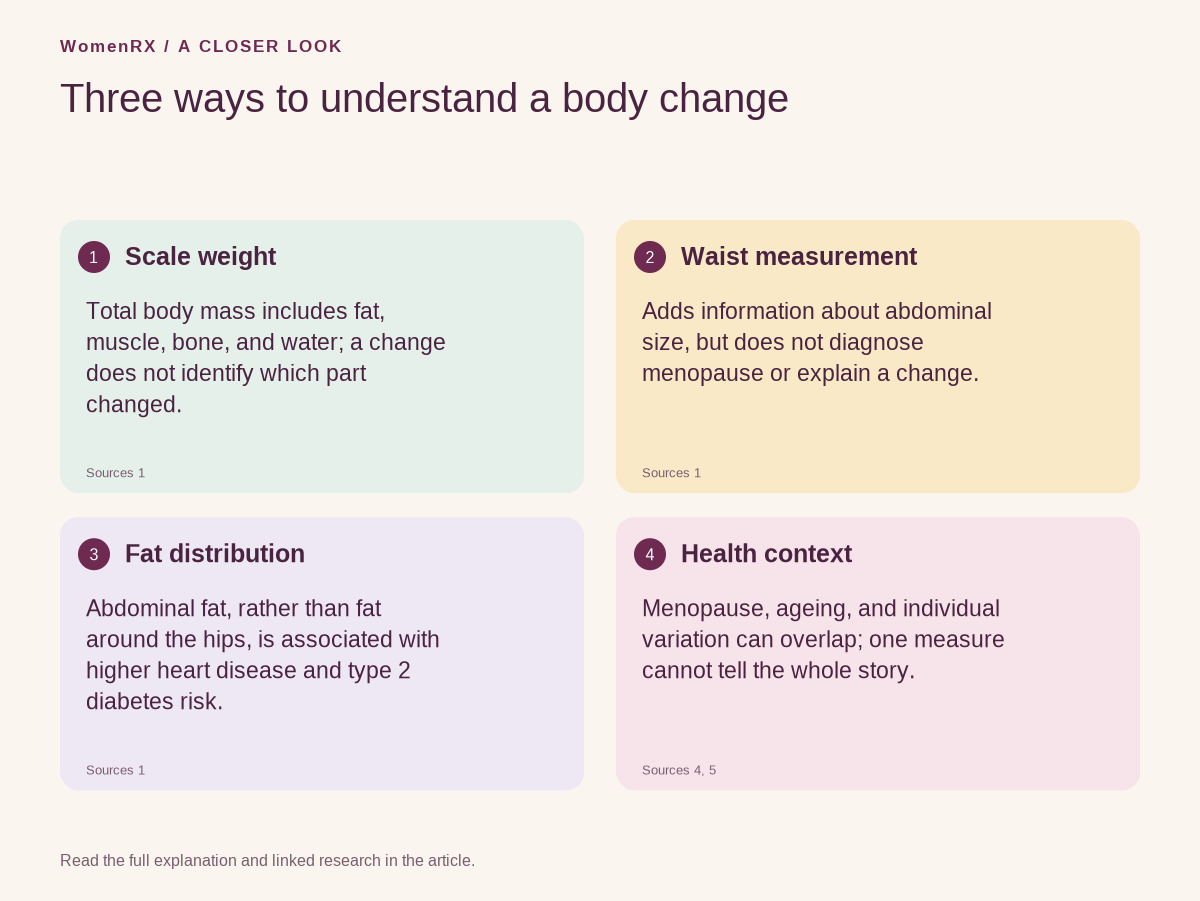
Three ways to understand a body change
Scale weight: Total body mass includes fat, muscle, bone, and water; a change does not identify which part changed.1
Waist measurement: Adds information about abdominal size, but does not diagnose menopause or explain a change.1
Fat distribution: Abdominal fat, rather than fat around the hips, is associated with higher heart disease and type 2 diabetes risk.1
Health context: Menopause, ageing, and individual variation can overlap; one measure cannot tell the whole story.45
Read the figure as text
Weight, waist measurement, and body-fat distribution answer different questions; consider them as separate clues rather than interchangeable measures.- Scale weight: Total body mass includes fat, muscle, bone, and water; a change does not identify which part changed.1
- Waist measurement: Adds information about abdominal size, but does not diagnose menopause or explain a change.1
- Fat distribution: Abdominal fat, rather than fat around the hips, is associated with higher heart disease and type 2 diabetes risk.1
- Health context: Menopause, ageing, and individual variation can overlap; one measure cannot tell the whole story.45
More questions, answered
Can a bigger waist tell me that I’m in menopause?
No. Waist measurement describes abdominal size, not reproductive stage. Menopause-related body changes vary, and weight or waist alone can’t identify their cause. 1 4
Should I use BMI to understand a waist change?
BMI and waist circumference describe different things. BMI compares weight with height but doesn’t separate fat from muscle or bone; waist circumference can add information about where fat is carried. Neither gives the whole health picture. 1
Sources you can check
- Body Weight: MedlinePlusAccessed 2026-09-25Return to first citation
- Lifestyle interventions targeting body weight changes during the menopause transition: a systematic review.Jull J, Stacey D, Beach S, Dumas A, Strychar I, Ufholz LA, Prince S, Abdulnour J, Prud'homme D. · Journal of obesity · 2014Return to first citation
- Detrimental Changes in Health during Menopause: The Role of Physical Activity.Hulteen RM, Marlatt KL, Allerton TD, Lovre D. · International journal of sports medicine · 2023Return to first citation
- Racial differences in body composition and cardiometabolic risk during the menopause transition: a prospective, observational cohort study.Marlatt KL, Redman LM, Beyl RA, Smith SR, Champagne CM, Yi F, Lovejoy JC. · American journal of obstetrics and gynecology · 2020Return to first citation
- Metabolic implications of menopause.Polotsky HN, Polotsky AJ. · Seminars in reproductive medicine · 2010Return to first citation