Estradiol Treatment: Forms, Uses, and Questions to Discuss
The first choice is what you’re treating: menopause symptoms throughout the body or symptoms limited to the vagina and urinary tract.
Systemic estradiol, taken by mouth or absorbed through the skin, is used as part of hormone therapy for symptoms such as hot flashes and night sweats. Low-dose vaginal estrogen is a separate option for bothersome genitourinary symptoms when systemic therapy isn’t otherwise needed. The route, your health history, and whether you have a uterus all shape the discussion. 2 3
Start with the symptom you want to treat
Estradiol is a form of estrogen used in menopausal hormone therapy. The practical first distinction is between symptoms that affect your body more broadly and symptoms centered on the vagina or urinary tract.
For hot flashes and night sweats, systemic hormone therapy is the most effective treatment. Systemic treatment can also help prevent bone loss, though that doesn’t make it a default choice for everyone. The potential benefits and risks depend on factors including the type of hormone, dose, route, duration, timing, and whether a progestogen is used. 3
If your main concerns are genitourinary symptoms of menopause, such as vaginal symptoms, low-dose vaginal estrogen may be an option without using systemic hormone therapy, when you don’t have another reason to take systemic treatment. The treatment goal is local, so it’s worth asking specifically about a local option rather than assuming you need a whole-body treatment. 3
What the main routes mean
Oral estradiol is taken by mouth and acts systemically. Oral estradiol has also been studied in combined hormone therapy with progesterone, so the product you’re discussing may contain more than one hormone. 4
A skin patch delivers estradiol through the skin and is also systemic therapy. A patch and a pill can share a treatment goal, such as hot flashes, but they aren’t automatically interchangeable in their effects or risks. Menopause guidance says risk varies by route as well as by other treatment factors. 2 3
Low-dose vaginal estrogen is used for genitourinary symptoms. It isn’t simply another way to treat hot flashes: the reason to consider it is different. Ask which local products are suitable for your symptoms, since the options and instructions depend on the specific product. 3
Products within a route can differ, too. A patch that combines estradiol with a progestogen, for example, is not the same treatment as an estradiol-only patch. Check the actual product and ingredients being discussed. 1 2
If you have a uterus, ask about the progestogen plan
For systemic estrogen after menopause, a person with a uterus will generally need a progestogen as well. Estrogen without a progestogen can increase the risk of endometrial cancer; adding a progestogen reduces the risk of endometrial hyperplasia, a possible precursor to that cancer. The plan can differ for someone without a uterus, and individual history can matter. 2
This is a separate question from which estradiol route to use: ask both what form of estrogen is being considered and whether the plan also addresses the uterine lining. Any persistent or recurring unusual bleeding after menopause while using systemic estrogen needs evaluation. 1 2
Timing and personal risks are part of the choice
For women younger than 60 or within 10 years of menopause onset who have no contraindications, the benefit-risk balance is generally favorable when treating bothersome vasomotor symptoms or preventing bone loss. Starting later than that, or after age 60, tends to have a less favorable balance because some health risks rise with age and time since menopause. These are broad guideposts, not a personal risk calculation. 3
The useful comparison isn’t just “pill or patch.” It’s whether the expected benefit for your symptom goal fits your health history, timing, and preferences, and whether the treatment needs a progestogen. Hormone therapy isn’t recommended to prevent heart disease or dementia. 2 3
Questions that can clarify the options
You might ask: Is my main goal relief from hot flashes and night sweats, local vaginal or urinary symptom relief, or both? Would a local treatment address my main concern without systemic therapy? If systemic estrogen is being considered, how does my age, time since menopause, and health history affect the tradeoffs between routes? If I have a uterus, what is the plan to protect its lining?
If you’re wondering whether hormone blood tests can pick the right dose, product labeling says FSH and estradiol levels have not been shown useful for managing postmenopausal women with moderate to severe vasomotor symptoms. Ask what the treatment decision is based on instead, and how you’ll reassess whether it’s helping. 2
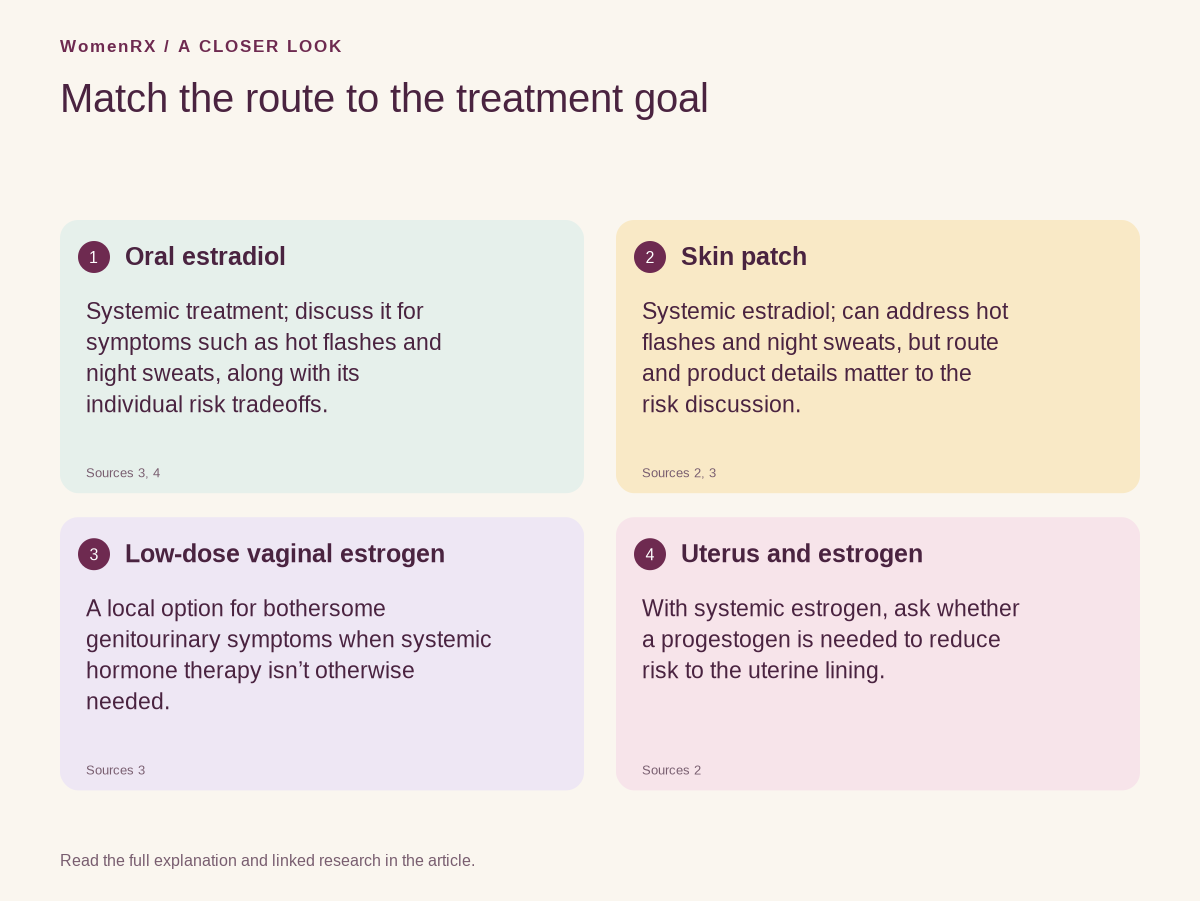
Match the route to the treatment goal
Oral estradiol: Systemic treatment; discuss it for symptoms such as hot flashes and night sweats, along with its individual risk tradeoffs.34
Skin patch: Systemic estradiol; can address hot flashes and night sweats, but route and product details matter to the risk discussion.23
Low-dose vaginal estrogen: A local option for bothersome genitourinary symptoms when systemic hormone therapy isn’t otherwise needed.3
Uterus and estrogen: With systemic estrogen, ask whether a progestogen is needed to reduce risk to the uterine lining.2
Read the figure as text
These routes differ in whether the treatment is systemic or local, and in the symptoms they’re meant to address.- Oral estradiol: Systemic treatment; discuss it for symptoms such as hot flashes and night sweats, along with its individual risk tradeoffs.34
- Skin patch: Systemic estradiol; can address hot flashes and night sweats, but route and product details matter to the risk discussion.23
- Low-dose vaginal estrogen: A local option for bothersome genitourinary symptoms when systemic hormone therapy isn’t otherwise needed.3
- Uterus and estrogen: With systemic estrogen, ask whether a progestogen is needed to reduce risk to the uterine lining.2
More questions, answered
Does estradiol treat every menopause symptom?
No. Systemic hormone therapy is most effective for hot flashes and night sweats, while low-dose vaginal estrogen is an option for bothersome genitourinary symptoms when systemic therapy isn’t otherwise needed. Estradiol shouldn’t be assumed to address every symptom a person experiences. 3
Do blood tests determine which estradiol form or dose is right?
For postmenopausal women with moderate to severe vasomotor symptoms, product labeling says FSH and estradiol levels have not been shown useful for managing treatment. The treatment choice also depends on the symptoms being treated and individual factors. 2 3
Sources you can check
- CLIMARA PRO (ESTRADIOL AND LEVONORGESTREL) PATCH [BAYER HEALTHCARE PHARMACEUTICALS INC.] | US prescribing information and patient instructionsAccessed 2026-09-25Return to first citation
- CLIMARA (ESTRADIOL) PATCH [BAYER HEALTHCARE PHARMACEUTICALS INC.] | US prescribing information and patient instructionsAccessed 2026-09-25Return to first citation
- The 2022 hormone therapy position statement of The North American Menopause Society.“The 2022 Hormone Therapy Position Statement of The North American Menopause Society” Advisory Panel. · Menopause (New York, N.Y.) · 2022Return to first citation
- Determinants of attained estradiol levels in response to oral estradiol plus progesterone therapy.Sriprasert I, Hodis HN, Bernick B, Mirkin S, Mack WJ. · Climacteric : the journal of the International Menopause Society · 2021Return to first citation