Electric-Shock Sensations in Your 40s: What Else to Consider
Perimenopause may be part of the picture in your 40s, but the location and pattern of a new zapping sensation can point to other causes worth checking.
Perimenopause can begin in your 40s, particularly if your periods are changing, but an electric-shock sensation alone can’t identify a hormonal cause. Notice where the feeling occurs, whether it comes with pain or weakness, and whether it’s becoming more frequent. Nerve problems, diabetes, vitamin B12 deficiency and certain medicines are other possibilities that may need assessment.3456
A changing cycle is context, not an explanation
A sudden zap in your hand, foot or elsewhere can be hard to describe. You might also call it tingling, a jolt or a brief shooting feeling. If you’re in your 40s and your periods have changed, it’s reasonable to wonder about perimenopause. That possibility deserves attention, but it shouldn’t settle the question of what’s causing a new sensation.
Perimenopause commonly occurs in the years before periods stop and can happen earlier than the usual mid-40s to mid-50s range. Menopause guidance considers newly occurring hot flashes alongside menstrual changes when identifying perimenopause in otherwise healthy people age 45 or older. That guidance does not make electric-shock sensations a way to identify it.34 Even if zaps seem to happen near a period, the timing alone cannot establish their cause. The more useful next question is: what pattern does the sensation follow?
Where you feel it changes the possibilities
Mostly in one arm or one spot: A localized pattern raises questions about a focal nerve problem, including nerve compression or injury. Neuropathy reviews distinguish focal nerve problems from more widespread nerve patterns, but location alone can’t identify the cause. Mention any pain, numbness or weakness when describing what you feel.256
Hands or feet, especially if the feeling persists or spreads: This raises a different set of questions about peripheral nerves. Diabetes, vitamin B12 deficiency and other health conditions can cause peripheral neuropathy. A clinician assessing possible neuropathy may check sensation, strength and reflexes, then consider blood tests for causes such as diabetes or B12 deficiency.56
Symptoms that progress quickly or include marked weakness: These patterns call for further evaluation rather than assuming the sensation tracks with your cycle. Rapid progression, an uneven pattern and prominent weakness are reasons to escalate a nerve evaluation; a rare nerve condition can cause rapidly developing paralysis.26
These are clues, not a home diagnostic test. A focal nerve problem and a more widespread neuropathy can require different investigations, and a symptom’s location doesn’t tell you its cause with certainty.25
Medicines and B12 deserve a closer look
If a new medicine or treatment preceded the sensations, include its name and start date when you discuss the symptom. Some chemotherapy medicines and, less commonly, certain antibiotics taken for months can cause peripheral neuropathy.6 Don’t stop a prescribed medicine on your own to test the theory.5
Other medicines can matter indirectly. Metformin and long-term use of medicines that reduce stomach acid can lower vitamin B12 absorption or levels. B12 deficiency can cause numbness and tingling in the hands and feet, sometimes without anemia, so the absence of an anemia diagnosis doesn’t rule it out.1 Diet and medical history matter too: people who eat no animal products, have certain digestive conditions or have had gastrointestinal surgery may be at greater risk of B12 deficiency.1 This is a reason to consider testing, not a reason to assume a supplement will treat every zap.
What to do with the pattern you notice
If the sensation keeps returning, persists, spreads or comes with pain, arrange an evaluation rather than attributing it to age. You don’t need a long symptom diary. A few specifics can make the conversation more useful: where you feel it, how long an episode lasts, whether an activity seems related, and whether you’ve noticed numbness or weakness. Mention period changes and hot flashes too, along with medicines and relevant health conditions. An examination can then help determine whether testing for a nerve problem or an underlying cause makes sense.35
You can consider perimenopause and a nerve-related explanation at the same time. Taking the zapping sensation seriously doesn’t mean assuming the worst. It means letting its pattern, rather than your age alone, guide the next step.
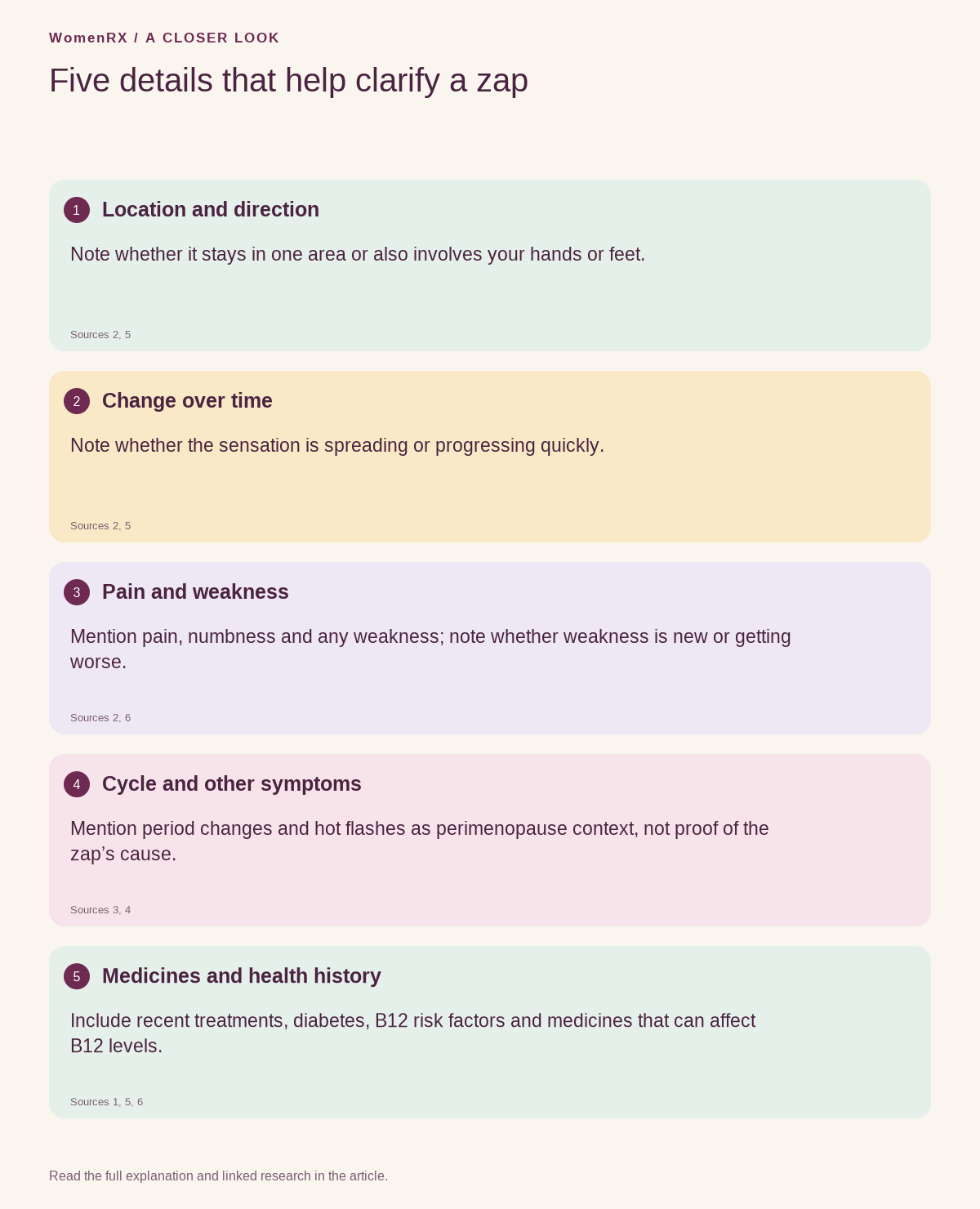
Five details that help clarify a zap
Location and direction: Note whether it stays in one area or also involves your hands or feet.25
Change over time: Note whether the sensation is spreading or progressing quickly.25
Pain and weakness: Mention pain, numbness and any weakness; note whether weakness is new or getting worse.26
Cycle and other symptoms: Mention period changes and hot flashes as perimenopause context, not proof of the zap’s cause.34
Medicines and health history: Include recent treatments, diabetes, B12 risk factors and medicines that can affect B12 levels.156
Read the figure as text
These observations can make a symptom discussion more specific; they are not a diagnostic score.- Location and direction: Note whether it stays in one area or also involves your hands or feet.25
- Change over time: Note whether the sensation is spreading or progressing quickly.25
- Pain and weakness: Mention pain, numbness and any weakness; note whether weakness is new or getting worse.26
- Cycle and other symptoms: Mention period changes and hot flashes as perimenopause context, not proof of the zap’s cause.34
- Medicines and health history: Include recent treatments, diabetes, B12 risk factors and medicines that can affect B12 levels.156
More questions, answered
Could vitamin B12 deficiency cause tingling even if I’m not anemic?
Yes. B12 deficiency can cause neurological symptoms, including numbness and tingling in the hands and feet, without anemia. A clinician can assess whether testing fits your symptoms and risk factors.1
Sources you can check
- Vitamin B12 - Health Professional Fact SheetAccessed 2026-09-25Return to first citation
- Peripheral Neuropathy: A Phenotype-Driven Review for Diagnosis and Management.Yuba T, Dabbagh A, Sabouri AS. · Revista de neurologia · 2026Return to first citation
- Recommendations | Menopause: identification and management | Guidance | NICEAccessed 2026-09-25Return to first citation
- Menopause and perimenopause - NHSAccessed 2026-09-25Return to first citation
- Peripheral neuropathy - Diagnosis - NHSAccessed 2026-09-25Return to first citation
- Peripheral neuropathy - Causes - NHSAccessed 2026-09-25Return to first citation