Does Ozempic Reduce Food Cravings? The Evidence
Semaglutide can improve measured craving control, but appetite and cravings are different experiences, and individual results vary.
It can. In trials, semaglutide improved scores for some food cravings and eating control, alongside changes in hunger, fullness, or food intake. But these are different outcomes: feeling less hungry doesn’t guarantee a specific craving will disappear. The studies used different semaglutide formulations and populations, and don’t establish a predictable, Ozempic-specific effect for every person. 1 2
Semaglutide may make food cravings less intense or easier to resist for some people. In clinical studies, people taking it reported improvements in certain craving and eating-control measures. That doesn’t mean cravings always go away, or that a change in appetite and a change in cravings are the same thing. 1 2
Hunger, appetite, cravings: related, not interchangeable
Hunger is the physical sense that your body needs food. Appetite is the broader desire to eat. A craving is a more specific pull toward a food or kind of food, such as something sweet or savory. These can shift together, but they don’t have to.
For example, you might feel less hungry between meals but still want a particular snack. Or you might find a craving easier to resist without noticing much change in how hungry you feel. That distinction matters because studies measure these experiences separately: a questionnaire about craving control isn’t the same as a rating of hunger or a measurement of how much someone eats. 1 2
What the semaglutide studies found
In a small, 12-week randomized crossover trial, 15 people with type 2 diabetes received oral semaglutide and placebo in alternating study periods. Among the 13 people with evaluable food-intake results, energy intake at a test meal and snack assessment was lower during semaglutide treatment. Participants also reported fewer cravings and better eating control. Appetite ratings differed after a higher-fat breakfast, but not after a standard breakfast. The results suggest that craving reports, food intake, and feelings of hunger or fullness can each tell a different part of the story. 1
A longer study looked at once-weekly semaglutide in adults with overweight or obesity, alongside lifestyle modification. In a subgroup who completed the eating-control questionnaire, scores improved for several measures, including control of cravings and cravings for savory foods at weeks 20, 52, and 104. Some other craving measures improved at weeks 20 and 52. Because the reported findings are questionnaire scores, they describe average changes in reported experiences, not a promise that a particular craving will disappear. 2
The studies also aren’t identical to one another: one tested oral semaglutide in people with type 2 diabetes, while the longer study tested weekly semaglutide in adults with overweight or obesity. Together, they offer evidence that semaglutide can affect reported cravings, but they don’t tell us exactly what any one person taking Ozempic will experience. 1 2
A craving change may accompany weight change
In the longer study, improvements in craving scores were associated with reductions in body weight among participants taking semaglutide. An association doesn’t show that reduced cravings caused the weight change, or that weight change caused cravings to ease. It does show why researchers may assess eating control alongside weight and appetite rather than treating them as interchangeable outcomes. 2
If you’re taking semaglutide, a practical way to interpret your experience is to notice which part has changed: overall hunger, how full you feel, the amount you eat, or the intensity and frequency of specific cravings. For example, one of these might change while another stays much the same. That pattern wouldn’t contradict the trial findings, which measured these outcomes separately. 1 2
What we know about women
The study summaries don’t provide results by sex or reproductive stage. So they can’t tell us whether craving changes differ for women, or whether they vary across cycling years, perimenopause, or postmenopause. The findings support a possible effect in the overall study populations, not a distinct effect specific to women. 1 2
Bottom line: Semaglutide improved some measured food-craving and eating-control scores in trials. Think of that as a possible change, not a guarantee, and distinguish it from feeling less hungry or eating less.
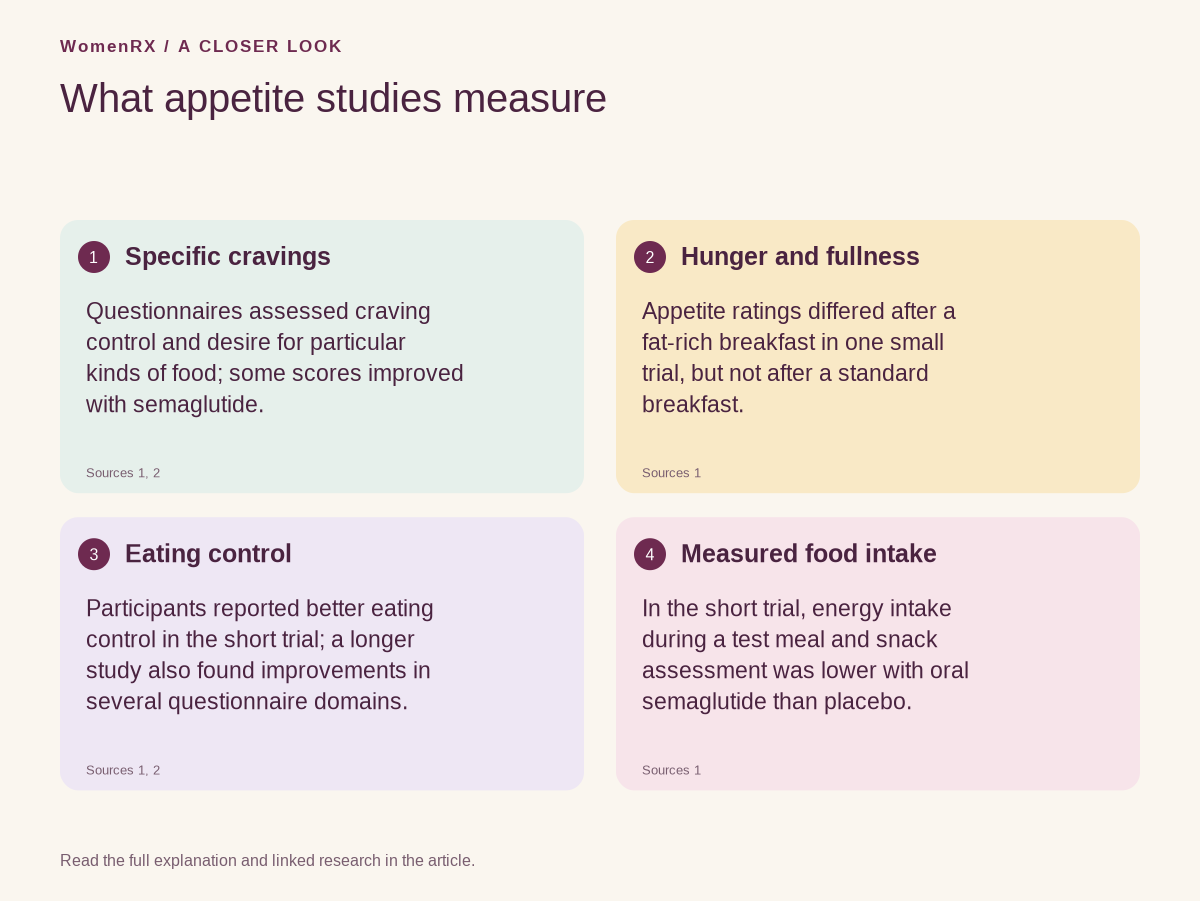
What appetite studies measure
Specific cravings: Questionnaires assessed craving control and desire for particular kinds of food; some scores improved with semaglutide.12
Hunger and fullness: Appetite ratings differed after a fat-rich breakfast in one small trial, but not after a standard breakfast.1
Eating control: Participants reported better eating control in the short trial; a longer study also found improvements in several questionnaire domains.12
Measured food intake: In the short trial, energy intake during a test meal and snack assessment was lower with oral semaglutide than placebo.1
Read the figure as text
Cravings, hunger, fullness, and food intake are related but distinct outcomes. Semaglutide studies have assessed them separately, with results that do not always match.- Specific cravings: Questionnaires assessed craving control and desire for particular kinds of food; some scores improved with semaglutide.12
- Hunger and fullness: Appetite ratings differed after a fat-rich breakfast in one small trial, but not after a standard breakfast.1
- Eating control: Participants reported better eating control in the short trial; a longer study also found improvements in several questionnaire domains.12
- Measured food intake: In the short trial, energy intake during a test meal and snack assessment was lower with oral semaglutide than placebo.1
More questions, answered
If my cravings don’t change, does that mean semaglutide isn’t affecting my appetite?
Not necessarily. Trials assessed cravings, hunger, fullness, and food intake as separate outcomes, and they didn’t always move in parallel. A change in one doesn’t guarantee a change in the others. 1 2
Do the studies show that Ozempic stops emotional eating or treats an eating disorder?
No. The cited trials assessed food-craving and eating-control measures; they don’t establish semaglutide as a treatment for an eating disorder. Those questionnaire outcomes shouldn’t be treated as evidence of that use. 1 2
Sources you can check
- Effects of oral semaglutide on energy intake, food preference, appetite, control of eating and body weight in subjects with type 2 diabetes.Gibbons C, Blundell J, Tetens Hoff S, Dahl K, Bauer R, Baekdal T. · Diabetes, obesity & metabolism · 2021Return to first citation
- Two-year effect of semaglutide 2.4 mg on control of eating in adults with overweight/obesity: STEP 5.Wharton S, Batterham RL, Bhatta M, Buscemi S, Christensen LN, Frias JP, Jódar E, Kandler K, Rigas G, Wadden TA, Garvey WT. · Obesity (Silver Spring, Md.) · 2023Return to first citation