Dizziness Around Menopause: Causes, Red Flags, and Next Steps
The kind of dizziness you feel, what brings it on, and what comes with it can help point to a useful next step.
Dizziness may feel like faintness, unsteadiness, or spinning, and those sensations can have different causes. A drop in blood pressure, a medicine, migraine, or an inner-ear problem may be involved. Dizziness around perimenopause or after menopause isn’t automatically caused by hormones. Get urgent medical assessment for vertigo with a severe headache; sudden or severe dizziness with vision problems, slurred speech, or weakness needs emergency help. 123
Start by naming what you feel
“Dizzy” can mean several things. Lightheadedness or feeling faint is different from feeling off-balance. Vertigo is the sense that you or the room is spinning. These descriptions don’t identify the cause, but they help make the next assessment more focused. 123
Notice what was happening when it began. Feeling dizzy after standing up suddenly can fit a drop in blood pressure. If it started after a new medicine, a side effect is another possibility to discuss. These clues are useful, but they aren’t a diagnosis. 13
Spinning can point to more than one cause
Inner-ear problems are common causes of vertigo. With benign paroxysmal positional vertigo (BPPV), specific head movements can bring on spinning. Some other inner-ear conditions may involve ringing in the ears or hearing changes. 12
Migraine can cause vertigo, too. Vestibular migraine may involve spinning, dizziness triggered by visual surroundings, or discomfort with head movement. Its diagnosis is based mainly on symptom history and excluding other causes, rather than a single reliable laboratory test. If you have migraine, mention it even if dizziness is your main concern. 25
Menopause is context, not a diagnosis
Dizziness can occur during the menopause transition or after menopause, but that timing alone doesn’t show that hormone changes caused it. One retrospective study reviewed records for 85 women ages 40 to 59 who were treated for dizziness. Over two months, recovery was higher among women without vasomotor symptoms, such as hot flashes, than among those with them. In the group with vasomotor symptoms, the faster recovery among the seven women treated with hormone therapy compared with 22 who weren’t treated was not statistically significant. This study can’t establish that hormone therapy treats dizziness or that hormones caused it. 4
The study doesn’t establish whether the pattern differs between perimenopause and postmenopause. At either stage, it’s more useful to describe the specific sensation and consider other possible causes than to assume menopause explains it. 4
What to note before an assessment
A short set of observations can help focus a conversation about recurring or persistent dizziness:
- The sensation: Do you feel faint, unsteady, or as if things are spinning?
- The trigger: Does it follow standing up, a particular head movement, or starting a medicine?
- Other clues: Do you have migraine, ringing in your ears, or hearing changes?
- The pattern: Does it keep returning, persist, or affect daily life?
Bring a list of medicines you take, including anything recently started. An assessment may include questions about symptoms and medicines, a physical exam, and checks of hearing, balance, or walking. 123
Choose care based on the warning signs
Get emergency help right away for sudden or severe dizziness or vertigo accompanied by vision problems, slurred speech, or weakness. These symptoms can signal a serious condition. 1
Vertigo with a severe headache calls for urgent medical assessment. Arrange an assessment if dizziness keeps returning, won’t go away, or affects daily life. Fainting or collapsing, changes to your pulse, or headaches alongside dizziness are also reasons to seek medical advice. 23
While symptoms are happening, sit or lie down until they ease, then get up slowly and move carefully. If spinning is the main sensation, moving your head slowly may help avoid aggravating it. 23
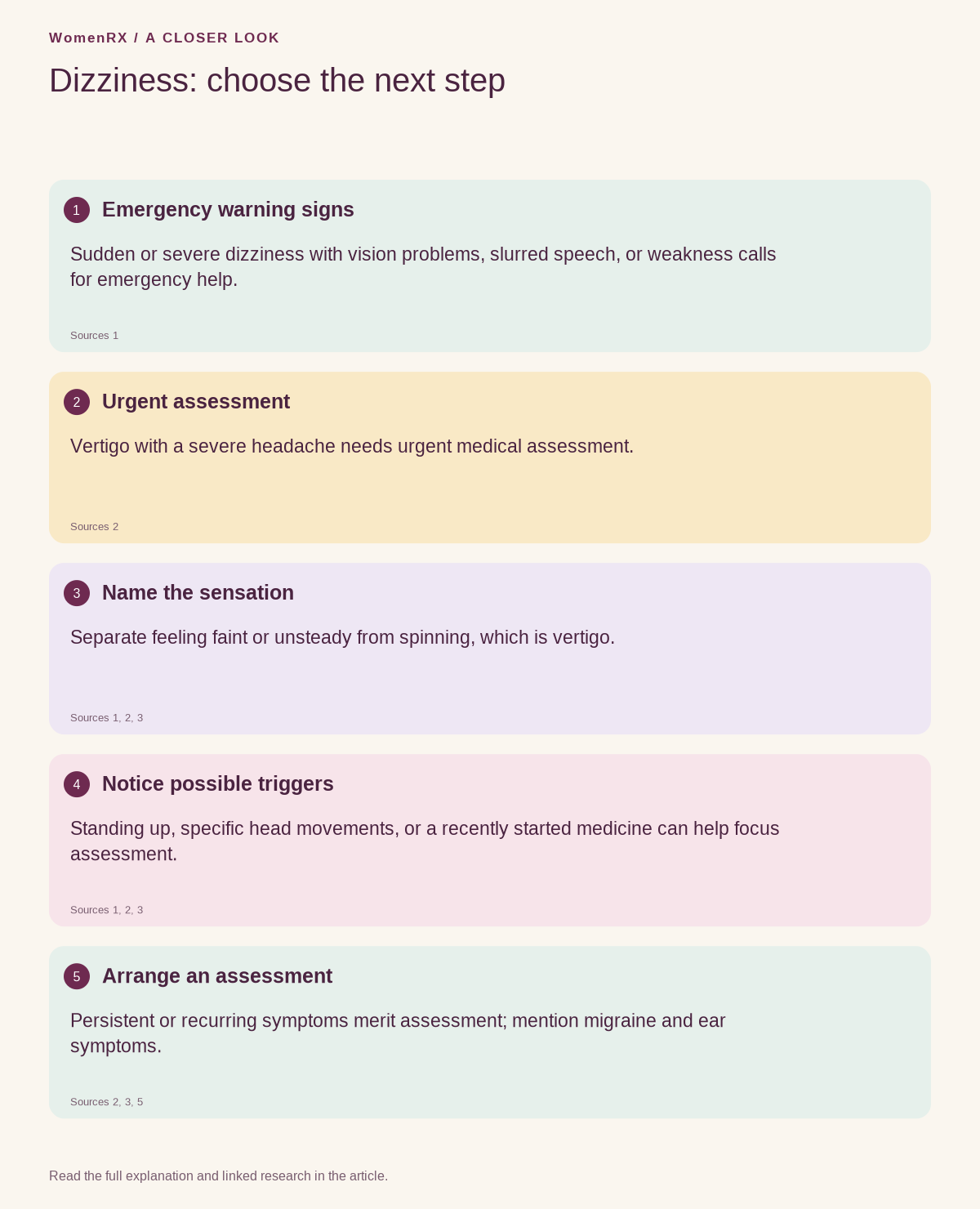
Dizziness: choose the next step
Emergency warning signs: Sudden or severe dizziness with vision problems, slurred speech, or weakness calls for emergency help.1
Urgent assessment: Vertigo with a severe headache needs urgent medical assessment.2
Name the sensation: Separate feeling faint or unsteady from spinning, which is vertigo.123
Notice possible triggers: Standing up, specific head movements, or a recently started medicine can help focus assessment.123
Arrange an assessment: Persistent or recurring symptoms merit assessment; mention migraine and ear symptoms.235
Read the figure as text
Start with urgent warning signs, then use the sensation and triggers to guide a cause-focused assessment. These clues don’t diagnose the cause.- Emergency warning signs: Sudden or severe dizziness with vision problems, slurred speech, or weakness calls for emergency help.1
- Urgent assessment: Vertigo with a severe headache needs urgent medical assessment.2
- Name the sensation: Separate feeling faint or unsteady from spinning, which is vertigo.123
- Notice possible triggers: Standing up, specific head movements, or a recently started medicine can help focus assessment.123
- Arrange an assessment: Persistent or recurring symptoms merit assessment; mention migraine and ear symptoms.235
More questions, answered
Does dizziness mean I need hormone therapy?
No. In one retrospective study of women treated for dizziness, the comparison between seven women with vasomotor symptoms who received hormone therapy and 22 who did not wasn’t statistically significant. The study can’t establish hormone therapy as a treatment for dizziness. 4
Does spinning always mean an inner-ear problem?
No. Inner-ear conditions are common causes of vertigo, but migraine can cause it too. The pattern of symptoms and any associated clues, such as migraine or ear symptoms, can help guide assessment. 25
Sources you can check
- Dizziness | Vertigo | MedlinePlusAccessed 2026-09-25Return to first citation
- Vertigo - NHSAccessed 2026-09-25Return to first citation
- Dizziness - NHSAccessed 2026-09-25Return to first citation
- The relationship between vasomotor symptoms and menopause-associated dizziness.Owada S, Suzuki M. · Acta oto-laryngologica · 2014Return to first citation
- Vestibular migraine: course of symptoms during a four-year follow-up.Celebisoy N, Kısabay A, Özdemir HN, Gokcay F, Sarıtas AS, Toydemir H, Yayla V, Isıkay I, Erkent İ, Atac C, Bıcakcı S, Güleç F, Kartı DT, Goksu EO. · Frontiers in neurology · 2025Return to first citation