Dizziness While Taking Ozempic: Causes and Next Steps
Dizziness can have several causes; if you have diabetes, checking your glucose is one practical way to see whether low blood sugar may be involved.
Ozempic’s patient information lists dizziness or lightheadedness as a possible sign of low blood sugar, especially when semaglutide is used with insulin or a sulfonylurea. If you have diabetes, check your glucose when symptoms occur if that’s part of your care plan. Dizziness can also have other causes, including a blood-pressure drop when standing. Eating less or being unable to keep food down can make low blood sugar more relevant if you have diabetes. If you are drinking less or have vomiting or diarrhea, fluid loss is another possibility, but symptoms alone cannot identify the cause. 1 2 3 4
Start with what the dizziness feels like
“Dizzy” can mean lightheaded or close to fainting, unsteady, or as if the room is spinning. These sensations can point to different possibilities, and timing can offer a useful clue. Feeling lightheaded soon after standing can happen with a sudden drop in blood pressure. A spinning feeling or trouble with balance may have a different cause, such as an inner-ear problem. 3
Ozempic’s patient information names dizziness or lightheadedness as a possible sign of low blood sugar. That doesn’t mean every dizzy spell is caused by Ozempic or by low glucose. 1
If you have diabetes, check glucose when symptoms happen
If checking your blood glucose is part of your diabetes plan, use your meter or continuous glucose monitor when you feel dizzy. For many people with diabetes, a reading below 70 mg/dL is considered low, though the right threshold can vary. If your reading is low and you’re able to eat or drink, follow your low-glucose plan. Eating or drinking something with carbohydrates can help with mild or moderate low blood sugar. If you aren’t sure what number is low for you or what to do about a reading, contact your diabetes care team for individualized instructions. 2
Low blood sugar is more likely to be relevant if you take insulin or a sulfonylurea along with Ozempic. The Ozempic prescribing information warns that combining it with either can raise the risk of hypoglycemia, including severe hypoglycemia. In clinical trials reported in that prescribing information, symptomatic low blood sugar was more frequent when Ozempic was combined with a sulfonylurea than when it was used alone. These trial results describe groups, not the cause of an individual dizzy spell. 1
If you use insulin or a sulfonylurea and are getting dizzy, ask the clinician who manages your diabetes for instructions tailored to your medicines and glucose readings. Don’t try to work out a medication change from dizziness alone.
Consider standing up, fluid intake, and difficulty eating
Notice whether symptoms begin when you get up from sitting or lying down. A sudden blood-pressure drop on standing is one recognized cause of lightheadedness. While dizzy, sit or lie down until it passes, then rise slowly; avoid driving or other activities where a spell could put you at risk. Standing-related symptoms do not, by themselves, show why blood pressure has dropped. 3
Think about whether you have been drinking less than usual, vomiting, or having diarrhea, and whether you can keep fluids down. Fluid loss or too little fluid intake may be a concern in that setting. Research discussing GLP-1 receptor agonists describes possible dehydration when intake falls, but these clues cannot establish that dehydration caused your dizziness. Contact your clinician if you cannot keep fluids down or your stomach problems are severe or will not go away. Ozempic’s patient information advises reporting severe or persistent stomach problems. 1 4
If you have diabetes, also consider whether you have been eating less or cannot keep food down. That can make low blood sugar more relevant, especially if you take insulin or a sulfonylurea. A glucose reading during symptoms helps distinguish a low from a suspected fluid problem; more than one factor may be present. 1 2
Know when to get help
Get medical help right away if you suspect a serious allergic reaction, such as dizziness or fainting alongside swelling of the face, lips, tongue, or throat; trouble breathing or swallowing; or a severe rash. Dizziness on its own does not establish an allergic reaction. Passing out can also be a sign of severe low blood sugar. If someone passes out or has severe low blood sugar, get immediate help; severe hypoglycemia can require treatment with glucagon. 1 2
For dizziness that keeps returning or doesn’t go away, contact a clinician for assessment. Do the same if dizziness comes with changes in vision, numbness or weakness, a change in pulse, headache, or nausea. These symptoms can have causes beyond Ozempic and may need evaluation. 3
If you’re pregnant or might be, mention that when seeking individualized advice about dizziness and your medicines.
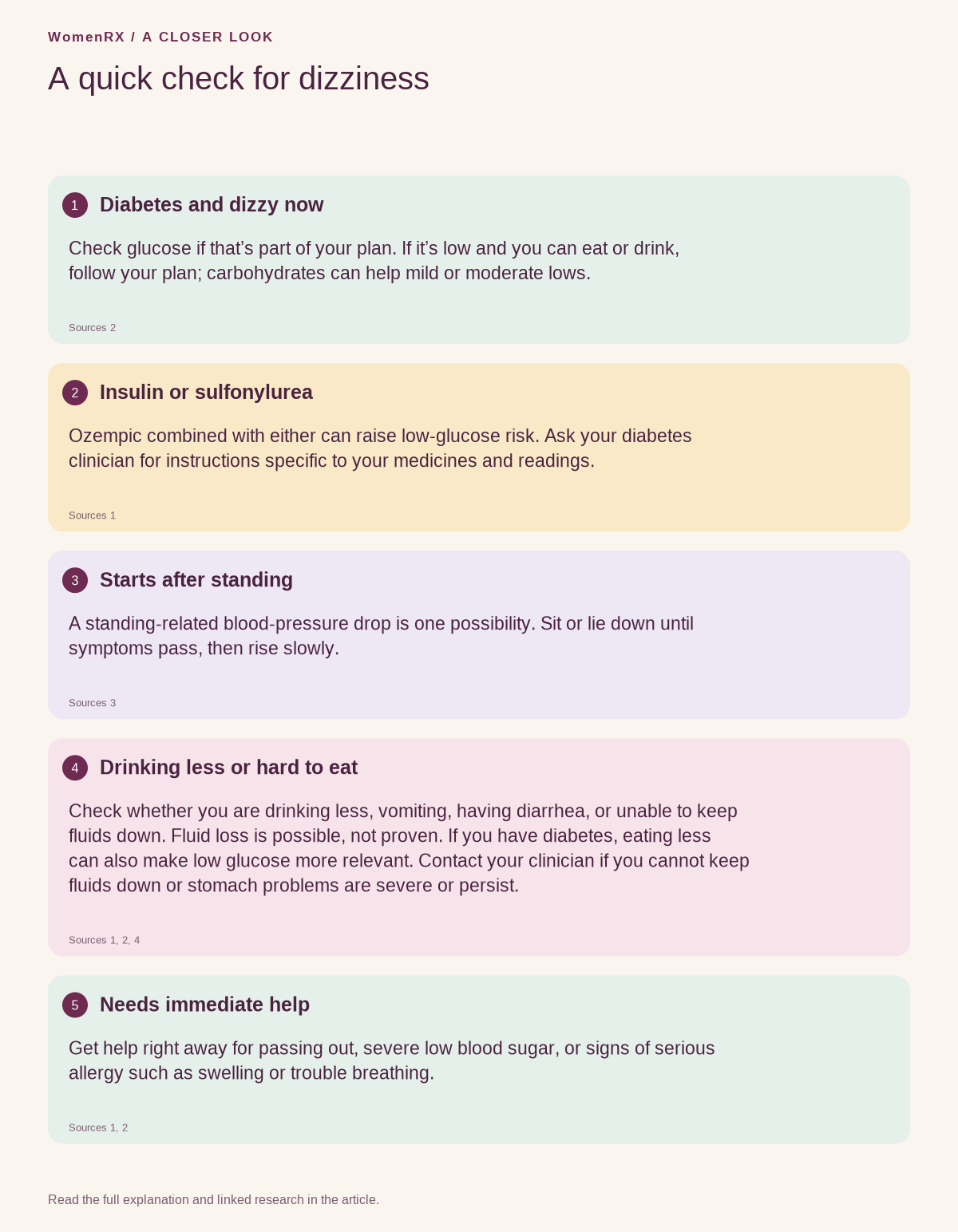
A quick check for dizziness
Diabetes and dizzy now: Check glucose if that’s part of your plan. If it’s low and you can eat or drink, follow your plan; carbohydrates can help mild or moderate lows.2
Insulin or sulfonylurea: Ozempic combined with either can raise low-glucose risk. Ask your diabetes clinician for instructions specific to your medicines and readings.1
Starts after standing: A standing-related blood-pressure drop is one possibility. Sit or lie down until symptoms pass, then rise slowly.3
Drinking less or hard to eat: Check whether you are drinking less, vomiting, having diarrhea, or unable to keep fluids down. Fluid loss is possible, not proven. If you have diabetes, eating less can also make low glucose more relevant. Contact your clinician if you cannot keep fluids down or stomach problems are severe or persist.124
Needs immediate help: Get help right away for passing out, severe low blood sugar, or signs of serious allergy such as swelling or trouble breathing.12
Read the figure as text
Use the pattern as a clue, not a diagnosis. A glucose reading, when included in your diabetes plan, is more informative than guessing from dizziness alone.- Diabetes and dizzy now: Check glucose if that’s part of your plan. If it’s low and you can eat or drink, follow your plan; carbohydrates can help mild or moderate lows.2
- Insulin or sulfonylurea: Ozempic combined with either can raise low-glucose risk. Ask your diabetes clinician for instructions specific to your medicines and readings.1
- Starts after standing: A standing-related blood-pressure drop is one possibility. Sit or lie down until symptoms pass, then rise slowly.3
- Drinking less or hard to eat: Check whether you are drinking less, vomiting, having diarrhea, or unable to keep fluids down. Fluid loss is possible, not proven. If you have diabetes, eating less can also make low glucose more relevant. Contact your clinician if you cannot keep fluids down or stomach problems are severe or persist.124
- Needs immediate help: Get help right away for passing out, severe low blood sugar, or signs of serious allergy such as swelling or trouble breathing.12
More questions, answered
Does dizziness mean Ozempic is causing low blood sugar?
Not necessarily. Ozempic’s patient information lists dizziness as a possible symptom of low blood sugar, but a standing-related blood-pressure drop is another possibility. Drinking less, vomiting, or diarrhea may also raise concern about fluid loss. If you have diabetes and glucose checks are part of your plan, a reading during symptoms can help clarify whether low glucose may be involved; it will not establish the cause of any other symptoms. 1 2 3 4
Which diabetes medicines make low blood sugar more relevant?
The Ozempic prescribing information specifically warns that using it with insulin or a sulfonylurea can increase the risk of low blood sugar. If you take either and feel dizzy, contact the clinician who manages your diabetes for individualized instructions rather than changing a medicine on your own. 1
Sources you can check
- OZEMPIC (SEMAGLUTIDE) INJECTION, SOLUTION [A-S MEDICATION SOLUTIONS] | US prescribing information and patient instructionsAccessed 2026-09-25Return to first citation
- Hypoglycemia: MedlinePlusAccessed 2026-09-25Return to first citation
- Dizziness - NHSAccessed 2026-09-25Return to first citation
- Harnessing Facebook to Investigate Real-World Mentions of Adverse Events of Glucagon-Like Peptide-1 Receptor Agonist (GLP-1 RA) Medications: Observational Study of Facebook Posts From 2022 to 2024.Alibilli AS, Jain V, Mane H, Yue X, Ratzki-Leewing A, Merchant JS, Criss S, Nguyen QC, McCoy RG, Nguyen TT. · JMIR infodemiology · 2025Return to first citation