Can Ozempic Cause Low Blood Sugar?
Low blood sugar is a particular concern when Ozempic is taken with insulin or a sulfonylurea.
Yes. Low blood sugar can happen while you’re taking Ozempic, especially if you also take insulin or a sulfonylurea. If symptoms appear, check your glucose if you can. If it’s low, or you strongly suspect a low and can’t check, treat it promptly with a fast-acting source of sugar. Review repeated episodes with your diabetes care team. 1 2 3
Why your other diabetes medicines matter
Ozempic (semaglutide) helps lower blood sugar partly by stimulating insulin release when glucose is elevated. Its US prescribing information warns that using it with insulin or a sulfonylurea, such as glimepiride, can increase the risk of low blood sugar, including severe episodes. A prescriber may consider adjusting one of those other medicines when Ozempic is started. Don’t change its dose on your own; the combination needs a plan that still manages your diabetes. 1 3
That warning doesn’t mean Ozempic alone commonly causes severe lows. It means your full treatment plan is more useful than the name of one medicine when you’re trying to understand an episode. 3
If you feel low, check and act
Shaking, sweating, a fast heartbeat, hunger, dizziness, or confusion can be signs of low blood sugar. Symptoms vary, and they don’t tell you your glucose number. If you can, check with your meter or continuous glucose monitor (CGM) when they occur. For many people with diabetes, below 70 mg/dL is low, though your care team may give you a different threshold. 1 2 3
If your reading is low, treat it promptly. The same applies if symptoms strongly suggest a low and you can’t check right away. Have something that raises blood sugar quickly, such as a small glass of fruit juice, regular (not diet) soda, or glucose tablets. Check your glucose after 10 to 15 minutes if you’re able. If it’s still low, have another fast-acting source of sugar and check again. Once you feel better and your glucose is back above your low threshold, have longer-lasting food, such as a sandwich or your next meal if it’s due. 1 2
If someone has a seizure, is unconscious, or isn’t responding normally, call 911. Don’t wait for a glucose reading before getting emergency help. 1
Use the episode to review the combination
Treating a low comes first. Afterward, the details can help your diabetes care team assess whether your medicines or monitoring plan needs to change. Note the reading if you have one, when the episode happened, which diabetes medicines you take, and whether lows have happened more than once or overnight. Frequent lows, a severe episode, nighttime lows, or trouble recognizing symptoms all warrant a review. 1 2 3
Ask specifically whether your insulin or sulfonylurea needs a clinician-led adjustment alongside Ozempic, what number counts as low for you, and how to handle a suspected low when you can’t check. If you use insulin and have trouble with lows, ask whether CGM could help you see patterns across the day and night. 2 3
If pregnancy is part of the picture
If you’re pregnant or planning a pregnancy, arrange a prompt review of Ozempic and your diabetes treatment plan. A review of GLP-1 medicines describes general recommendations to discontinue them before conception, but it doesn’t establish a personal plan for keeping your glucose managed. This is a reason to plan treatment together, not evidence that women have a different Ozempic-related risk of low blood sugar. 4
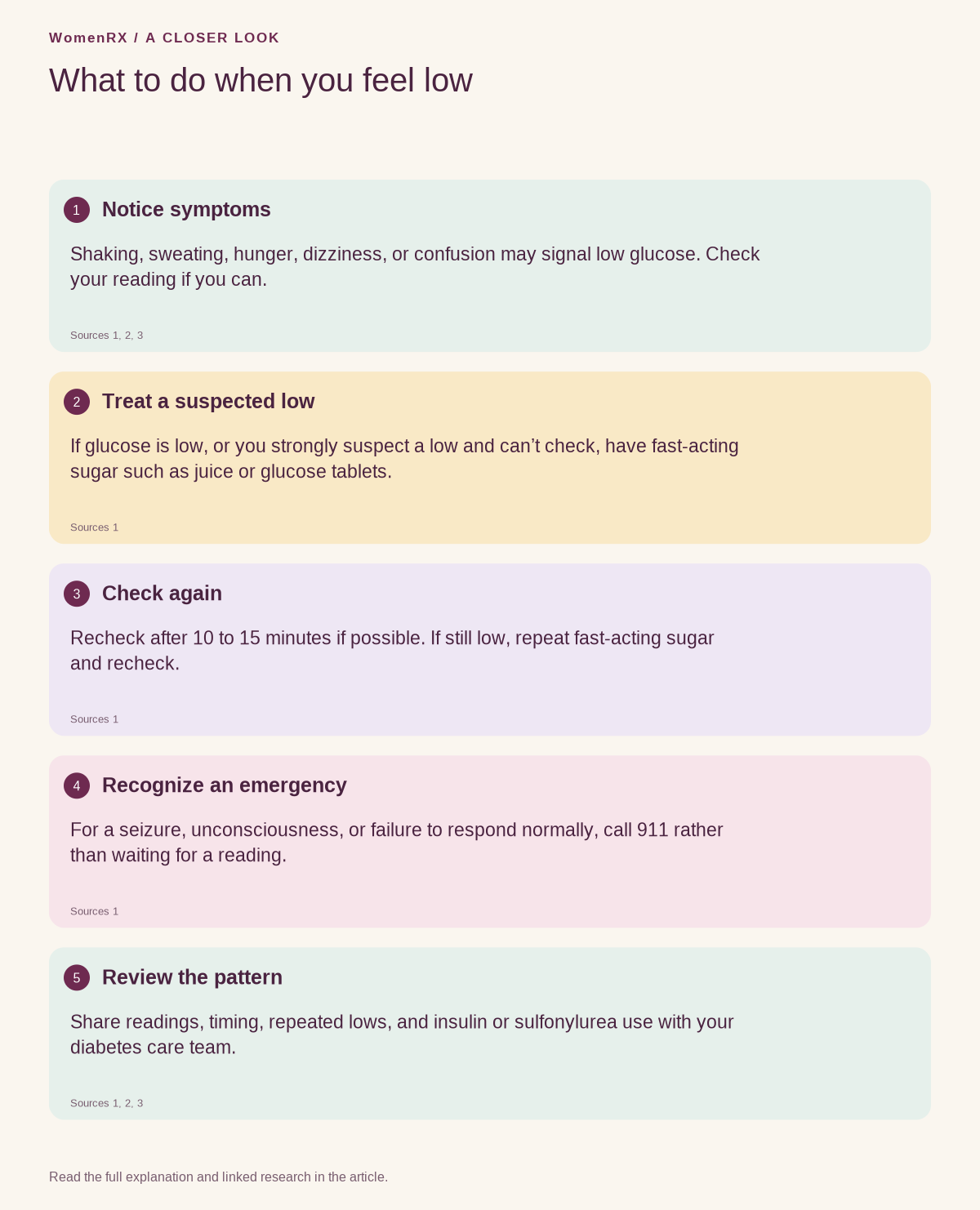
What to do when you feel low
Notice symptoms: Shaking, sweating, hunger, dizziness, or confusion may signal low glucose. Check your reading if you can.123
Treat a suspected low: If glucose is low, or you strongly suspect a low and can’t check, have fast-acting sugar such as juice or glucose tablets.1
Check again: Recheck after 10 to 15 minutes if possible. If still low, repeat fast-acting sugar and recheck.1
Recognize an emergency: For a seizure, unconsciousness, or failure to respond normally, call 911 rather than waiting for a reading.1
Review the pattern: Share readings, timing, repeated lows, and insulin or sulfonylurea use with your diabetes care team.123
Read the figure as text
Follow the immediate steps first, then use the episode to review your treatment combination.- Notice symptoms: Shaking, sweating, hunger, dizziness, or confusion may signal low glucose. Check your reading if you can.123
- Treat a suspected low: If glucose is low, or you strongly suspect a low and can’t check, have fast-acting sugar such as juice or glucose tablets.1
- Check again: Recheck after 10 to 15 minutes if possible. If still low, repeat fast-acting sugar and recheck.1
- Recognize an emergency: For a seizure, unconsciousness, or failure to respond normally, call 911 rather than waiting for a reading.1
- Review the pattern: Share readings, timing, repeated lows, and insulin or sulfonylurea use with your diabetes care team.123
Sources you can check
- Low blood sugar (hypoglycaemia) - NHSAccessed 2026-09-25Return to first citation
- Blood Glucose | Blood Sugar | Diabetes | MedlinePlusAccessed 2026-09-25Return to first citation
- OZEMPIC (SEMAGLUTIDE) INJECTION, SOLUTION [A-S MEDICATION SOLUTIONS] | US prescribing information and patient instructionsAccessed 2026-09-25Return to first citation
- Integrating glucagon-like peptide-1 receptor agonists into dermatology practice: Safety and monitoring strategies.Narla S, Narla RR. · Clinics in dermatology · 2026Return to first citation