Digestive Enzymes: Side Effects and Product-Specific Cautions
Pancreatic enzyme replacement, lactase, and alpha-galactosidase do different jobs, so the product name matters when checking side effects and warnings.
There isn’t one side-effect list for all digestive enzymes. Pancrelipase treats pancreatic enzyme deficiency; stomach symptoms have been reported during treatment, and a serious bowel complication has been associated with high-dose use.35 Lactase and alpha-galactosidase products target different foods and have product-specific cautions. Check the exact label, and seek assessment if digestive symptoms persist.67
First, identify which enzyme you have
“Digestive enzymes” can mean very different products. Pancrelipase replaces enzymes when the pancreas doesn’t supply enough of them. It contains enzymes that help digest fat, protein, and carbohydrates and is used for exocrine pancreatic insufficiency, or EPI.3 A lactase supplement has a narrower purpose: helping break down lactose in dairy. Alpha-galactosidase products are intended for certain complex carbohydrates in foods such as beans and grains.67
That distinction matters more than the word enzyme on the front of a bottle. A caution documented for high-dose pancreatic enzyme replacement doesn’t automatically apply to a lactase tablet. Likewise, an over-the-counter product aimed at gas after beans isn’t a substitute for treatment of pancreatic enzyme deficiency.3567
What side effects are known for pancrelipase?
In trials of pancrelipase for EPI, reported symptoms included abdominal pain, nausea, bloating, and diarrhea. Digestive symptoms can also come from EPI itself, so a symptom that continues during treatment isn’t automatically a drug side effect. A review also describes fibrosing colonopathy, a serious bowel complication associated with high doses of pancreatic enzymes, particularly in the context of cystic fibrosis. These are reasons to discuss new or worsening symptoms with the clinician managing your treatment rather than adjust it on your own.5
Pancreatic enzyme replacement products have historically been made from pig pancreas. A review notes the possibility of allergic reactions, including severe reactions, in people at risk of reacting to these products. If you have a relevant allergy, tell the clinician managing your treatment which product you use; the ingredient source matters here.5
The short pancrelipase trials shouldn’t be read as a complete long-term safety guarantee. One review found that many trials enrolled relatively few people and lasted less than a few weeks.5 A seven-day placebo-controlled trial in people with EPI due to chronic pancreatitis or pancreatic surgery found similar rates of reported adverse events, including low and high blood sugar, in the pancrelipase and placebo groups. That result applies to the studied patients and timeframe, not to every person with diabetes or every enzyme product.4
What changes with an over-the-counter supplement?
Start with the enzyme and the specific formulation, not a general list of supposed enzyme side effects. For example, the manufacturer of LACTAID says its lactase supplements, used as directed, shouldn’t cause constipation or diarrhea. That is a product-maker’s statement, not evidence that every lactase formulation has been studied or that ongoing diarrhea is harmless. The same manufacturer advises contacting a doctor if diarrhea, bloating, gas, or stomach upset continues, since something else may be causing it.6
Beano tablets contain alpha-galactosidase derived from Aspergillus niger and include other listed ingredients. Their label says to stop use if a rare sensitivity occurs and tells people with galactosemia to check with a doctor. Those are cautions for that product, not a universal contraindication list for all digestive enzymes.7
This also helps separate a possible reaction from a poor match between product and problem. For example, lactase is aimed at lactose in dairy, while the Beano product is aimed at gas-producing complex carbohydrates. If your symptoms happen regardless of whether you eat the food a product targets, taking more of it may not answer why you feel unwell.67
When symptoms need a closer look
Recurring gas or bloating can be frustrating, but don’t let an enzyme supplement become the only response to persistent diarrhea or stomach upset. The lactase manufacturer specifically advises medical follow-up when those symptoms continue.6 Greasy stools, weight loss, or trouble maintaining nutrition deserve assessment too: they can occur with EPI, a condition for which pancreatic enzyme replacement is part of treatment.3 These signs don’t diagnose EPI on their own.
If you seek advice, bring the bottle or a photo of its ingredient list. Be ready to say which product you use, which food you hoped it would help with, what symptoms you’re having, and whether they began before or after you started it. If you use pancrelipase, include the product name and any new symptoms rather than assuming all pancreatic enzyme formulations are identical; products can differ in their enzyme amounts and how they release them.3
Pregnancy and breastfeeding call for a product-specific check
Whether you’re pregnant or breastfeeding, check the exact product rather than assuming all digestive enzymes carry the same cautions. MedlinePlus advises checking before starting or stopping medicines, including supplements, during pregnancy, and notes that stopping a needed medicine may carry risks of its own.2 During breastfeeding, questions about a medicine’s suitability also warrant an individual check.1
The Beano tablets described above specifically say to ask a doctor before use if pregnant or nursing.7 LACTAID’s manufacturer advises pregnant or nursing women to discuss their diet, including dairy, with their doctor.6 Neither statement establishes a class-wide risk for lactase or alpha-galactosidase. If you use pancrelipase for a diagnosed condition, discuss the treatment and your symptoms with the clinician managing it rather than replacing it with an over-the-counter blend.23
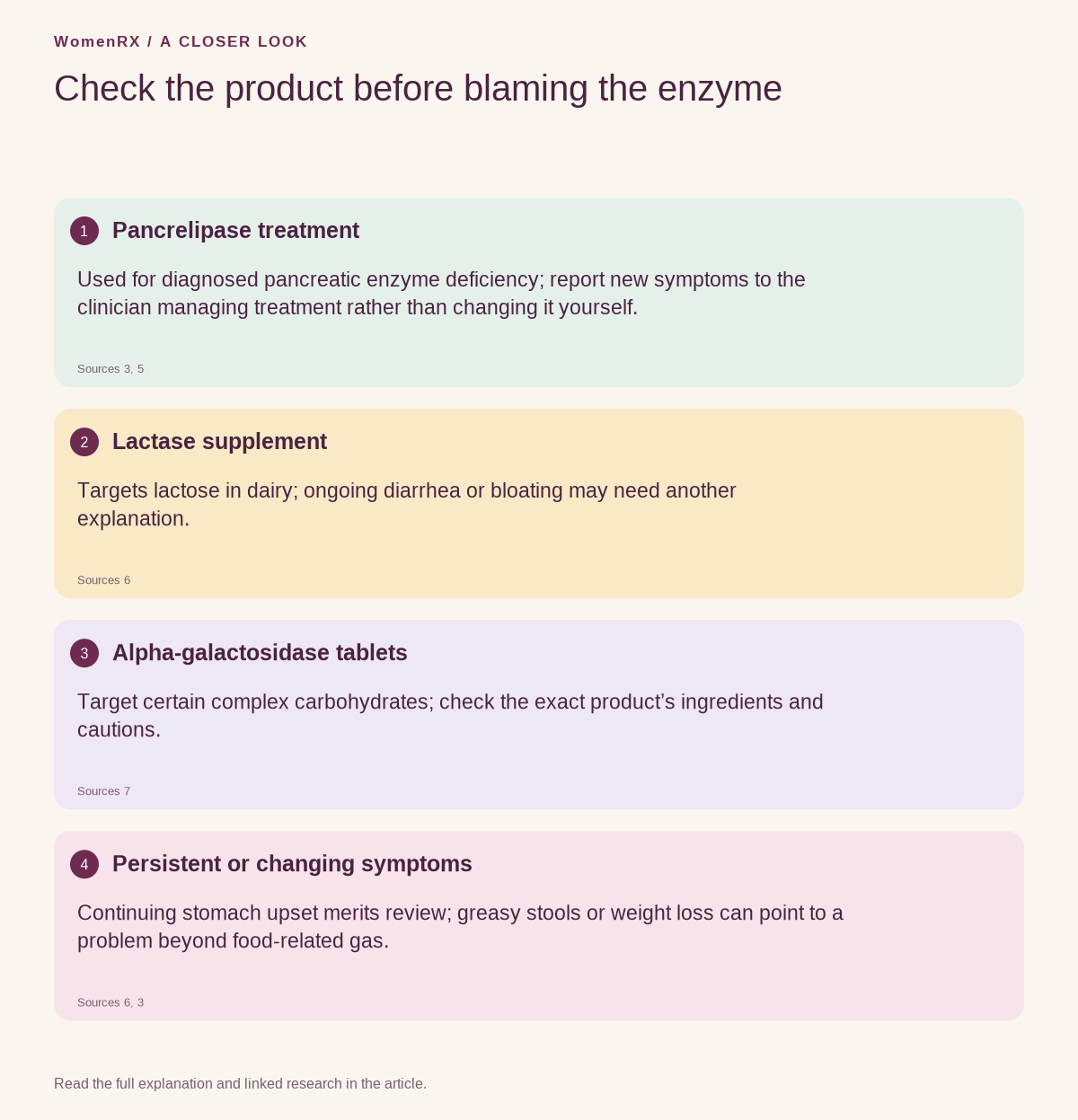
Check the product before blaming the enzyme
Pancrelipase treatment: Used for diagnosed pancreatic enzyme deficiency; report new symptoms to the clinician managing treatment rather than changing it yourself.35
Lactase supplement: Targets lactose in dairy; ongoing diarrhea or bloating may need another explanation.6
Alpha-galactosidase tablets: Target certain complex carbohydrates; check the exact product’s ingredients and cautions.7
Persistent or changing symptoms: Continuing stomach upset merits review; greasy stools or weight loss can point to a problem beyond food-related gas.63
Read the figure as text
Four distinctions to use when reading a label or explaining symptoms to a clinician. This is not a diagnostic score.- Pancrelipase treatment: Used for diagnosed pancreatic enzyme deficiency; report new symptoms to the clinician managing treatment rather than changing it yourself.35
- Lactase supplement: Targets lactose in dairy; ongoing diarrhea or bloating may need another explanation.6
- Alpha-galactosidase tablets: Target certain complex carbohydrates; check the exact product’s ingredients and cautions.7
- Persistent or changing symptoms: Continuing stomach upset merits review; greasy stools or weight loss can point to a problem beyond food-related gas.63
More questions, answered
Can digestive enzymes cause diarrhea, or is diarrhea a sign they aren’t working?
Either explanation may be too simple. Diarrhea has been reported during pancrelipase treatment, but digestive symptoms can also reflect the underlying condition.5 A lactase product won’t address every cause of diarrhea; if symptoms continue, the LACTAID manufacturer advises medical follow-up.6
Sources you can check
- Breastfeeding | Benefits of Breastfeeding | MedlinePlusAccessed 2026-09-25Return to first citation
- Pregnancy and Medicines | MedlinePlusAccessed 2026-09-25Return to first citation
- Clinical Efficacy and Safety of Treatments for Exocrine Pancreatic Insufficiency: A Systematic Literature Review.Chu P, Mioc J, O'Donovan P, Henry O. · Digestion · 2025Return to first citation
- Efficacy and Safety of Pancrelipase/Pancreatin in Patients With Exocrine Pancreatic Insufficiency and a Medical History of Diabetes Mellitus.Whitcomb DC, Bodhani A, Beckmann K, Sander-Struckmeier S, Liu S, Fuldeore M, Pollack PF, Khurmi RP. · Pancreas · 2016Return to first citation
- Pancrelipase: an evidence-based review of its use for treating pancreatic exocrine insufficiency.Nakajima K, Oshida H, Muneyuki T, Kakei M. · Core evidence · 2012Return to first citation
- Frequently Asked Questions | LACTAID®Accessed 2026-09-25Return to first citation
- Beano® Tablets - Alpha-D-Galactosidase Anti-Gas PillsAccessed 2026-09-25Return to first citation