Could heavy or painful periods signal adenomyosis?
Severe period pain or heavy bleeding can raise the question, but symptoms overlap with other conditions and can’t confirm adenomyosis on their own.
Adenomyosis can cause painful periods, heavy menstrual bleeding, and pain during sex, though some people have no symptoms. These signs can also have other causes, including fibroids and endometriosis. A clinician may ask about your periods and, if needed, use an ultrasound or MRI to look for what’s causing the symptoms. 1 2
The pattern that may prompt a closer look
Adenomyosis is a condition in which tissue from the uterine lining grows into the muscle of the uterine wall. It may cause periods that are very painful, heavy bleeding during your period, or pain during sex. Some people with adenomyosis have no symptoms at all. 2
A practical sign that bleeding may be heavy is needing to change a pad or tampon every one to two hours. Bleeding that leaves you tired or short of breath is another reason to bring it up. These clues describe the impact of bleeding, not its cause: heavy periods can happen for several reasons. 1
Period pain is worth discussing if it’s severe enough to interrupt your usual activities, or if it’s becoming more painful over time. Pain during sex can also be part of the picture. None of these symptoms is unique to adenomyosis, and having them doesn’t mean you have it. 2
How it differs from fibroids and endometriosis
The conditions can sound alike because their symptoms overlap. Adenomyosis involves tissue growing into the muscle of the uterine wall. Endometriosis is different: tissue similar to the uterine lining grows in other places, such as the ovaries or fallopian tubes. Fibroids are another possible cause of heavy periods, so bleeding alone doesn’t distinguish among these conditions. 1 2
Menstrual bleeding can also change after pregnancy or as menopause approaches. Those changes may help explain when a symptom began, but they don’t identify adenomyosis as the cause. 1
What an evaluation may involve
A clinician may ask about your periods and examine your abdomen for swelling or bloating. You can also mention pain during sex or other symptoms you’ve noticed. If more information is needed, an ultrasound or MRI may help investigate adenomyosis or other possible causes. 2
Symptoms alone can’t confirm the diagnosis. The evaluation is about matching your history with examination or imaging findings when appropriate, and considering alternatives such as endometriosis. Not everyone needs the same tests. 2
For an appointment, it can help to describe what you’ve noticed: how often you change menstrual products, whether pain is getting worse, and whether it affects your usual activities. You don’t need a perfect record. A few notes, or a clear recollection of the pattern, can give the clinician a useful starting point. 1 2
Consider making an appointment if heavy bleeding is affecting your life, period pain is severe or worsening, or you have bleeding between periods or after sex. Pain with sex, or pain when peeing or having a bowel movement alongside heavy periods, is also worth discussing. 1 2
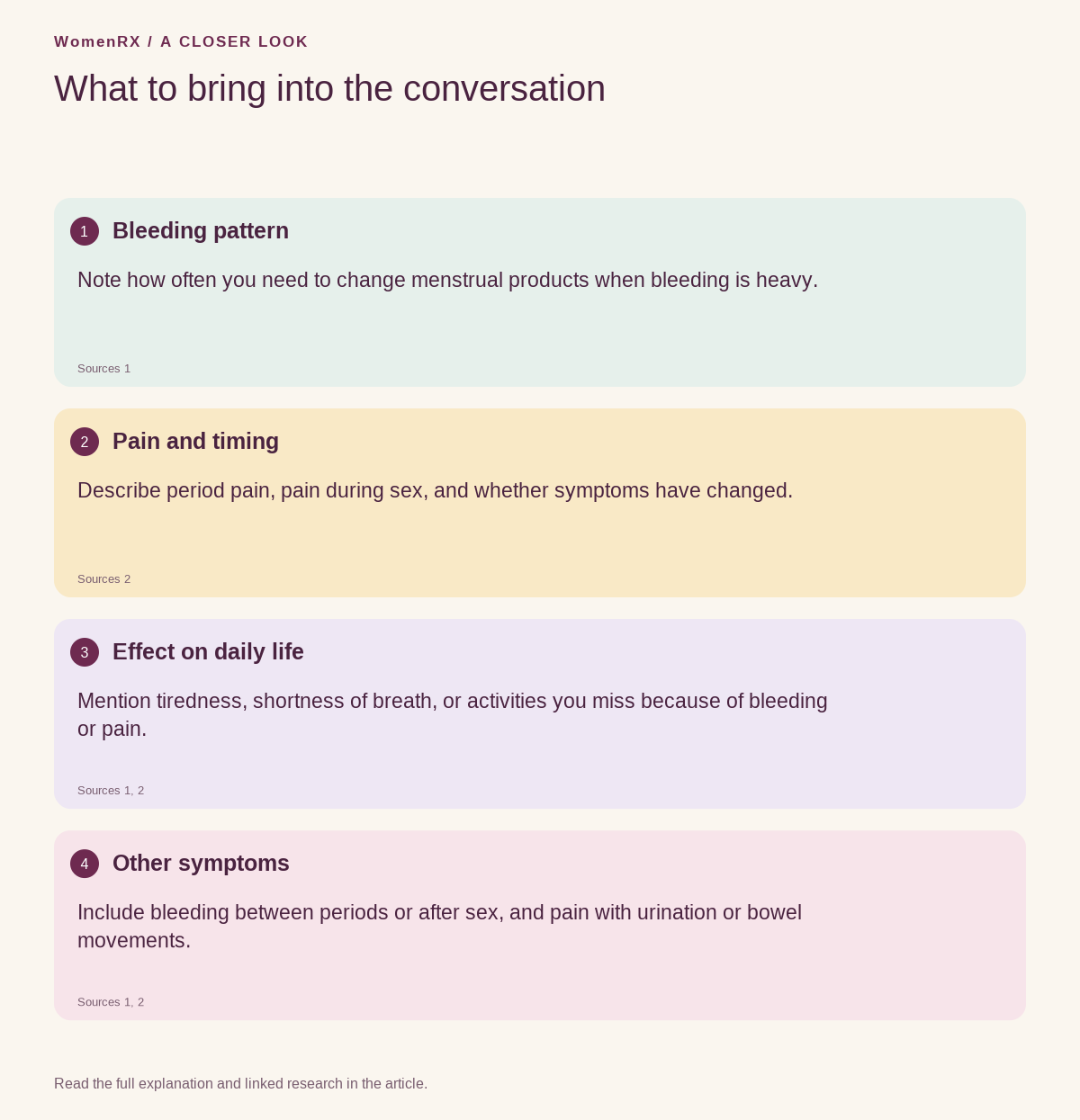
What to bring into the conversation
Bleeding pattern: Note how often you need to change menstrual products when bleeding is heavy.1
Pain and timing: Describe period pain, pain during sex, and whether symptoms have changed.2
Effect on daily life: Mention tiredness, shortness of breath, or activities you miss because of bleeding or pain.12
Other symptoms: Include bleeding between periods or after sex, and pain with urination or bowel movements.12
Read the figure as text
These notes can help describe the pattern and its impact. They are not a self-test for adenomyosis.- Bleeding pattern: Note how often you need to change menstrual products when bleeding is heavy.1
- Pain and timing: Describe period pain, pain during sex, and whether symptoms have changed.2
- Effect on daily life: Mention tiredness, shortness of breath, or activities you miss because of bleeding or pain.12
- Other symptoms: Include bleeding between periods or after sex, and pain with urination or bowel movements.12
Sources you can check
- Heavy periods - NHSAccessed 2026-09-25Return to first citation
- Adenomyosis - NHSAccessed 2026-09-25Return to first citation