Fibroids and Heavy Bleeding: How Treatment Choices Differ
The right plan depends on whether fibroids are causing the bleeding, how much the bleeding affects you, and whether you hope to become pregnant.
Treatment choices start with confirming what’s causing the bleeding and checking whether blood loss has led to anemia. Fibroid location, size, symptoms, and pregnancy plans then shape the options. Medicines can reduce bleeding without removing fibroids; myomectomy removes fibroids while leaving the uterus; uterine artery embolization shrinks them; and hysterectomy removes the uterus. Each answers a different need. 123456
First, make sure the fibroids explain the bleeding
Finding a fibroid doesn’t automatically mean it’s the cause of a heavy period. Fibroids often cause no symptoms, and heavy bleeding can also have other causes. A fibroid’s location, size, and number can affect the symptoms it causes. That’s why an exam, imaging, and sometimes other tests matter before choosing a fibroid treatment. 124
The bleeding itself deserves attention, too. For example, needing to change a pad or tampon every hour or two, feeling tired or short of breath, or having periods that disrupt work or sleep are useful ways to describe its impact. Blood tests can help check for anemia, including iron-deficiency anemia; heavy periods can cause enough blood loss to contribute to it. 34
This creates an immediate distinction: How do we reduce the bleeding now, and does the fibroid itself need treatment? Fibroids sometimes shrink during or after menopause, but that possibility doesn’t erase the effect of ongoing blood loss. 23
If bleeding is the main problem, medicines may be a starting point
Treatment doesn’t always require a procedure. Options used for heavy periods include a hormonal intrauterine system, some other hormonal contraception, and tranexamic acid, a medicine that reduces bleeding. These approaches target the bleeding rather than remove a fibroid. Their suitability still depends on your circumstances and what the evaluation finds. 24
That distinction matters if you also have pressure or pain, or if imaging shows a fibroid whose position may affect which treatments make sense. It also matters if you hope to become pregnant: a contraceptive method and a noncontraceptive bleeding treatment serve different immediate purposes. The useful comparison isn’t simply “medicine or surgery.” It’s whether controlling periods is enough for you, or whether the fibroid needs to be addressed. 24
If the fibroid needs treatment, compare what stays and what changes
Myomectomy removes fibroids while leaving the uterus in place. It’s a relevant discussion when keeping the uterus, including for a possible future pregnancy, is a priority. Leaving the uterus also means that needing treatment again remains possible. The surgical approach and recovery discussion depend on the fibroid’s location, size, and number, rather than on the word myomectomy alone. 26
Uterine artery embolization (UAE) leaves the uterus in place but does not surgically remove the fibroids. A catheter is used to block blood flow to them so they shrink. It’s a minimally invasive option for symptom relief. A review comparing UAE with myomectomy found fewer early complications with UAE, but higher odds of another intervention by four-year follow-up. The review pooled 13 studies, nine observational and four randomized, so those findings describe groups of patients, not what will happen to any one person. 56
If pregnancy is a goal, “uterus-preserving” isn’t the same as “equally established for pregnancy.” In that review, pregnancy outcomes came from only two studies, and the estimates were too uncertain to settle the choice between UAE and myomectomy for someone hoping to conceive. Bring that goal into the discussion before deciding on a procedure. 6
Hysterectomy removes the uterus. It may be considered when fibroids are very large or cause heavy bleeding, particularly near or after menopause. Because the uterus is removed, pregnancy is no longer possible and uterine fibroids cannot come back. That is a different tradeoff from a uterus-preserving treatment, not an automatic next step after medicines. 26
Recovery is part of this comparison, but it shouldn’t be reduced to a single promise that one option is “easy.” UAE uses a catheter rather than fibroid-removal surgery, and its access point may be at the wrist or groin. A review of those two UAE approaches found differences in procedure and discharge outcomes, but it did not compare recovery from UAE with recovery from myomectomy or hysterectomy. For a useful personal estimate, the specific procedure being proposed matters. 56
Let your life plans change the discussion
Fibroids sometimes shrink during or after menopause. If bleeding is disrupting your life or contributing to anemia, symptom relief and blood loss deserve more weight in the decision. If pregnancy is part of your plans, say so before comparing any medicine or procedure; some fibroids can affect fertility or pregnancy, but many women with fibroids become pregnant without problems. 234
Bleeding after menopause is a different question from a heavy period near menopause. It counts as abnormal bleeding and needs evaluation rather than an assumption that a known fibroid is responsible. Bleeding between periods or after sex also warrants attention. 14
Once the cause and the effect of the bleeding are clearer, you can compare options by the outcome you want most: lighter periods, relief from other fibroid symptoms, preserving a chance of pregnancy, avoiding a major operation, or reducing the chance of needing another treatment. Those priorities can point to different choices, and they’re worth stating plainly. 246
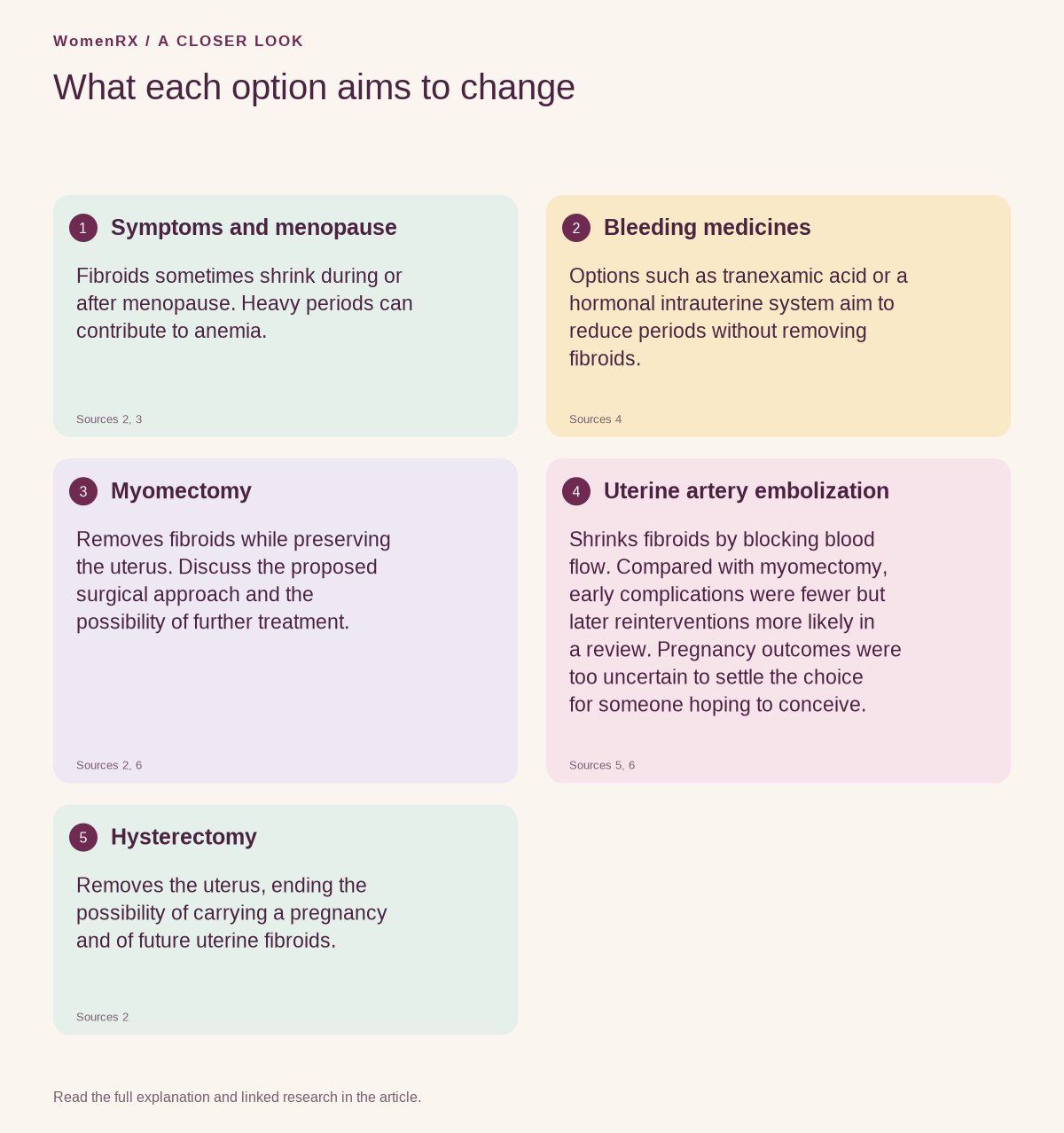
What each option aims to change
Symptoms and menopause: Fibroids sometimes shrink during or after menopause. Heavy periods can contribute to anemia.23
Bleeding medicines: Options such as tranexamic acid or a hormonal intrauterine system aim to reduce periods without removing fibroids.4
Myomectomy: Removes fibroids while preserving the uterus. Discuss the proposed surgical approach and the possibility of further treatment.26
Uterine artery embolization: Shrinks fibroids by blocking blood flow. Compared with myomectomy, early complications were fewer but later reinterventions more likely in a review. Pregnancy outcomes were too uncertain to settle the choice for someone hoping to conceive.56
Hysterectomy: Removes the uterus, ending the possibility of carrying a pregnancy and of future uterine fibroids.2
Read the figure as text
These are different questions and treatment targets, not a ranking. Fibroid position, bleeding effects, and pregnancy plans help determine which comparisons matter.- Symptoms and menopause: Fibroids sometimes shrink during or after menopause. Heavy periods can contribute to anemia.23
- Bleeding medicines: Options such as tranexamic acid or a hormonal intrauterine system aim to reduce periods without removing fibroids.4
- Myomectomy: Removes fibroids while preserving the uterus. Discuss the proposed surgical approach and the possibility of further treatment.26
- Uterine artery embolization: Shrinks fibroids by blocking blood flow. Compared with myomectomy, early complications were fewer but later reinterventions more likely in a review. Pregnancy outcomes were too uncertain to settle the choice for someone hoping to conceive.56
- Hysterectomy: Removes the uterus, ending the possibility of carrying a pregnancy and of future uterine fibroids.2
Sources you can check
- Vaginal Bleeding | Uterine Fibroids | MedlinePlusAccessed 2026-09-25Return to first citation
- Uterine Fibroids | Fibroids | MedlinePlusAccessed 2026-09-25Return to first citation
- Anemia | MedlinePlusAccessed 2026-09-25Return to first citation
- Heavy periods - NHSAccessed 2026-09-25Return to first citation
- Transradial versus transfemoral access in uterine artery embolization for fibroids: a systematic review and meta-analysis.Alhebshi ZA, Ahmad MN, Alsayed MA, Aljarari LH, Rawah M, Hayat M, Fadl JKM, Daoud I, Orabi OOM, Eltayeb SMH. · Frontiers in medicine · 2026Return to first citation
- Systematic review and meta-analysis of current evidence in uterine artery embolization vs myomectomy for symptomatic uterine fibroids.Peng J, Wang J, Shu Q, Luo Y, Wang S, Liu Z. · Scientific reports · 2024Return to first citation