Fibroids: Symptoms, Diagnosis, and Treatment Choices
A fibroid’s size is only part of the picture: its location, your symptoms, and your plans for pregnancy can all shape what to do next.
Fibroids are common, noncancerous growths, and many cause no symptoms or need no treatment. When symptoms occur, their impact can depend on fibroid number, size, and location. A pelvic exam and ultrasound can help clarify what’s there; treatment choices depend on how you feel, what the imaging shows, and whether you hope to become pregnant. 1 2
The facts behind common fibroid assumptions
“Every fibroid needs treatment.” Not so. Many cause no symptoms, and treatment may not be needed when they aren’t causing problems. 1 2
“A bigger fibroid always causes worse symptoms.” Size matters, but it’s not the whole story. Fibroids can differ in number and in where they sit in or around the uterus, and symptoms can vary with those features. A scan’s size measurement is useful, but it doesn’t tell the whole story of how you feel. 1 2 3
“Fibroids always prevent pregnancy.” Many women with fibroids become pregnant without problems, though some fibroids may be associated with difficulty getting pregnant or pregnancy complications. Your particular scan findings and reproductive plans matter more than the diagnosis alone. 1
Fibroids are common, noncancerous growths made of muscle and other tissue. Some people have no symptoms; others experience heavy or painful periods, pelvic or lower-back pain, urinary or bowel pressure symptoms, discomfort during sex, or difficulty getting pregnant. Symptoms can affect everyday life in different ways. 1 2
What a scan can clarify
A clinician may find fibroids during a pelvic examination or imaging. Ultrasound can help show how many there are, where they are, and how large they are. Fibroids may be near the inner lining of the uterus, within its muscular wall, or on its outer surface. MRI can be used as a more detailed, second-stage imaging option in some cases; it isn’t necessary to assume everyone needs one. 1 2 3
Ask what the scan shows in practical terms: how many fibroids were seen, where they are, and whether the clinician thinks they relate to your symptoms. If you’re having bleeding, pain, pressure, or fertility concerns, explain how those symptoms affect your life. The image and your experience are both part of the treatment decision.
Treatment should match the problem you want to solve
If fibroids aren’t causing symptoms, observation without treatment may be reasonable. When symptoms are troublesome, possible approaches include medicines to help with pain or heavy bleeding, procedures, or surgery. Uterine artery embolization is one procedure that blocks blood supply to fibroids so they shrink. Which options fit depends in part on symptoms and fibroid size, number, and location. 1 2
A key tradeoff is whether preserving the possibility of pregnancy matters to you. Some fibroid procedures or operations can affect the ability to have children or increase the risk of pregnancy problems, so bring up your plans before choosing a treatment. Don’t assume that a treatment suitable for symptom relief is also the right choice when pregnancy is a goal. 2
Menopause status is useful context, too: fibroids mainly affect women who haven’t gone through menopause. If you’re in perimenopause or postmenopause, say so when discussing symptoms and options. The decision still needs to reflect your symptoms, imaging, and goals rather than a one-size-fits-all rule. 2
Questions that make the appointment more useful
You could ask:
- Where are my fibroids, how many are there, and what does their size mean in my case?
- Which of my symptoms might be related to them, and what else could explain those symptoms?
- If I wait and monitor symptoms, what would prompt us to revisit the plan?
- Which options are aimed at bleeding, pain, or pressure, and what tradeoffs come with each?
- Could any option affect a future pregnancy? If so, how should that change the choice?
- Is ultrasound enough to guide the decision, or would additional imaging help?
The goal isn’t to choose a procedure just because a fibroid appears on a scan. It’s to connect the scan findings to what’s bothering you and what you want your treatment to make possible.
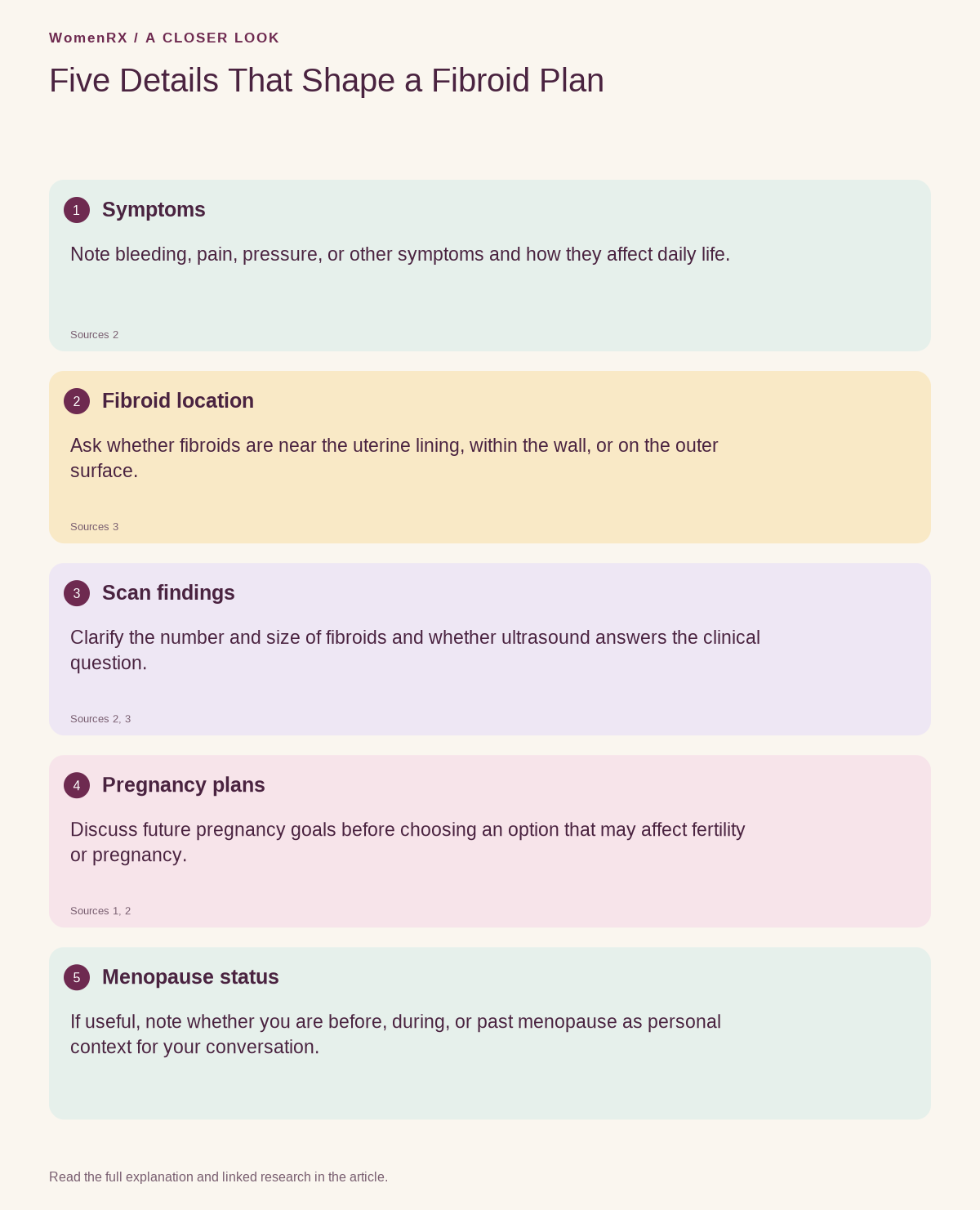
Five Details That Shape a Fibroid Plan
Symptoms: Note bleeding, pain, pressure, or other symptoms and how they affect daily life.2
Fibroid location: Ask whether fibroids are near the uterine lining, within the wall, or on the outer surface.3
Scan findings: Clarify the number and size of fibroids and whether ultrasound answers the clinical question.23
Pregnancy plans: Discuss future pregnancy goals before choosing an option that may affect fertility or pregnancy.12
Menopause status: If useful, note whether you are before, during, or past menopause as personal context for your conversation.
Read the figure as text
Use these five prompts to connect what imaging shows with symptoms and what you want treatment to preserve or improve.- Symptoms: Note bleeding, pain, pressure, or other symptoms and how they affect daily life.2
- Fibroid location: Ask whether fibroids are near the uterine lining, within the wall, or on the outer surface.3
- Scan findings: Clarify the number and size of fibroids and whether ultrasound answers the clinical question.23
- Pregnancy plans: Discuss future pregnancy goals before choosing an option that may affect fertility or pregnancy.12
- Menopause status: If useful, note whether you are before, during, or past menopause as personal context for your conversation.
More questions, answered
Can fibroids be found when they aren’t causing symptoms?
Yes. A clinician may find them during a pelvic exam or imaging done for another reason, and many fibroids cause no noticeable symptoms. 1 2
Does a diagnosis mean I need surgery?
No. If fibroids aren’t causing problems, treatment may not be needed. When symptoms do need attention, medicine and procedures may also be options; the choice depends on symptoms, fibroid features, and reproductive plans. 1 2
Sources you can check
- Uterine Fibroids | Fibroids | MedlinePlusAccessed 2026-09-25Return to first citation
- Fibroids - NHSAccessed 2026-09-25Return to first citation
- Understanding different aspects of blood supply of uterine fibroids: an overview of ultrasound and magnetic resonance imaging techniques.Slotman DJ, Frijlingh M, Juffermans LJM, Bartels LW, Moonen CTW, Bosch van den T, Boomsma MF, Huirne JAF. · Insights into imaging · 2025Return to first citation