Fibroids: When to Watch, Treat, or Wait
Fibroids may need no treatment at all; symptoms, location, pregnancy plans, and menopause timing help shape what makes sense.
Fibroids don’t always need treatment, and many people have no symptoms. They may shrink during or after menopause, but that isn’t a dependable way to manage troublesome bleeding, pain, or pressure. Options range from monitoring and medicines that ease symptoms to procedures or surgery; the best fit depends on fibroid size and location, how you feel, and whether you may want a pregnancy. 2 3
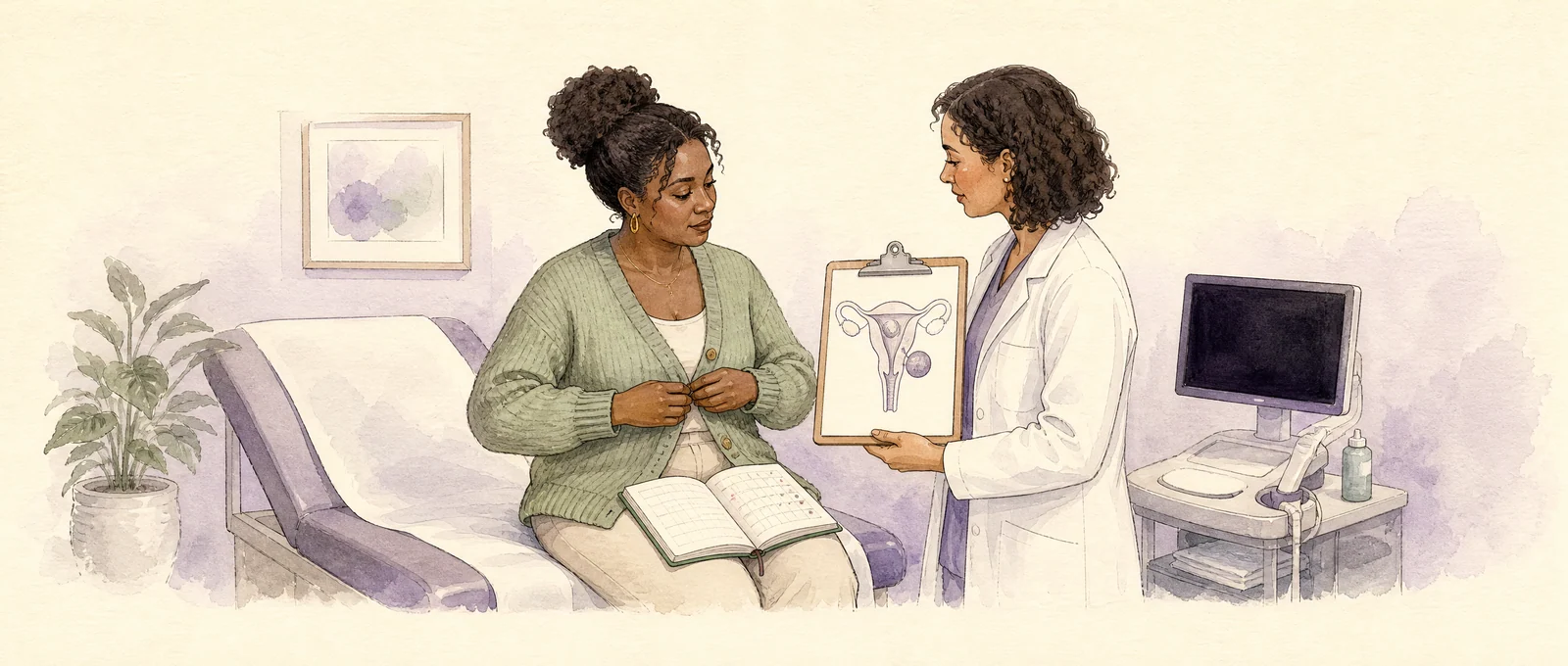
First question: are the fibroids causing problems?
Fibroids are noncancerous growths in or around the uterus. Some cause no noticeable symptoms and need no active treatment. Others can contribute to heavy or painful periods, pelvic pain or pressure, or difficulty getting pregnant. Their number, size, and location help explain why symptoms can differ from one person to another. 2 3 6
If fibroids aren’t bothering you, monitoring rather than treatment may be reasonable. If bleeding, pain, or pressure is affecting daily life, the decision shifts toward relief. An ultrasound can show how many fibroids there are and where they sit, information that helps make treatment choices more specific. 3 6
What “shrinking on its own” can mean
Fibroids can shrink during and after menopause, when hormone levels change. That may make waiting an appealing option if you’re nearing menopause and symptoms are manageable. But it isn’t a promise, and it doesn’t address symptoms that need relief now. 2
A treatment can also have a different goal from making a fibroid disappear. Medicines may help with bleeding or pain; some may also reduce fibroid size. Procedures can target fibroids or their blood supply, while surgery can remove fibroids or the uterus. These approaches come with different tradeoffs, so “shrink it” isn’t the only measure that matters. 3 6
Matching options to what you need
For bleeding or pain: Medicines may help control symptoms. Tranexamic acid is a nonhormonal medicine used for heavy bleeding; hormonal medicines may also be discussed. These treatments focus on symptom relief, not necessarily removing fibroids. 3 4 6
For fibroids that need a procedure: Uterine artery embolization blocks blood flow to fibroids so they shrink. Surgery may be considered when symptoms are severe, fibroids are large, or other approaches haven’t helped. Which procedures are suitable depends partly on fibroid size, number, and location. 3 6
For someone who may want a future pregnancy: Say so before weighing procedures or surgery. Many people with fibroids can become pregnant without problems, but some fibroids can affect fertility or pregnancy. Myomectomy removes fibroids while preserving the uterus, but it doesn’t guarantee a future pregnancy and fibroids can recur. Other procedures may have uncertain implications for future fertility, so preserving the uterus and preserving the option of pregnancy aren’t always the same thing. 2 3 6
For someone nearing or past menopause: If symptoms are manageable, the possibility that fibroids may shrink can be part of the conversation. If bleeding or other symptoms are severe, waiting isn’t the only option. Your symptoms, scan findings, age, and priorities still matter. 2 6
Hysterectomy removes the uterus and is not an option for someone who wants to carry a future pregnancy. It’s one possible treatment for significant fibroid problems, not a necessary outcome of having fibroids. 2 6
Do natural treatments reverse fibroids?
A Cochrane review of varied herbal preparations found the evidence insufficient to support or rule out their use for fibroids. The review included 21 trials involving 2,222 women; most trials had unclear or high risk of bias, and none reported the review’s primary outcome of fibroid-related symptoms. That is not proof that every preparation has no effect, but it does mean herbal products can’t be presented as an established alternative to monitoring or medical treatment. 5
If you’re considering an herbal product, bring its name or label into the treatment discussion, particularly if you’re also using medication. The practical question is whether it has evidence for the outcome you care about, such as less bleeding or pain, not just a reported change in fibroid size.
A useful way to frame the decision
Think in terms of three questions: Are symptoms affecting your life? What do the fibroids’ size and location suggest? Do you want to preserve the possibility of pregnancy? Add where you are in relation to menopause, and the options become easier to compare. Heavy or unusual bleeding can have causes other than fibroids, so it deserves assessment rather than assuming the fibroids explain it. Bleeding after menopause is also considered abnormal and should be evaluated. 1 2 6
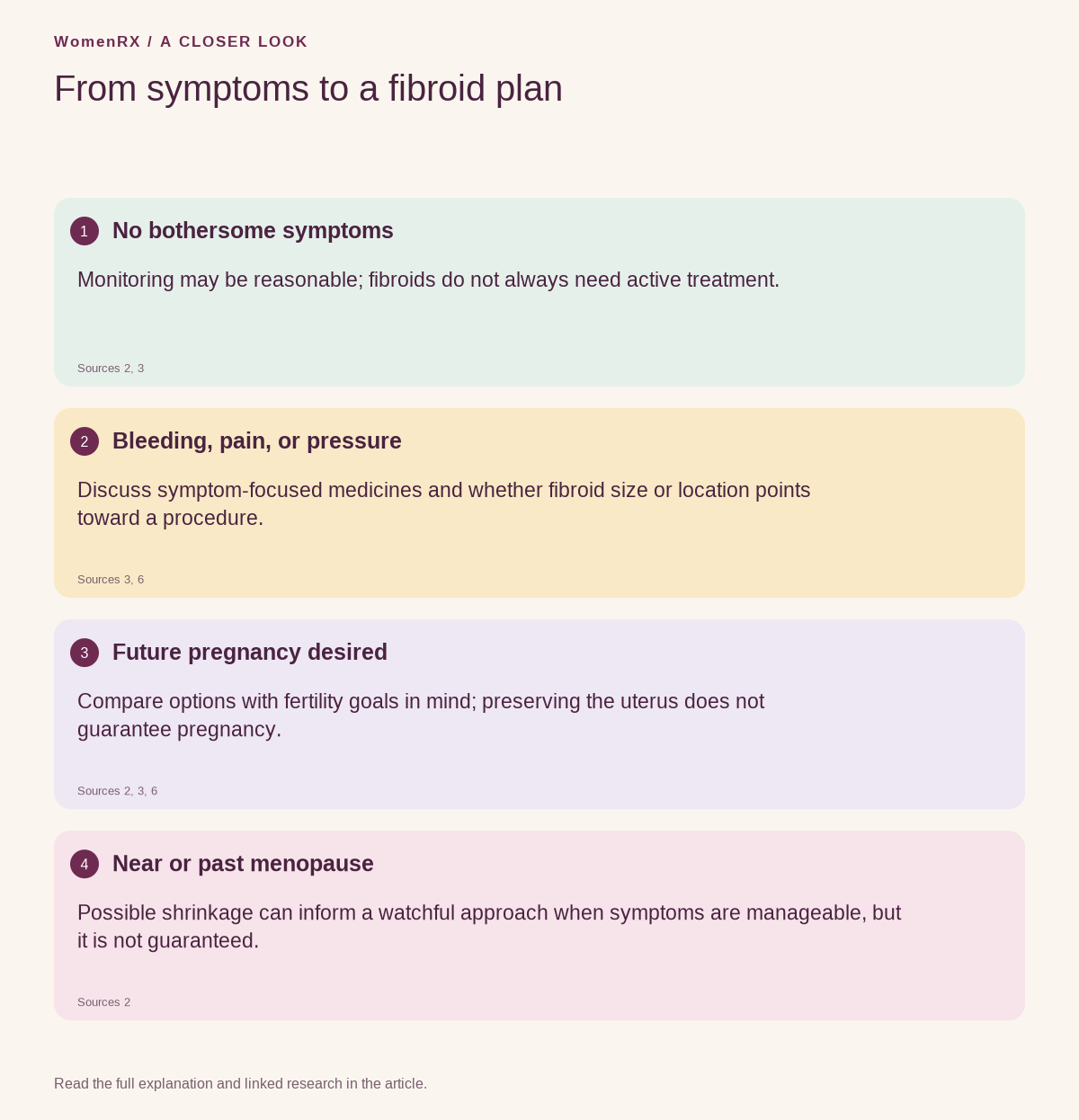
From symptoms to a fibroid plan
No bothersome symptoms: Monitoring may be reasonable; fibroids do not always need active treatment.23
Bleeding, pain, or pressure: Discuss symptom-focused medicines and whether fibroid size or location points toward a procedure.36
Future pregnancy desired: Compare options with fertility goals in mind; preserving the uterus does not guarantee pregnancy.236
Near or past menopause: Possible shrinkage can inform a watchful approach when symptoms are manageable, but it is not guaranteed.2
Read the figure as text
A practical decision path: start with how fibroids affect you, then weigh scan findings, pregnancy goals, and menopause timing.- No bothersome symptoms: Monitoring may be reasonable; fibroids do not always need active treatment.23
- Bleeding, pain, or pressure: Discuss symptom-focused medicines and whether fibroid size or location points toward a procedure.36
- Future pregnancy desired: Compare options with fertility goals in mind; preserving the uterus does not guarantee pregnancy.236
- Near or past menopause: Possible shrinkage can inform a watchful approach when symptoms are manageable, but it is not guaranteed.2
More questions, answered
Do fibroids always make it harder to get pregnant?
No. Many people with fibroids become pregnant without problems. Some fibroids can affect fertility or pregnancy, so their location and your pregnancy plans matter when discussing treatment. 2 6
Can herbal remedies be counted on to shrink fibroids?
No. Research on varied herbal preparations has not established a dependable benefit for fibroid symptoms, and the available trials had important limitations. That doesn’t prove every preparation is ineffective, but it isn’t evidence that herbs can replace established management options. 5
Sources you can check
- Vaginal Bleeding | Uterine Fibroids | MedlinePlusAccessed 2026-09-25Return to first citation
- Uterine Fibroids | Fibroids | MedlinePlusAccessed 2026-09-25Return to first citation
- Fibroids - NHSAccessed 2026-09-25Return to first citation
- About tranexamic acid - NHSAccessed 2026-09-25Return to first citation
- Herbal preparations for uterine fibroids.Liu JP, Yang H, Xia Y, Cardini F. · The Cochrane database of systematic reviews · 2013Return to first citation
- Pharmacological treatment for uterine fibroids.Garg A, Brennan L, Brito LGO, Nagels H, Beros A. · The Cochrane database of systematic reviews · 2026Return to first citation