Uterine Fibroids: Can Supplements Help Symptoms?
Vitamin D has been studied after fibroid surgery, but that small trial doesn’t show that supplements relieve heavy bleeding or pain.
A small post-surgery vitamin D trial doesn’t establish it as a treatment for fibroid bleeding or pain. The trial measured recurrence and fibroid size, not whether symptoms improved. If periods are heavy, start by evaluating the bleeding and whether anemia may be present, rather than relying on a supplement. 5 1 4
What the vitamin D research actually tested
Vitamin D deficiency is listed as a factor associated with a higher risk of fibroids, but that association doesn’t show that taking vitamin D will shrink fibroids or ease symptoms. 3
One small, double-blind pilot trial randomized 109 women who had undergone hysteroscopic fibroid removal to vitamin D or placebo for 12 months. The researchers looked at fibroid recurrence, number, and size, not relief from heavy bleeding or pain. Recurrence was reported as 50% lower with vitamin D, but that difference was not statistically significant. The study did find a difference in the size of recurrent fibroids between groups. Because it was a pilot study in women after surgery, it doesn’t establish vitamin D as a treatment for fibroids generally, or as a way to control symptoms. 5
That distinction matters: research about nutrient levels or fibroid measurements is not automatically evidence that a supplement improves how you feel or changes the treatment you need. The vitamin D trial also doesn’t answer whether supplementation helps women who haven’t had surgery, or whether it reduces heavy bleeding.
Heavy bleeding deserves its own evaluation
Fibroids can cause heavy or prolonged bleeding, but they aren’t the only possible cause. Bleeding between periods, bleeding that is much heavier or longer than usual, and bleeding after menopause are all types of abnormal vaginal bleeding that may need evaluation. 1
Ongoing blood loss can contribute to anemia. Anemia may cause fatigue, feeling cold, dizziness, headaches, or shortness of breath; blood tests can help diagnose it, and a complete blood count is one commonly used test. 4 2 If you have heavy periods, ask whether checking for anemia is appropriate. The key first step is to identify what’s causing the bleeding and whether it has affected your blood count, rather than assuming a supplement will address either problem.
Iron may be relevant if testing shows iron deficiency, but it doesn’t treat fibroids or stop the bleeding. Don’t treat iron as a fibroid remedy. Anemia has different causes, and treatment depends on the type. 4
Let your goals shape the fibroid discussion
Fibroids vary in size, number, and location, and some cause no symptoms. Treatment decisions can depend on your symptoms and whether you’re pregnant or hope to become pregnant. Many women with fibroids can get pregnant without problems, although some fibroids may affect fertility or pregnancy. 3
If you’re planning a pregnancy, mention that before choosing a treatment or relying on supplements. If you’re pregnant and bleeding, contact your care provider promptly; bleeding in pregnancy can have several causes. 1 3
If bleeding starts after menopause, don’t assume fibroids explain it. Fibroids are one possible cause of abnormal bleeding, but other causes exist, and bleeding after menopause warrants evaluation. 1 Around menopause, symptoms and treatment goals still matter; fibroid treatment may be considered for heavy bleeding or very large fibroids, depending on the situation. 3
A practical way to judge a supplement claim
Before spending money or delaying care, ask what outcome the supplement was actually tested for: fibroid size, recurrence after surgery, bleeding, pain, or anemia. Those are different outcomes. In the vitamin D pilot, the participants had already had surgery and the measured outcomes were recurrence and size, so its results don’t answer whether vitamin D can relieve your current symptoms. 5
For heavy or prolonged bleeding, the more useful next move is to discuss the bleeding itself and whether a blood count is needed. Fibroid care can then be considered in light of your symptoms, pregnancy plans, and treatment goals. 1 2 3
What supplement studies do and don’t show
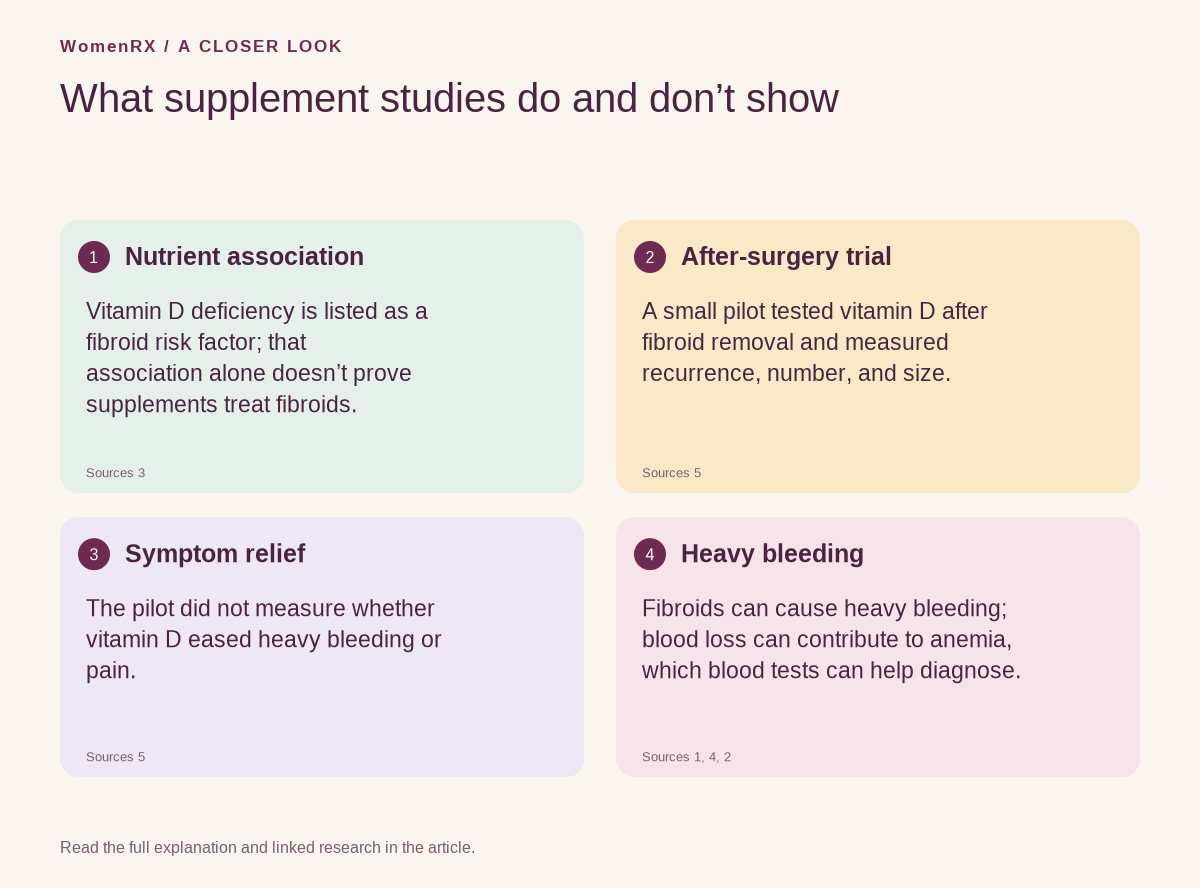
Nutrient association: Vitamin D deficiency is listed as a fibroid risk factor; that association alone doesn’t prove supplements treat fibroids.3
After-surgery trial: A small pilot tested vitamin D after fibroid removal and measured recurrence, number, and size.5
Symptom relief: The pilot did not measure whether vitamin D eased heavy bleeding or pain.5
Heavy bleeding: Fibroids can cause heavy bleeding; blood loss can contribute to anemia, which blood tests can help diagnose.142
Read the figure as text
These evidence categories separate nutrient associations and post-surgery measurements from symptom relief and evaluation of blood loss.- Nutrient association: Vitamin D deficiency is listed as a fibroid risk factor; that association alone doesn’t prove supplements treat fibroids.3
- After-surgery trial: A small pilot tested vitamin D after fibroid removal and measured recurrence, number, and size.5
- Symptom relief: The pilot did not measure whether vitamin D eased heavy bleeding or pain.5
- Heavy bleeding: Fibroids can cause heavy bleeding; blood loss can contribute to anemia, which blood tests can help diagnose.142
More questions, answered
Does vitamin D shrink uterine fibroids?
A pilot study found a difference in the size of recurrent fibroids among women who had undergone fibroid removal, but it doesn’t establish vitamin D as a treatment for fibroids generally. The study did not test whether supplementation relieved bleeding or pain. 5
Can fibroids cause anemia?
Fibroids can cause heavy bleeding, and blood loss is one cause of anemia. A blood test such as a complete blood count can help check for anemia; the right response depends on what the evaluation finds. 1 4 2
Sources you can check
- Vaginal Bleeding | Uterine Fibroids | MedlinePlusAccessed 2026-09-25Return to first citation
- Blood Count Tests: MedlinePlusAccessed 2026-09-25Return to first citation
- Uterine Fibroids | Fibroids | MedlinePlusAccessed 2026-09-25Return to first citation
- Anemia | MedlinePlusAccessed 2026-09-25Return to first citation
- The effect of vitamin D on recurrence of uterine fibroids: A randomized, double-blind, placebo-controlled pilot study.Vahdat M, Allahqoli L, Mirzaei H, Giovannucci E, Salehiniya H, Mansouri G, Alkatout I. · Complementary therapies in clinical practice · 2022Return to first citation