Can Treating Thyroid Disease Stop Hot Flashes?
Treating an overactive thyroid may ease thyroid-related heat and sweating, but a thyroid diagnosis alone doesn’t explain every hot episode.
It depends on what’s causing the heat or sweating. An overactive thyroid can cause both, and treatment aims to bring excess thyroid hormone under control. In midlife, menopausal hot flashes may also be relevant alongside thyroid-related symptoms. Treating thyroid excess may not stop menopausal hot flashes. If you take levothyroxine, overtreatment is another possibility to review, not a reason to change it yourself. 4673
Heat and sweating aren’t one diagnosis
An overactive thyroid can make you sensitive to heat and cause warm skin or excessive sweating. Other clues can include a fast or irregular heartbeat, trembling, trouble sleeping, diarrhea, or weight loss despite an increased appetite. You don’t need to have all of these symptoms for a thyroid problem to be worth checking, and none proves the cause on its own. 4
That distinction matters if you already have a thyroid diagnosis. For example, taking levothyroxine for an underactive thyroid doesn’t mean every spell of sweating is caused by your thyroid. But overtreatment can produce heat intolerance, excessive sweating, and symptoms such as a rapid heartbeat. Your current treatment and thyroid levels matter more than the diagnosis on your chart alone. 23
In midlife, menopausal hot flashes and thyroid-related heat or sweating are distinct possibilities. Both may be relevant, so finding thyroid excess does not necessarily explain every hot episode. A thyroid blood test helps assess whether excess thyroid hormone needs attention; it cannot identify every cause of an episode or rule out menopausal hot flashes. 457
What a thyroid review can answer
A useful starting point is the whole picture: whether the heat comes in episodes or feels more persistent, whether you’re also noticing a racing heart or tremor, and what thyroid treatment you currently take. These details help frame the question, but they aren’t a home test for distinguishing thyroid symptoms from hot flashes. Hyperthyroidism is assessed using symptoms and blood tests. 45
TSH is usually the first thyroid blood test. T3 and T4 measure thyroid hormones; a low TSH with high T3 and/or T4 usually points toward an overactive thyroid. A clinician interprets the results using the laboratory’s ranges and your circumstances. If testing shows excess thyroid hormone, further tests may help identify its cause, which can include Graves’ disease, thyroid nodules, or thyroid inflammation. 251
If you take levothyroxine, mention it when discussing new heat or sweating rather than changing it to see what happens. Both too much and too little treatment can cause problems, and the medication’s prescribing information identifies heat intolerance and excessive sweating among symptoms to report. Also mention a rapid or irregular heartbeat, chest pain, or shortness of breath promptly. 3
When treatment may help
Treatment for an overactive thyroid is intended to reduce excess thyroid hormone. Medicines, radioactive iodine, and surgery are among the approaches used, depending on the cause and the person’s circumstances. As thyroid hormone levels come under control, thyroid-related symptoms may improve. That is a reason to assess suspected thyroid excess, not a promise that treatment will stop every hot episode or menopausal hot flashes. 6
The practical next move is cause-first: review any accompanying symptoms and current thyroid treatment, check thyroid function when appropriate, then decide what the results do and don’t explain. Whether or not tests find thyroid excess, menopausal hot flashes may also deserve attention in midlife. Don’t adjust thyroid medication to chase the symptom. 23457
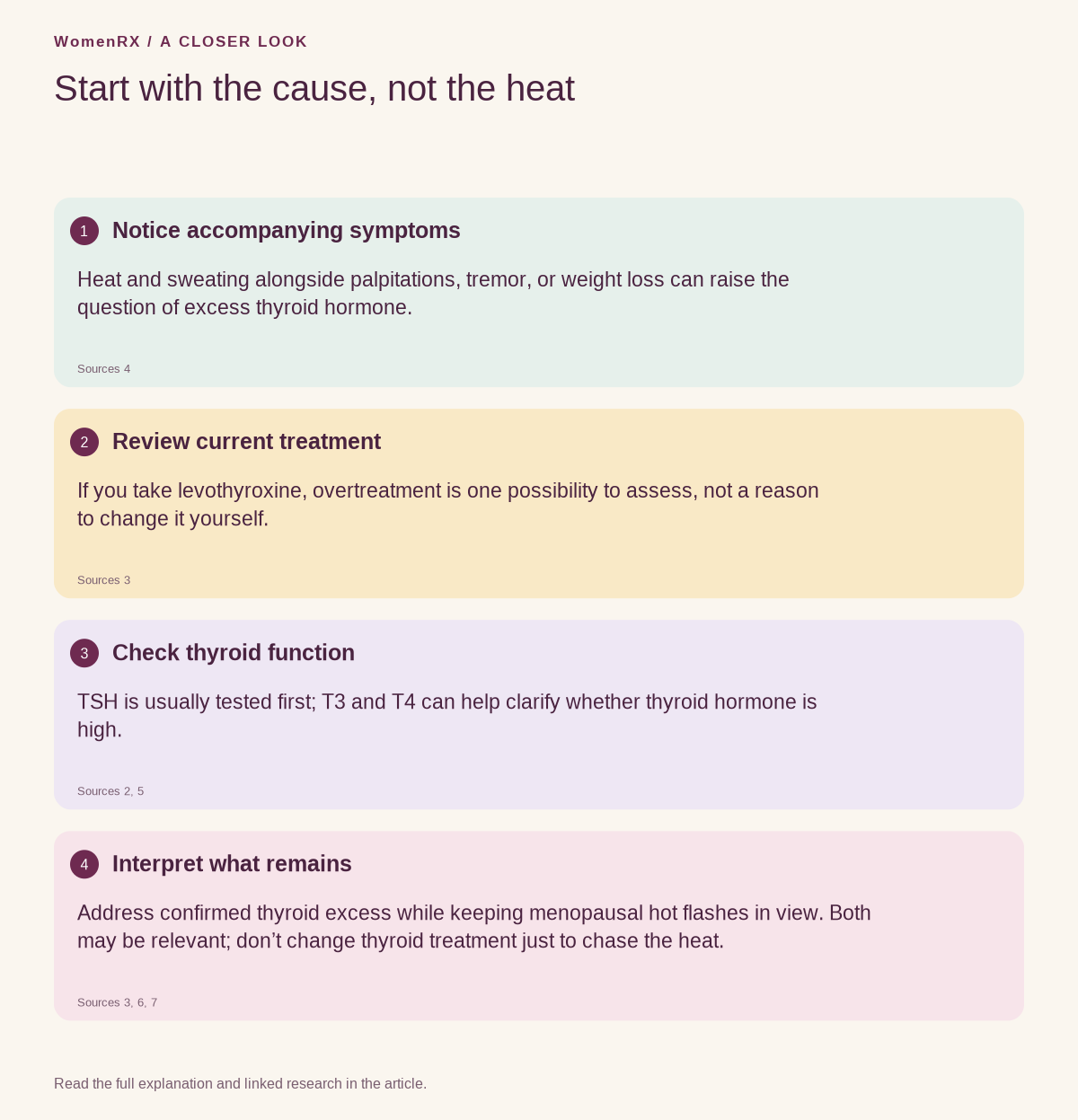
Start with the cause, not the heat
Notice accompanying symptoms: Heat and sweating alongside palpitations, tremor, or weight loss can raise the question of excess thyroid hormone.4
Review current treatment: If you take levothyroxine, overtreatment is one possibility to assess, not a reason to change it yourself.3
Check thyroid function: TSH is usually tested first; T3 and T4 can help clarify whether thyroid hormone is high.25
Interpret what remains: Address confirmed thyroid excess while keeping menopausal hot flashes in view. Both may be relevant; don’t change thyroid treatment just to chase the heat.367
Read the figure as text
A path for discussing hot episodes when you have a thyroid diagnosis or take thyroid medication.- Notice accompanying symptoms: Heat and sweating alongside palpitations, tremor, or weight loss can raise the question of excess thyroid hormone.4
- Review current treatment: If you take levothyroxine, overtreatment is one possibility to assess, not a reason to change it yourself.3
- Check thyroid function: TSH is usually tested first; T3 and T4 can help clarify whether thyroid hormone is high.25
- Interpret what remains: Address confirmed thyroid excess while keeping menopausal hot flashes in view. Both may be relevant; don’t change thyroid treatment just to chase the heat.367
More questions, answered
Could my thyroid medication be making me feel hot?
If you take levothyroxine, overtreatment can cause heat intolerance and excessive sweating. Those symptoms alone can’t tell you whether your dose is too high; a review of your symptoms, treatment, and thyroid tests is more useful than changing it yourself. 32
Sources you can check
- Overactive thyroid (hyperthyroidism) - Causes - NHSAccessed 2026-09-25Return to first citation
- Thyroid Tests: MedlinePlusAccessed 2026-09-25Return to first citation
- LEVOTHYROXINE SODIUM TABLET [CARDINAL HEALTH 107, LLC] | US prescribing information and patient instructionsAccessed 2026-09-25Return to first citation
- Overactive thyroid (hyperthyroidism) - Symptoms - NHSAccessed 2026-09-25Return to first citation
- Overactive thyroid (hyperthyroidism) - Diagnosis - NHSAccessed 2026-09-25Return to first citation
- Overactive thyroid (hyperthyroidism) - Treatment - NHSAccessed 2026-09-25Return to first citation
- The 2022 hormone therapy position statement of The North American Menopause Society.“The 2022 Hormone Therapy Position Statement of The North American Menopause Society” Advisory Panel. · Menopause (New York, N.Y.) · 2022Return to first citation